Get Full Government Meeting Transcripts, Videos, & Alerts Forever!
Get email alerts on the Revenue And Taxation topic
No spam. Unsubscribe anytime.
House Revenue and Taxation Committee introduces Idaho parental choice tax credit bill
Summary
The House Revenue and Taxation Committee voted to introduce RS 31974, the Idaho Parental Choice Tax Credit, after about an 18-minute discussion during its Jan. 22, 2025, meeting.
The House Revenue and Taxation Committee voted to introduce RS 31974, the Idaho Parental Choice Tax Credit, after about an 18-minute discussion during its Jan. 22, 2025, meeting.
The bill, introduced by Representative Wendy Horman, would create a refundable tax credit beginning with the 2025 tax year that parents could claim for qualified education expenses up to $5,000 per child and up to $7,500 per child with disabilities. Representative Horman said the credit would be available to full-time Idaho resident students ages 5 to 18 and to students with disabilities through age 21.
Provisions and accountability Representative Wendy Horman (District 32, Bonneville County), the bill sponsor, said the credit could be used for nonpublic K–12 tuition and fees, tutoring, nationally standardized college-admissions tests and AP exams, prep courses, textbooks and curricula, and certain transportation costs. Horman said a credit could not be claimed for any semester in which the student is enrolled in a public school.
Horman told the committee the proposal prioritizes families with incomes below 300% of the federal poverty level; she described that threshold as roughly $95,000 gross income (about $65,000 adjusted gross income) and said those families would receive top priority and could elect a one-time advance payment in their first year. Horman also said parents of foster children in qualified foster homes under Idaho code would be eligible.
The bill specifies a statewide cap on total available tax credits of $50,000,000 and, according to Horman, that cap "cannot increase" except by subsequent action of the full Legislature. She said the measure would not take funds from public schools and includes transparency and accountability measures: the Idaho State Tax Commission would publish updates on amounts claimed, and the Tax Commission would report to the governor, the state comptroller and legislative committees on the number of applicants, average awards, applicant incomes and geographic distribution. Horman also said misuse of the program could be penalized, up to and including felony charges for tax fraud.
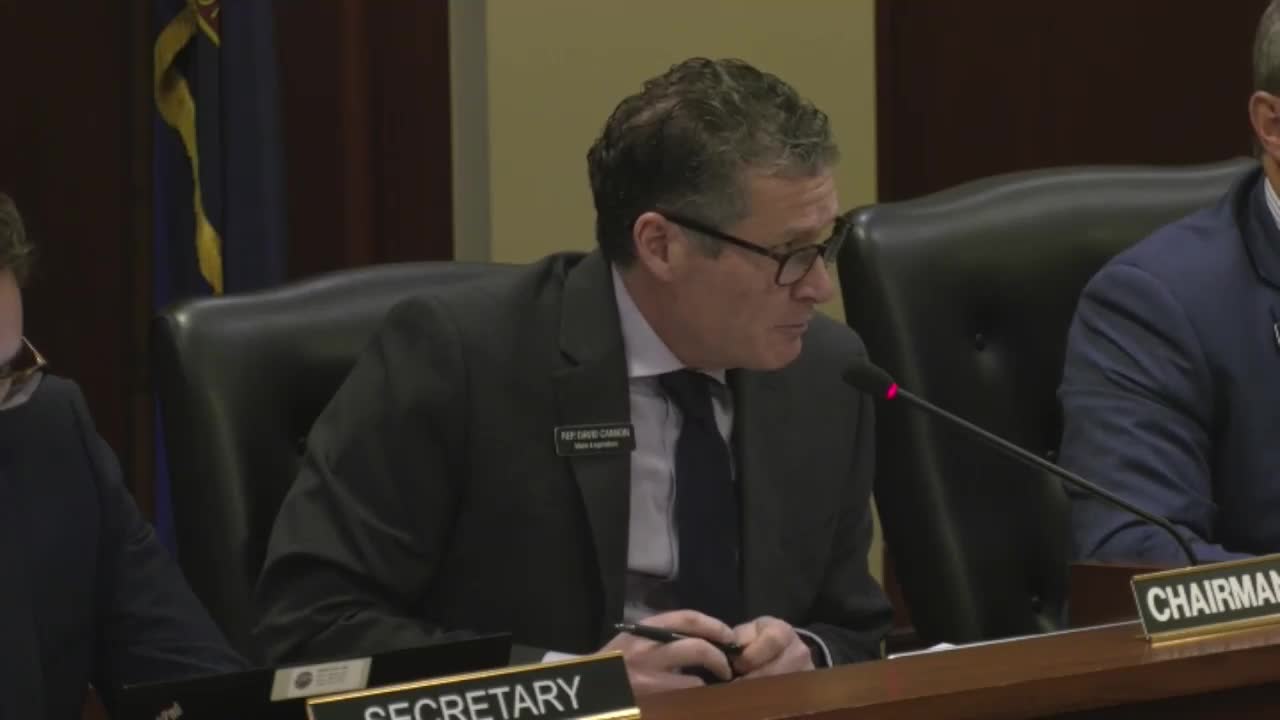
Concerns and committee questions Several committee members raised technical and policy concerns. Representative Gannon questioned the tax-technical structure of a capped refundable credit and said he was "very uncomfortable" with the fiscal note and the novelty of the credit's structure. He also asked how the program would handle returns that were rejected for technical reasons, such as incorrect Social Security numbers or unsigned returns; Horman said she would bring more detail to a full hearing.
Representative Shepherd asked for clarification of language on instruction "not provided by a parent" and whether that would treat a certified-teacher parent differently; Horman said the intent was to prevent a homeschool parent from paying themselves a salary and that she would bring more precise language to a hearing.
Representative Birch said she would not support the motion and voiced concern there is "no performance accountability in it," warning there were no consequences tied to student outcomes and expressing worry the dollar amount could increase in the future.
Vote and next steps Representative Monks moved to introduce RS 31974; the motion carried. Committee leadership recorded two opposing votes: Representative Birch and Representative Gannon. The committee therefore voted to introduce the bill for consideration; Representative Horman said she would return with more detailed templates and fiscal-processing information if the committee prints and schedules a full hearing. The committee adjourned after concluding business.
The bill sponsor and committee members indicated further technical detail would be provided at a full hearing, including a more detailed template on how the credit would be administered and processed by the Idaho State Tax Commission.