Get Full Government Meeting Transcripts, Videos, & Alerts Forever!
Get email alerts on the Housing Repair Programs topic
No spam. Unsubscribe anytime.
Habitat for Humanity presents home-repair programs, urges Newport homeowners to apply
Summary
Habitat for Humanity Greater Cincinnati described several repair programs — including veteran, aging-in-place and larger state-funded repairs — to Newport officials on Feb. 3, outlining eligibility, typical work and potential municipal partnership options.
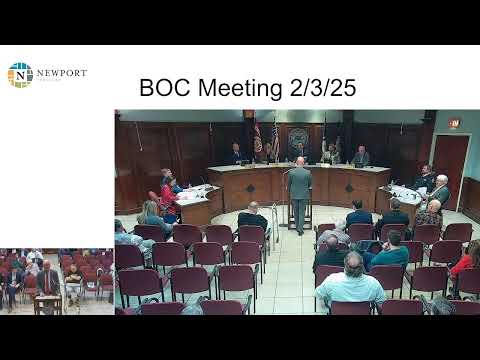
Habitat for Humanity Greater Cincinnati told the Newport Board of Commissioners on Feb. 3 that its home-repair programs can provide accessibility modifications, roof and window repairs, and targeted critical repairs for low-income homeowners across a nine-county service area.
Megan Goliki, director of operations for the local Habitat affiliate, gave the presentation and described eligibility rules, the types of repairs the organization will and will not undertake, and ways cities can partner with Habitat to expand capacity. “We build strength, stability and self-reliance through shelter,” Goliki said as she summarized the organization’s mission and repair work.
The presentation said Habitat’s local repair work includes: veteran-targeted repairs funded in part by the Home Depot Foundation; an Aging-in-Place program serving homeowners 60 and older; a state-funded program that supports larger exterior and safety repairs; and the Revive and Thrive loan program, a low-interest payback loan run in partnership with local funders. Goliki said Habitat completed 66 repairs in fiscal year 2024 and has helped “325-plus families” since the repair programs began; staff expect to complete roughly 200 projects by the end of the current program year in June.
Goliki described common repairs as tub-to-shower conversions, ramps and stair lifts, water heaters, HVAC work and many roof and window jobs. She said Habitat typically focuses funding on a single “primary repair” when a house has multiple needs and that full renovations, structural work and mold remediation are outside the program’s scope. “If the home isn’t going to be livable by the time we are finished with the repair, then we can’t do the repair,” she said.
Goliki explained income and occupancy requirements: applicants must live in a single-family, owner-occupied house within Habitat’s multi-county service area, and household income must be at or below 80% of area median income for the program. She said there is no required out-of-pocket payment for many repairs and that Habitat approved a $10,000 repair for a household with about $7,000 in annual income as an example of how grants and low-payback loans are targeted.
Officials asked whether Habitat would replace lead service lines and whether the group works in historic districts. Goliki said Habitat primarily uses subcontractors for skilled trades and has not previously replaced service lines, though the organization could explore it; she said Habitat has worked on older and historic homes and can tailor partnerships, but that local rules for historic districts still apply.
Goliki described three partnership models with local governments: Habitat can serve as general contractor (GC) for larger state-funded projects, can take full intake and outreach in partnership with counties (as it does in Clermont County), or can work alongside county programs where county agencies provide certain services (as with Hamilton County lead-clearance work). She recommended that a municipality define scope and funding caps before finalizing a memorandum of understanding.
Officials and the presenter discussed program capacity. Goliki said the biggest current bottleneck is availability of subcontractors for specialized accessibility work; Habitat raises funds independently but continues to seek additional funding, especially in Kentucky and Indiana. She encouraged residents who think they might qualify to apply, saying, “I would say don’t deny yourself, let us deny you.” Goliki said staff would leave printed applications with City Hall and can provide outreach help through partners such as United Way’s 2-1-1 intake line.
The presentation closed with commissioners expressing support and interest in exploring a municipal partnership to prioritize repairs in historic neighborhoods and other areas of need.
Ending: Goliki offered staff contact information and paper applications for city distribution; commissioners asked staff to follow up on potential partnership steps, including a scoping meeting and drafting MOUs if Newport decides to proceed.