Get Full Government Meeting Transcripts, Videos, & Alerts Forever!
Get email alerts on the Death Penalty Methods topic
No spam. Unsubscribe anytime.
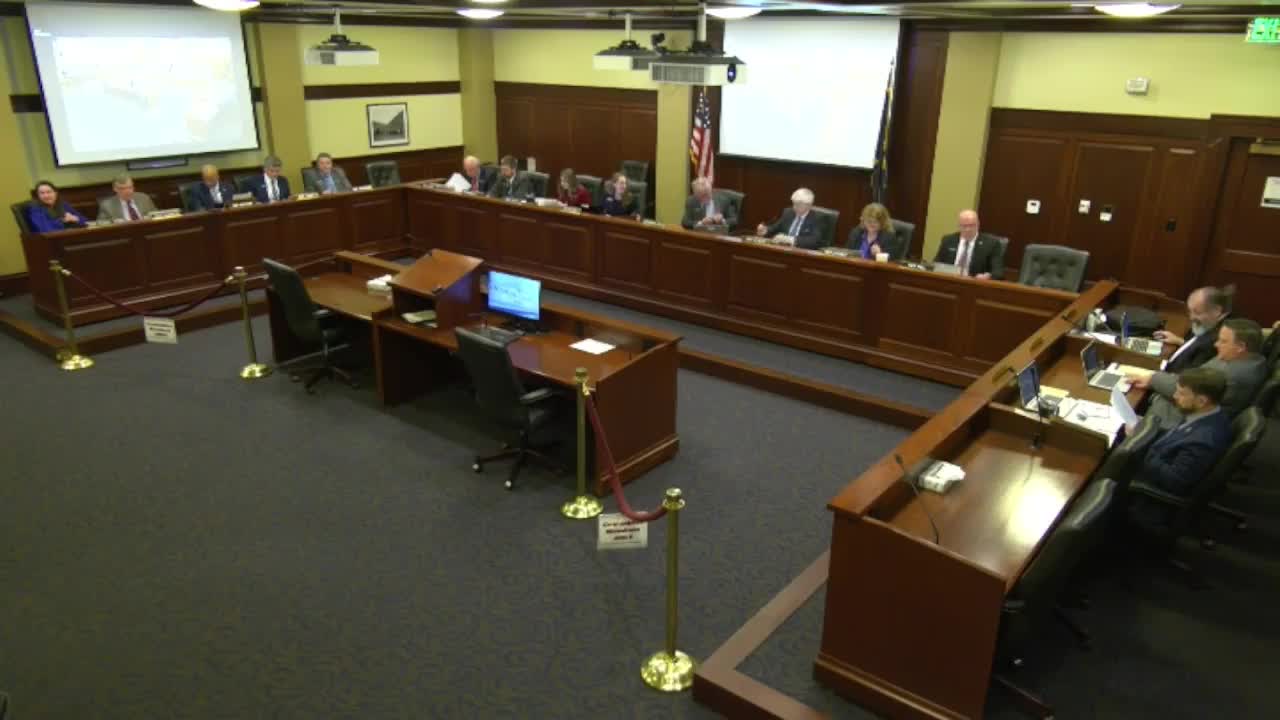
Committee advances H37 to floor after debate; firing squad would become Idaho's primary execution method
Summary
After extensive testimony for and against, the Judiciary, Rules and Administration Committee voted 12–2 to send H37 to the House floor with a due-pass recommendation; the bill would make the firing squad the primary method of execution in Idaho.
Representative Bruce Scogg introduced House Bill 37 and said the bill would make the firing squad the primary method of execution in Idaho for persons sentenced to death for premeditated murder. "This bill proposes that firing squad become the primary method of execution in Idaho," Scogg said, adding he believes the method is "more humane because it is quick and certain." He said the Idaho Department of Correction has policies and procedures for a firing-squad option and that the department would remodel existing space to carry out the method if the legislature approves.
The committee heard a series of in-person and virtual testimonies. Diana David, identifying herself as Idaho chapter lead for Survivors Empowered and a survivor of gun violence, urged the committee to vote no and said the firing squad would "increase stress, lead to work comp mental health claims, and contribute to turnover" among staff and witnesses. Daniel Murphy and other supporters testified that the firing squad can be quicker and more certain than lethal injection. Deputy Attorney General Lamont Anderson described the legal landscape, citing U.S. Supreme Court precedent (Wilkerson v. Utah) and noting some federal judges and justices have said a firing squad may be comparatively quick and humane; he also highlighted that ballistic methods are not affected by drug shortages or interactions with medications.
Committee members asked practical and procedural questions about costs, staffing, volunteer selection and protocol. Several witnesses and lawmakers raised concerns about the mental-health impact on staff and witnesses, and about whether the $750,000 appropriation to refurbish facilities would be sufficient; Director-level decisions and execution protocol details were identified as the Idaho Department of Correction's responsibility.
At the close of debate, Representative Vihar moved that the committee send H37 to the floor with a due-pass recommendation. The committee conducted a roll-call vote. The motion carried 12–2 and H37 was sent to the House floor with a due-pass recommendation.