Get Full Government Meeting Transcripts, Videos, & Alerts Forever!
Get email alerts on the Animal Services topic
No spam. Unsubscribe anytime.
Yukon Board of Adjustment approves lot-size and width variances but tables street-access request for Pets and People Humane Society
Summary
The Board approved variances allowing Pets and People Humane Society to build a kennel and small administration building on a 2.99-acre parcel but tabled a separate variance over street frontage. Board members repeatedly cited concerns about lot size, setbacks and long-term access.
The Yukon Board of Adjustment on Feb. 5 approved variances that let Pets and People Humane Society build a kennel and small administration building on a 2.99-acre parcel inside the city limits, but the panel tabled a separate request tied to frontage and access to a public street.
The vote clears the way for the nonprofit to construct two buildings totaling about 2,800 square feet on land identified in the application as 701 In LA, Unit B inside Yukon. Board members emphasized the project’s charitable purpose but repeatedly said the property’s size and access raised planning and code concerns.
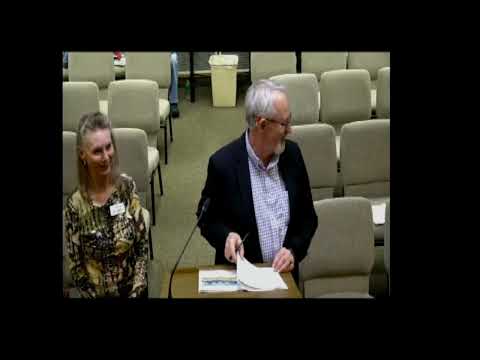
Christie McCree, representing Pets and People Humane Society, told the board the organization owns “almost 3 acres” and plans a kennel that would house about 18 dogs at capacity; she said the shelter currently cares for nine dogs and four cats and also hopes to use an administration building for fundraising and to host low-cost spay/neuter clinics. “We’re hoping and praying that you guys approve today,” McCree said.
Board discussion focused on three separate variance requests the society submitted under the Unified Development Code’s building-envelope rules: a variance because the parcel does not abut a public street (access/frontage), a variance from the agricultural-district minimum lot area (code requires 5 acres; the parcel is 2.99 acres), and a variance to the minimum lot width (code requires 330 feet; the parcel is 209 feet).
On the access/frontage request (agenda item 3), members said they wanted more time to review the easement and the long-term implications for public access and service delivery. The board voted to table that item until its next meeting in March, allowing staff and the applicant to provide additional documentation about existing easements and the route the nonprofit plans to use for vehicular access.
For the lot-area request (agenda item 4) the board voted to approve a variance allowing construction on the parcel despite the code’s 5-acre minimum for agricultural zoning. On the minimum lot-width request (agenda item 5) the board likewise approved a variance for the parcel’s 209-foot width in lieu of the 330-foot requirement. Roll calls recorded board members voting in favor during the approval motions.
During discussion, staff and members noted other regulatory and operational constraints that would still apply if the variances stood: the site remains zoned agricultural and would still require a kennel license and compliance with rules on animal holding periods and noise; McCree said the organization understands and plans to comply with those requirements. Board members also questioned how site coverage would be calculated given an on-site pond and noted that some existing easements—McCree said a neighbor, Pete Dahl, and a Mr. Ramey had granted easements and that documentation appears at the county assessor’s office—could affect circulation and frontage issues.
The board and staff also discussed lot coverage formulas, setbacks and the practical difference between a standalone kennel and a combined kennel and administrative facility; one member said the kennel alone might be easier to accommodate than the combined program because of acreage limits. McCree said the nonprofit plans concrete drives and to keep the pond on site; the organization also said it would continue to maintain the remainder of the space as a dog park for public use.
The board took no action on agenda item 6 (pulled by the applicant) and agreed that any additional changes to the application should be considered as separate applications or follow-up documentation.
Votes at a glance
- Item 3 (variance for frontage/access): Motion to table until the March meeting — outcome: tabled. Roll call recorded votes in favor during the tabling motion: Sherry Houston (yes), April Stacy (yes), Buddy Carpenter (yes), Jeff Schaller (yes), Ken Smith (yes).
- Item 4 (variance from 5-acre minimum to allow development on 2.99-acre parcel): Motion to approve — outcome: approved. Roll call recorded votes in favor: Sherry Houston (yes), April Stacy (yes), Buddy Carpenter (yes), Jeff Schaller (yes), Ken Smith (yes).
- Item 5 (variance to permit 209-foot lot width instead of required 330 feet): Motion to approve — outcome: approved. Roll call recorded votes in favor: Sherry Houston (yes), April Stacy (yes), Buddy Carpenter (yes), Jeff Schaller (yes), Ken Smith (yes).
- Item 6: Pulled from the agenda — outcome: no action taken.
Why it matters
The approvals allow the humane society to proceed with plans to locate a small nonprofit-run shelter inside Yukon, which supporters said will broaden local access to shelters and spay/neuter services. Neighbors and some board members expressed concern that granting variances for small parcels could set precedents for future commercial uses in agricultural zones and raised questions about frontage, service access and how lot-coverage rules will apply once construction plans are finalized.
What’s next
Because the access/frontage request was tabled, the applicant and staff agreed to return at the March meeting with additional documentation about easements and access plans. The approved variances do not remove other permitting steps: the project will still need required building permits, a kennel license and compliance with applicable health, safety and animal-control rules.