Get Full Government Meeting Transcripts, Videos, & Alerts Forever!
Get email alerts on the Public Safety Fire Services topic
No spam. Unsubscribe anytime.
Chester County council approves first reading to replace rural fire commission with county fire board after extended debate
Summary
The council approved first reading of an ordinance to dissolve the Chester County Rural Fire Board and establish a county fire board (formerly described as an advisory board) after lengthy discussion about accountability, chief representation and oversight of county fire funding; vote was 6–1 on first reading.
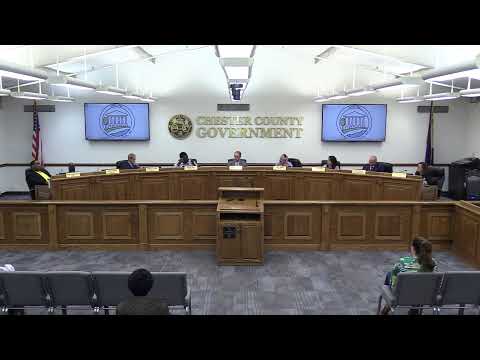
Chester County Council voted 6–1 on first reading of an ordinance to dissolve the county—s Rural Fire Board and establish a new Chester County Fire Service Board, following more than an hour of public remarks and council discussion about oversight, operational authority and accountability.
Supporters said the new board is intended to improve communication among the county—s 12 volunteer fire departments and provide a single pipeline for financial and strategic planning. "The plan has been discussed with council. The plan has been discussed with fire chiefs," County Administrator Kenneth Hester said, adding the change is intended to "allow for communication, for oversight of finances that we are all... responsible for."
The ordinance began as language creating an "advisory" board but county staff said the word "advisory" would be removed; council members and fire personnel clarified that the board would be chaired by the county—s fire director and would include representation from each department. "The board will play a pivotal role in advising on a strategic use of resources to best serve our community," Director Kale Benson said, describing a board composed of chiefs or their designees and chaired by the county fire director.
Opponents and some council members urged caution. Councilman John Agee and others expressed concern about taking authority from boards that were created by special-purpose tax districts and stressed that some chiefs answer to locally appointed boards. "If it's broke... then we're broke," Agee said, urging that a plan and clearer communication precede structural change. Several chiefs and volunteer firefighters spoke during the discussion calling for clarity on whether chiefs would serve on the new board and how decisions would be made and recorded.
County staff and the fire director said the board would not direct day-to-day operations of individual departments and that statutory protections for fire chiefs— operational authority remain. Benson said the board would handle county-level planning, capital priorities and coordination, including a countywide fire plan, equipment maintenance planning and collective budgeting for more than $2 million in annual capital spending. Hester said the board is meant to improve "transparency of finance decisions regarding the allocations of county fire funds, enhancing services to our taxpayers, and eliminating duplication of services."
After discussion the chair called the vote on first reading; the motion passed 6–1.
Council members and staff said the ordinance will return for two additional readings, giving time for further input from chiefs and departments. Councilman Doug Raines, who chairs related committees, said the three-reading process provides opportunity for refinement and additional briefing to chiefs and district boards.
The county did not take final action on the ordinance during this meeting; the item remains pending second and third readings.