Get Full Government Meeting Transcripts, Videos, & Alerts Forever!
Get email alerts on the Literacy topic
No spam. Unsubscribe anytime.
Officials outline coordinated literacy plan, coaching tiers and dyslexia screening rollout
Summary
State education and literacy officials told the joint committee they have aligned agencies around a state literacy plan, narrowed approved universal screeners and are expanding differentiated coaching supports; they said dyslexia screening and metrics work are underway but workforce and funding remain constraints.
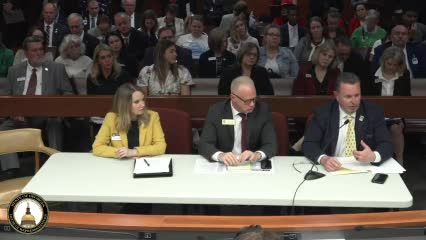
Representatives from the Governor's Office of Student Achievement (GOSA), the Georgia Department of Education (DOE), the Regional Educational Service Agencies (RESA) network and literacy partners presented a coordinated plan to improve reading outcomes from birth through grade 12. Speakers described a statewide strategy, new K–12 English language arts standards, a multi‑tiered coaching system and implementation steps for dyslexia screening.
Sarah Richards, Georgia literacy coach with GOSA, summarized the state literacy plan framework adopted by the Georgia Council on Literacy and told the committee, “we have made an overarching goal that Georgia will lead the nation in literacy.” The council’s framework sets three goals: every child a reader, every educator prepared and every community supported, and the council includes state agencies, the University System of Georgia, the Technical College System and early‑childhood partners.
Why it matters: officials told lawmakers that improved early literacy correlates with later academic success and economic outcomes and that the new coordinated approach is intended to align state agencies and resources to reduce duplication and accelerate progress.
Department of Education staff described work to implement state laws requiring early‑literacy supports. Amy Danté, the DOE director of literacy, said House Bill 538 (the Georgia Early Literacy Act) and other statutes have five major components and that four components live primarily in the K–3 space. DOE said it has narrowed the list of approved universal screeners to up to five instruments for the coming year and emphasized required tiered reading support plans for students who do not respond to instruction.
Coaching and professional development: Stacy Lutz (GOSA contractor) and Richard Smith (First District RESA) described a three‑tiered coaching model. Officials said the state now supports: (1) a Let’s Read Georgia/RESA delivered tier with 63 coaches for district readiness and systems support; (2) 60 DOE‑based coaches assigned to Comprehensive Support and Improvement (CSI) schools (the state’s bottom 5% by performance) to work onsite at high‑need schools; and (3) a Growing Readers program with 32 coaches providing in‑classroom, strategy‑level coaching tied to professional development. “All of these systems have a common vision based in our state literacy plan,” Stacy Lutz said.
Dyslexia and metrics: DOE staff noted Senate Bill 48 (dyslexia legislation) and the dyslexia screening pilot; officials said the current year is an implementation year for universal dyslexia screening and that the council is working to establish a broader set of literacy metrics (birth‑to‑12 and beyond). Amy Danté said Georgia’s new K–12 ELA standards will be implemented next year and that Georgia Milestones remains highly correlated to NAEP scores.
Capacity and equity concerns: witnesses repeatedly raised workforce and funding constraints. Commissioner Tanner (speaking earlier on behavioral health) and literacy speakers described clinician and coach shortages and turnover. Committee members pressed for data on subgroup and special‑education results; officials said those data are available in public dashboards (Georgia Insights) and are part of the council’s ongoing work to set metrics and differentiated supports.
Ending: the panel asked lawmakers for continued alignment of funding and policy, including potential incentives to increase district participation in state programs and consideration of supports (for example, facilitator positions or telehealth) to extend services in rural districts.