Get email alerts on the Land Use And Taxation topic
No spam. Unsubscribe anytime.
Commissioners debate water‑storage and solar projects, consider resolution or moratorium
Summary
Board members discussed tax‑roll impacts from water‑storage and solar projects, possible legal limits on county action, and asked the county attorney to draft or refine a resolution expressing the county’s position.
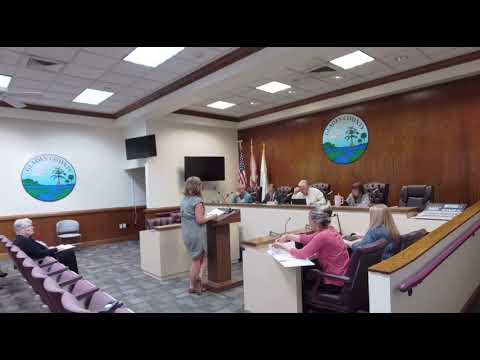
Glades County commissioners spent part of their Jan. 27 meeting discussing large water‑storage projects and solar developments and whether the county should pursue a resolution or moratorium to protect local tax revenues.
Commissioners said some recent and proposed water‑storage projects have reduced projected property taxes on affected parcels, and they voiced concern that widespread use of such projects could shrink the county’s tax base. One commissioner summarized county staff and constituent estimates, saying taxes on an example property had fallen from roughly $40,000 to about $15,000, producing a tax‑revenue difference the commissioner characterized as concerning.
Board members noted legal limits on local regulation. The county attorney had drafted a resolution that would not carry the force of an ordinance but would state the county’s position and encourage discussion with state lawmakers and water‑management districts. Commissioners asked staff and the county attorney to review the draft and consider stronger language where possible; they discussed the potential for lawsuits if the county tried to impose retroactive restrictions.
Why it matters: Commissioners said the fiscal impact of repeated conversions of farmland to water‑storage or solar uses can reduce local tax receipts, which fund public services. They described coordination with neighboring counties and state legislators to seek compensation or different tax treatment for these projects.
Discussion details: Commissioners referenced prior projects and regional conversations with neighboring counties, the state water‑management district and legislative offices. One commissioner said a county attorney’s resolution could be used in legislative outreach in Tallahassee to seek compensation or rule changes. Commissioners also discussed the difference between a resolution (symbolic but less binding) and an ordinance (legally enforceable but more likely to invite legal challenge).
No formal vote was taken on an ordinance or moratorium at the Jan. 27 meeting. Commissioners indicated they would refine and review a county‑attorney draft resolution and bring it back for further consideration and potential adoption.
AI generated
The text on this page is AI generated. Summaries, highlights, analysis, and video transcripts are all produced from the original source material.
AI can make mistakes, so if you spot one, and we will fix it for everyone.
Note: the source content is unaltered by us. Any content source we link to, be it a video, an audio recording, or a document, is presented exactly as its publisher released it. That publisher is usually a government body, sometimes an individual official or another organisation.