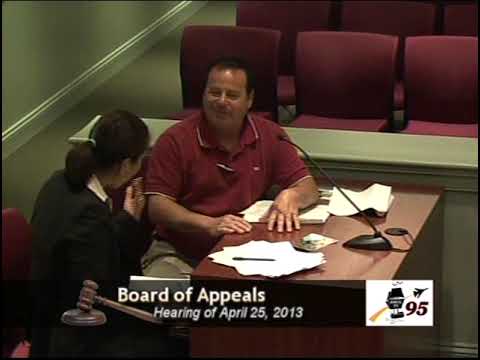
Hearing examiner to review Mattingly appeal over unpermitted second dwelling in St. Mary's County
Loading...
Summary
A hearing on April 25 focused on whether two structures on property at 39986 Lady Baltimore Avenue predate St. Mary’s County's 1974 zoning ordinance and whether a second dwelling exists without required permits and density. The hearing examiner will issue recommended findings within 60 days.
Jack Upton, the hearing examiner for St. Mary’s County, opened an appeal hearing April 25 for case number 12-1017 involving property owner Zach Mattingly and land-use staff over whether two structures on Mattingly’s Leonardtown property are legally existing nonconforming structures.
The dispute centers on whether a second dwelling exists at 39986 Lady Baltimore Avenue and whether it predates the county’s first zoning ordinance, adopted in 1974 — a date that matters because structures present before that ordinance can be treated as preexisting nonconforming. “Good morning. My name is Jack Upton. I'm assigned as the hearing examiner to, hear the case that we have before us this morning,” Upton said at the start of the hearing.
Attorney Jessica Andritz, representing Mattingly, told the examiner that Mattingly bought the property in the late 1990s and has repeatedly tried to obtain permits to repair and renovate structures on the parcel. “My client purchased this property in the late '90s,” Andritz said, describing multiple attempts to clean up and rebuild structures and saying the matter is “very simple” in essence: Mattingly seeks to remove trash and obtain permits to renovate.
Mattingly testified that he bought the property in 1997 and described a concrete block “bunker,” a trailer he dates to about 1957, and two homes he says he has worked on and rented. “This appeal is about, trying to get the trash removed off the property, and for me to get the proper permits to, renovate these buildings,” Mattingly said.
County staff entered a staff report into the record and told the examiner that while Mattingly obtained a 1997 building permit (97-1013) for work on a front structure, he did not complete final building or electrical inspections nor secure a certificate of use and occupancy. Staff also said subsequent permit applications, including an application associated with control number 98-2434 and later submissions, were never issued because the Health Department had no record of a septic system serving a second dwelling. “Staff maintains … that the property owner never had permits from the Department of Land Use and Growth Management … and density is not an item listed in [the nonconforming structure] section,” staff said while summarizing the report and ordinance provisions.
Jeffrey T. Neiman, a licensed professional land surveyor for Linear Surveys Inc., testified that county and state aerial photographs show a trailer at the front of the lot before 1974 but that the rear site was less clear. “They could not determine that it was a legal structure, meaning it had the right to be there as though it were built without authorization, or building permit,” Neiman said, explaining Land Use and Growth Management’s comment that the lower building was not recognized in the department’s records.
Neighbors and contractors who worked on cleanup and repairs testified in support of Mattingly’s efforts to remove trash and stabilize buildings; witnesses described prior trailers on the parcel, the presence of an old well ring, and both cleanup work and stop-work orders posted on the site. The county introduced aerial photography and historical assessment sketches and relied on Section 52.20.3 of the St. Mary’s County Comprehensive Zoning Ordinance in explaining the county’s nonconforming-structure rules.
No final decision was rendered at the hearing. Upton said he will review the evidence and prepare a finding of fact, a conclusion of law, and a recommended order for the Board of Appeals. “That is to be done within 60 days,” he said. The documents will be filed with Land Use and Growth Management and provided to the parties.
The record for the hearing includes a staff report dated April 4, 2013, multiple historic aerial photographs and site plans from Linear Surveys, affidavits submitted for the record, and permits and stop-work orders issued in the late 1990s and later. The examiner’s recommended order will be the next formal step in resolving whether the rear structure qualifies as a legally existing dwelling or requires corrective action under county ordinance.