Get Full Government Meeting Transcripts, Videos, & Alerts Forever!
Get email alerts on the Zoning Enforcement Home Occupation topic
No spam. Unsubscribe anytime.
Neighbor appeals county's finding after dispute over home-occupation garage in Mechanicsville
Summary
A St. Mary's County resident appealed a director's November 2013 decision that found no zoning violations at a nearby garage used by Frank Wheatley Drywall LLC. The hearing focused on early-morning vehicle activity, lights, a dumpster and whether the Board of Zoning Appeals can compel enforcement of the county's ordinance.
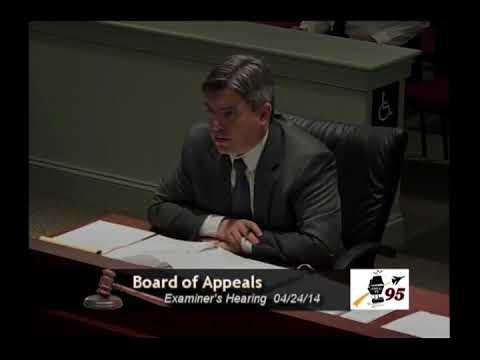
Robert Charles Stuperton appealed an administrative decision on Nov. 2013 by the director of St. Mary's County Department of Land Use and Growth Management that declined to revoke a home-occupation permit for Frank Wheatley Drywall LLC, which operates from a detached garage at 27094 Baptist Church Road in Mechanicsville. The appeal was heard before Hearing Examiner Jack Upton on a date in February 2014.
The hearing centered on whether activity at the Wheatley property violates the county's residential neighborhood conservation (RNC) home-occupation rules and, separately, whether the Board of Zoning Appeals can order enforcement when the county's zoning administrator declines to issue citations. Appellant counsel Joseph Mitchell told the examiner, "The sole question before the Department of Land Use and Growth Management . . . is whether the operation of Frank Wheatley Drywall LLC . . . violates the letter, or I would argue the spirit, of the comprehensive zoning ordinance." Mitchell presented emails, time-stamped photographs and neighborhood testimony alleging frequent early-morning vehicle activity, on-site employees, exterior lights that shine onto the neighbor's yard, and material in a dumpster that disturbed adjacent property.
Robert Charles Stuperton testified he and his wife bought their home in 2005 and said inspectors visited the Wheatley property six times over the prior year, including one scheduled inspection. Stuperton read multiple contemporaneous emails into the record reporting events such as trucks leaving at 6:30 a.m., employees arriving before dawn, outside lights on until after midnight, and a pickup being loaded at about 6:30 a.m. He also introduced photographs he said showed vehicles and equipment being loaded and lights reflecting onto his property.
Francis Patrick Wheatley, owner of Frank Wheatley Drywall LLC, testified that his business is a drywall contracting operation and that "mostly, everything is off-site. Anything I do on my property is just office work." Wheatley said the garage stores both business and personal vehicles and equipment, that employees do not regularly report to the home as a jobsite, and that county inspectors measured the workspace and told him the permitted area complied with the home-occupation limits. He also said he added fencing and planted trees after complaints and that the county reviewed the dumpster enclosure and found it acceptable.
Counsel for Wheatley, Chris Longmore, urged the examiner to consider a recent Maryland case submitted at the hearing. Longmore said that case — Falls Road Community Association v. Baltimore County — emphasized the zoning administrator's broad discretion in choosing whether and how to enforce violations. As Longmore summarized in argument, "It is well within the discretion of county officials to pick and choose among the categories of violations, or to prioritize certain types or areas of enforcement." He argued the Board of Zoning Appeals or a court should not substitute its enforcement priorities for those of the department.
Mitchell countered that the Board of Zoning Appeals may hear administrative appeals and "stand in the shoes" of the official under state law to determine whether the department's decision was correct. The parties and the examiner debated whether an appeal hearing may accept sworn neighbor testimony and photographs as evidence of violations the county inspectors did not witness firsthand, and whether the board may order enforcement or must remand to the zoning administrator.
Witnesses and counsel cited specific local provisions during the hearing, including the county's comprehensive zoning ordinance provisions on home occupations (Article 5: home-occupation standards including the 200-square-foot limit, restrictions on outdoor storage and a maximum of two nonresident on-site workers) and enforcement language in Article 8 (Chapter 80) describing the director's enforcement duties. The record also includes three permits related to the Wheatley site (a building permit, a home-occupation permit and an after-the-fact permit for a second-floor office) and inspection notes by county staff including measurements taken by inspector Jackie Alvey.
No formal vote or immediate board action was taken at the hearing. Hearing Examiner Jack Upton said he would review the record and arguments and issue a written suggested order to the Board of Zoning Appeals within 60 days for distribution by the County Attorney's office.
The hearing drew testimony from the immediate neighbors and the business owner; the facts presented to the examiner included contemporaneous emails and photographs and multiple county inspections, but the examiner did not make a final decision at the hearing. Any subsequent Board of Zoning Appeals action and whether the director's enforcement discretion will be upheld or overturned will be reflected in the written order the examiner produces for the board.