Get Full Government Meeting Transcripts, Videos, & Alerts Forever!
Get email alerts on the Education Finance topic
No spam. Unsubscribe anytime.
Committee advances school funding bill setting FY26 growth at 2% amid pushback from Democrats
Summary
Senate Study Bill 1053 was advanced on a roll call; sponsor said it sets FY26 regular and categorical state percent of growth at 2% and continues property tax replacement payments, while opponents said 2% is insufficient to meet inflation and warned many districts would need local property tax increases.
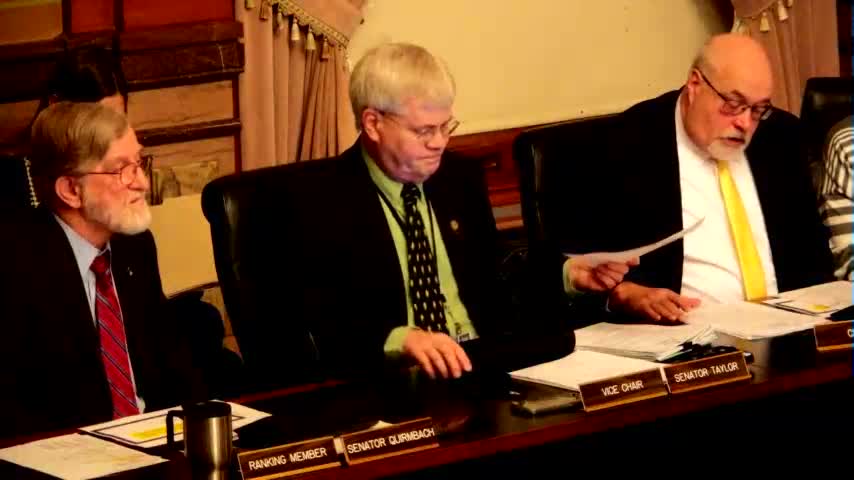
Senate Study Bill 1053, advancing K‑12 funding parameters for fiscal year 2026, was passed out of the Iowa Senate Education Committee after extended debate and a roll‑call vote.
Sponsor Senator Evans said the bill would set the regular and categorical state percent of growth for FY26 at 2 percent, continue property tax replacement payments associated with the educational savings account (referred to in committee as SSA), and provide $5.7 billion in state‑local funding for public K‑12 students. Evans laid out specific increases in categorical funding and property tax replacement payments: categorical funding of $747.5 million (an increase of $59.3 million from the prior fiscal year) and $136.7 million in property tax replacement payments (an increase of $9.9 million compared to FY25), according to his remarks in committee.
Opponents, including Senator Kornbach, argued 2 percent is inadequate to meet inflation and that the state is falling behind. Kornbach cited committee materials stating regular program students were about $822 behind eight years ago in purchasing power and that the neediest special‑education students were about $3,235 behind; he said the state would have needed roughly 9 percent this year alone to keep up with inflation and a larger multi‑year increase to maintain purchasing power. Several senators warned that with 2 percent allowable growth nearly half of school districts would need to seek additional local property tax dollars via the budget‑guarantee process; Senator Donahue and others said a higher percent (5–6 percent) would reduce the number of districts requiring local levies.
Committee debate also contrasted growth for public schools with expansion of educational savings accounts (described in debate as removing income caps), which opponents said would shift $100 million toward families already able to afford private education.
A roll‑call vote was requested. The committee recorded 11 ayes and 5 nays and advanced the bill to the calendar under Rule 40.
Sponsor Evans said he would present further details on the floor; opponents said they would continue to press for higher growth rates.