Get Full Government Meeting Transcripts, Videos, & Alerts Forever!
Get email alerts on the Water Infrastructure topic
No spam. Unsubscribe anytime.
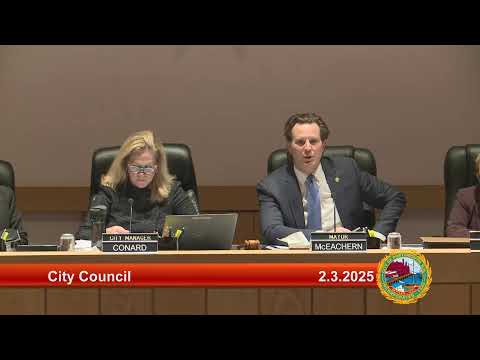
Council approves state revolving fund loan participation to inventory service lines, help residents replace galvanized pipes
Summary
Portsmouth authorized participation in a Drinking Water State Revolving Fund loan of up to $3.5 million, with 71% principal forgiveness, to complete a service-line material inventory and subsidize replacement of privately owned galvanized service lines.
The Portsmouth City Council on Feb. 3 authorized the city to participate in a Drinking Water State Revolving Fund (DWSRF) loan of up to $3.5 million, using principal forgiveness to encourage homeowners to replace galvanized service lines and to fund the city's inventory work required by EPA rules.
Lede: The council voted to accept participation in a DWSRF program offering 71% principal forgiveness on eligible costs, a one-time opportunity the city will use to complete service-line material inventories and offer heavily subsidized replacements for privately owned galvanized service lines.
Nut graf: The approval follows a presentation by Water Resource Manager Al Pratt explaining regulatory drivers (the EPA's revised Lead and Copper Rule), the extent of Portsmouth's known service-line inventory and the plan to use loan forgiveness as an incentive for customers to replace risk-bearing galvanized lines.
Body: Pratt told the council the EPA rule requires identification of materials for all service lines, defined as the pipe from the water main to a building. The city has identified the inbound piping inside buildings and currently knows the material for about 93% of the private side (from the property boundary to the house). The more difficult segment is the public side (water main to property boundary); Pratt estimated roughly 2,400 of those services remain unknown and would require small excavations to identify materials.
Pratt said the city already knows of 137 privately owned galvanized service lines; galvanized pipes can contain lead where old lead connectors were used and can corrode, reducing pressure. The DWSRF offer includes 71% principal forgiveness; Pratt said passing that forgiveness on to customers would mean those homeowners would pay roughly 29% of replacement costs. Payment on the loan likely would not begin until about six years after the loan is granted.
Councilors asked how the debt would be serviced and how identification and replacement obligations work after excavation. Pratt said costs would be allocated to the water/sewer enterprise funds, payment would be on the 29% share the city finances, and the regulatory obligation after inventory is primarily documentation and replacement of any lead or city-owned galvanized lines.
Action and vote: Councilor Denton moved to authorize participation in the DWSRF loan program up to $3.5 million with 71% principal forgiveness; the motion was seconded and passed in a roll-call vote with all councilors voting yes.
Ending: Pratt said the DPW will post program details on the city website, run direct outreach to identified customers and administer the replacement program. Councilors described the funding as a "one-time opportunity" to address aging infrastructure while reducing homeowner cost barriers.