Get Full Government Meeting Transcripts, Videos, & Alerts Forever!
Get email alerts on the Ag Land Conservation topic
No spam. Unsubscribe anytime.
Farm Bureau, state officials ask committee for $25 million to expand conservation easements for Utah farmland
Summary
Utah Farm Bureau and the Department of Agriculture and Food told legislators the state is losing farmland rapidly and asked the appropriations subcommittee to fund conservation easements with a $25 million request to leverage federal, local and private matching funds.
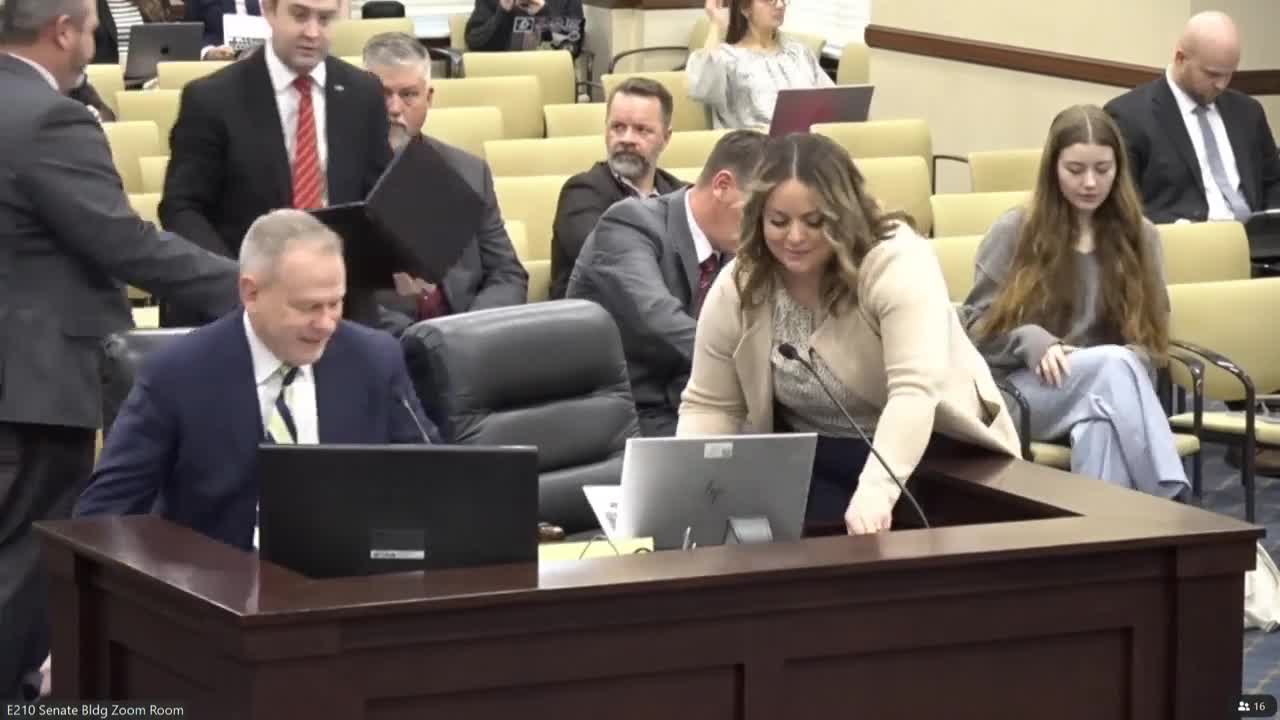
Representative Doug Owens introduced a request to the Natural Resources, Agriculture and Environmental Quality Appropriations Subcommittee seeking $25 million for agricultural land conservation, saying Utah’s agricultural heritage is threatened by rapid population growth.
Terry Camp, representing the Utah Farm Bureau, told the committee conservation easements let landowners receive capital while keeping farmland in agricultural use, that easements are customizable to protect property rights, and that Utah has lost about 2.7 million acres of farmland (roughly 20 percent) since 1960. He said owner/operator farmers are aging and that farmlands will transfer hands over the coming decades; conservation easements can create retirement capital while keeping agricultural use intact for future generations.
“Conservation easements are really a way to access capital while continuing to farm,” Camp said. He emphasized the program’s role in keeping farms available to the next generation and asked the committee to prioritize funding beyond the $1 million ongoing the program received last year.
Jim Bocut, director of the Conservation Division at the Utah Department of Agriculture and Food, told the committee the department received $1 million of ongoing funding for the LeRoy McAllister Working Farm and Ranch program last year and used that appropriation to help complete six easements covering 5,700 acres in 2024. Bocut said matching funds are often the bottleneck: some easements require 50% matches and land trusts and the department have easements on the books that need additional funding to complete. He estimated departmental need at $30–$40 million for pending easements and said land trusts reported gaps of $50–$100 million in matching funds for easements on their lists.
Bocut characterized the $25 million request as leverage to pull in federal and local matching money, county bonds, NRCS funds and other sources. He said the department currently has 22 landowners and 25 easement projects in its queue and that projects are commonly four years out under current funding levels.
Questions from committee members focused on eligibility limitations for easements, the need to tailor easements to specific landowner circumstances, and the legal review process: Bocut said easements are reviewed by land trust attorneys and by the state attorney general to protect both program intent and landowner interests.
No committee vote on the $25 million request was recorded in the transcript; the request was presented and discussed for committee consideration.
Why it matters: Witnesses told the committee conservation easements are one of the few tools that let farmers monetize development rights while keeping land in agricultural production, leveraging state dollars to pull in matching funds and preserving local food production and rural economies. Bocut stressed that completing easements is a long‑running funding challenge and that state funds often unlock additional outside dollars.
Next steps: The department and Farm Bureau asked the committee to consider the $25 million appropriation to accelerate easement completion and to reduce a growing backlog of pending projects.