Get Full Government Meeting Transcripts, Videos, & Alerts Forever!
Get email alerts on the Lead Service Lines topic
No spam. Unsubscribe anytime.
Council postpones vote on bill change to allow federal lead-service-line grants for private utility
Summary
After more than an hour of debate, the Superior Common Council voted 9–1 to postpone a resolution that would support a change in Wisconsin law to let federal capitalization grants be used for lead-service-line replacement involving the city's privately owned utility.
Councilor Johnson urged the council to back a state-law change to allow federal capitalization grants to pay for replacing lead service lines connected to Superior's privately owned utility, but the council voted 9'to'1 to postpone the resolution to the next regular meeting.
The resolution sought the council's support for "an act to amend 281.612 RE of the Wisconsin state statutes" (as listed on the meeting agenda) so that grants and principal loan forgiveness from the Drinking Water State Revolving Fund (DWSRF) could be used in Superior even though the local water system is privately owned. Proponents said the change would unlock federal and state funding to reduce homeowners' out'of'pocket costs for service'line replacement; opponents warned the language could direct public dollars to a private, for'profit utility without sufficient guardrails.
Why it matters: Superior is the only community in Wisconsin served by a privately owned water utility, Superior Water, Light and Power (SWL&P). Council members said the issue affects public health, household expenses and long'term utility costs for city residents. Several councilors framed the vote as a choice between accelerating replacement of lead service lines now through available grants and studying longer'term options such as municipal acquisition of the utility.
Proponents' case
Councilor Johnson, one of the resolution's sponsors, said the amendment would remove a barrier to federal and state fund access and provide immediate financial relief to homeowners. "We know the problem. We have the fix and the means to fix it," Johnson said, adding that principal loan forgiveness through the DWSRF could cut homeowner costs and that some projects might qualify for 75% or greater forgiveness, depending on DNR determinations.
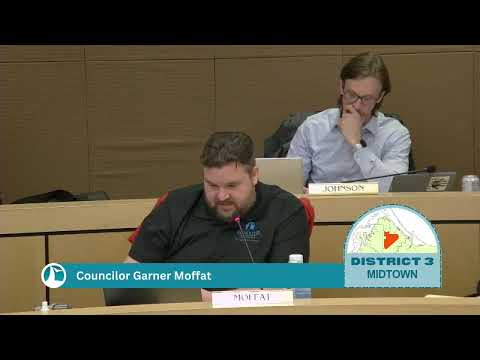
Councilor Moffett outlined the public-health case at length, citing studies and historical context and asserting "there's no known safe blood lead concentration," arguing lead exposure is especially harmful to children and women of childbearing age.
Concerns and objections
Several councilors urged caution. Councilor Lutman and others said the resolution was premature on the council floor because important implementation details (how grant dollars would be directed, whether funds would primarily benefit homeowners or be spent by a private utility, and the timeline) remained unresolved. Councilor Fennessy called the measure "a one'sentence change" but said that could have broad, unintended consequences and argued the matter should stay with the Public Works Committee where staff and councilors have been studying options.
Mayor Payne and other councilors warned that if the statutory change sent public money to a for'profit utility, the city could face higher acquisition costs later if it chose to buy the system. Several speakers noted uncertainty about how much federal funding would actually be available and that many grant and forgiveness decisions are made by state agencies (the DNR) and federal programs.
Outcome and next steps
Councilor Johnson moved, and Councilor Fennessy seconded, a motion to postpone the resolution to the next regular council meeting; the motion passed on a recorded roll call, 9'to'1 (Councilor Moffett voted no). The council announced the next regular meeting as Wednesday, Feb. 19, 2025 (moved because of the primary election). Supporters of the resolution said they would use the additional time to provide more detail about grant mechanics and likely impacts; opponents said they expected committee review and further vetting before any endorsement of legislative language.
Quotes (selected)
"There's no known safe blood lead concentration," Councilor Moffett said in outlining health risks.
"We know the problem. We have the fix and the means to fix it," Councilor Johnson said, urging support for the statutory change.
"I recommend voting this down and allowing the conversation about how we will replace lead lines to continue in the public works committee and allowing the conversation about how the utility will be regulated by the state to continue in the legislature where it belongs," Mayor Payne said in urging deliberation and oversight.
Ending
Council members who favored the resolution said they would continue legislative outreach and provide additional information to colleagues before the postponed vote. The council recorded broad agreement that lead service lines are an important public'health issue, but members differed on whether the proposed statutory change is the correct or safe route for channeling grant funds to accomplish replacements.