Fairbanks school board approves closure of three elementary schools after heated public testimony
Loading...
Summary
The Fairbanks North Star Borough School District school board voted Feb. 4 to close Midnight Sun, Pearl Creek and 2 Rivers elementary schools at the end of the 2024–25 school year after hours of public testimony and a series of amendments that left Hunter and Saltcha off the final closure list.
The Fairbanks North Star Borough School District school board voted Wednesday to close Midnight Sun, Pearl Creek and 2 Rivers elementary schools at the end of the 2024–25 school year, following hours of public testimony and a series of amendments that left Hunter and Saltcha off the final closure list.
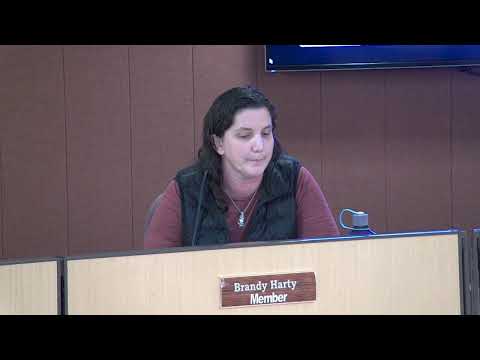
The board approved the final consolidation motion in a roll-call vote after extended discussion. The meeting record shows board members Miss Charlie (yes), Allen (yes), Carol Hubbard (yes), Mr. Doran (no), Ms. Hardy (no), Miss Maple (yes), Mr. Burgess (yes), Miss Julian (yes) and President Burnett (yes) among those recorded on the final roll call; the motion was carried.
The vote followed a packed public-comment period in which parents, students, teachers and community members urged the board either to keep neighborhood schools open or to adopt alternative models such as magnet or STEAM-focused options. Speakers who testified against closures included Chelsea Davis, coordinator at 2 Rivers; Christina Turman and other Pearl Creek advocates; and multiple Barnett students who described the disruption consolidation would cause to their school communities. Eric Schoen, a fisheries biologist and parent, described multi‑year community science partnerships tied to Pearl Creek, saying the relationships would be hard to relocate.
“Closing these 5 schools and making massive disruptions will only make [the district] weaker,” Chelsea Davis said in testimony recorded in the meeting transcript. Student speakers also appealed directly to the board: “They hold a special place in our community and are worth fighting for,” Pearl Creek student Jackson Redmond told the board.
Superintendent Dr. Mike Meinert told the board earlier in the meeting that if the board adopted consolidations, the administration would support the transitions, develop redistricting maps and provide opportunities for community input on new attendance areas. “After the board's vote tonight and if they choose to consolidate schools, my administration will fully support the decision that is made and immediately begin working with school communities to support smooth transitions for our students, families, and staff,” Meinert said (meeting transcript).
Budget context and alternatives
Board and public remarks repeatedly tied the consolidation discussion to the district’s long-term budget shortfall and falling enrollment. Speakers and board members cited different budget figures during debate: some members and public commenters referenced a district deficit in the low‑ to mid‑millions (figures cited in testimony and board discussion included $6 million, $7.7 million, and $16 million at different points in the meeting). The transcript records testimony from Susanna Westhoff and others about the district’s audited financial statements; Westhoff noted the district’s equity ratio and changes in net position between 2023 and 2024.
District staff presented a “reduced model” cost estimate for maintaining a very small rural school in place instead of fully consolidating it. Deputy finance staffer Mr. DeGraw estimated that a reduced operating model for 2 Rivers (three instructional positions including one head teacher, one full‑time custodian, a nutrition services position, plus utilities and a small activities budget) would cost roughly $600,000 and that the full consolidation model would save about $1.1 million (DeGraw, meeting transcript). DeGraw told the board that a reduced model would therefore reduce the district’s realized savings by about $500,000 compared with outright closure.
Amendments and procedural steps
- The board considered an initial motion to close five elementary schools: Hunter, Midnight Sun, Pearl Creek, Saltcha and 2 Rivers at the end of the 2024–25 school year. - An amendment to remove Hunter from the closure list (moved on the record by board member Miss Julian) carried, so Hunter was taken off the list. - An amendment to remove Pearl Creek from the list failed at a subsequent vote. - The board adopted an amendment (moved by Mr. Burgess) to remove Saltcha from the closure list but to explore a reduced operating model for that site; that amendment passed. - A motion to remove 2 Rivers from the closure list (and related attempts to attach a reduced model) did not pass. The final vote approved closure of Midnight Sun, Pearl Creek and 2 Rivers.
What the board approved and next steps
- Outcome: The board approved the closure of Midnight Sun Elementary, Pearl Creek Elementary and 2 Rivers Elementary at the end of the 2024–25 school year. - Schools removed from the closure list during the meeting: Hunter Elementary (amendment) and Saltcha Elementary (amendment to explore a reduced operating model and further budget discussion).
Board members emphasized timing and operational needs during debate. Superintendent Meinert and staff cautioned that delaying a final decision would impede planning and recruitment for the next school year; Meinert noted earlier that delayed recruitment had left the district short staffed in prior years. The administration said it would immediately begin planning transitions, including development of redistricting maps and supports for students and staff in impacted schools.
Community reaction and next steps
Speakers urged the board to pursue alternative revenue or programmatic options, including magnet/STEAM designations, grants and deeper community partnerships; Pearl Creek advocates described a ground‑up effort to develop a STEAM magnet that they said could bring additional grant revenue and enrollments. Multiple speakers said closures would damage small, rural communities and reduce access to place‑based outdoor learning that local families value.
Board members and district staff said they will continue planning work on redistricting, student supports and repurposing of affected buildings; the board asked staff to return with budget and program details to implement the decisions.
Ending
The decision ends a public process that included multiple work sessions, community meetings and more than an hour of public testimony at the February 4 board meeting. Board members said the choices were painful but argued the board must act given declining enrollment and constrained revenue. Community members said they would press state and borough elected officials for long‑term funding changes.