Get Full Government Meeting Transcripts, Videos, & Alerts Forever!
Get email alerts on the Special Education topic
No spam. Unsubscribe anytime.
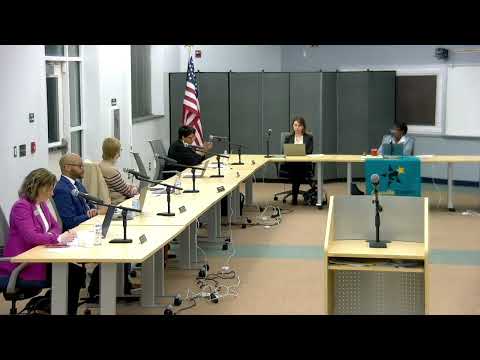
Granville County schools review special-education funding, services and staffing amid proposed state changes
Summary
District officials reviewed how federal and proposed state funding changes would affect the Exceptional Children’s (EC) program, explained services and counts used for funding, and outlined steps the district is taking on staffing, behavior supports and parent surveys.
Dr. Suzanne Cotterman, who led an update to the Granville County Public Schools board, summarized how the district provides services to students with disabilities and warned about a pending change to how state funding is calculated.
Cotterman said federal law under the Individuals with Disabilities Education Act (IDEA) drives EC services and that Granville serves children from age 3 through age 22. She described a full continuum of services — from home-based instruction for medically fragile students to specialized instruction within general education classrooms. “Parents are a very important member of that IEP team,” Cotterman said.
The EC director told the board that historically the district produced two “child counts” used for funding — a federal count on Dec. 1 and a state count on April 1 — but the Department of Public Instruction (DPI) has proposed funding-model changes. For the current year DPI counted only Dec. 1, and Cotterman said DPI’s proposal would move to a single December count and distribute funds based on the educational environment, frequency and intensity of services, and who provides supports instead of the present ADM-based formula.
Cotterman said DPI’s model would allow contracted services to be recognized and that central office costs would not be funded in the new model. She cautioned the district that the change likely redistributes existing funding rather than adding new dollars.
On compliance and practice, Cotterman said the district has focused on targeted professional development for EC teacher leaders, new teachers and general-education staff, and has instituted school-level EC compliance audits using DPI forms to identify trends such as least-restrictive-environment placement. She also described work on extended-content standards (for students who receive a certificate of completion rather than a diploma) and said the district is emphasizing curriculum and coaching for teachers in those programs.
Behavior and disproportionality also drew attention. Cotterman said the district is on a state “warning list” related to suspensions of students with disabilities exceeding 10 cumulative days and described steps to reduce long suspensions: earlier intervention, functional behavioral assessments, behavior intervention plans, and expanded crisis-prevention training (CPI) and coaching. She said the district repurposed a program specialist role specifically to address behavior supports.
Cotterman noted that the state has issued a revamped Indicator 8 parent-survey process (three simple questions), and the district has already begun promoting the DPI dashboard to solicit parent responses. She said Granville was ahead of many districts in early response counts.
Board members asked about the status of certified staff working with EC students; Cotterman said there was one substitute in EC classrooms at the time of the presentation but emphasized school-level teacher-leaders and supervisory arrangements to support less-experienced staff.
She closed by urging continued monitoring of the legislative proposals and said the district would notify the board as the DPI recommendations become final.
The board did not take formal action on the EC funding proposal during the meeting; the presentation served as an informational update and a request for continued attention to staffing and behavior interventions.