Get Full Government Meeting Transcripts, Videos, & Alerts Forever!
Get email alerts on the Children Mental Health Rtc Licensure topic
No spam. Unsubscribe anytime.
Senate committee hears bill to create residential treatment center license for children’s mental health
Summary
Lawmakers and providers told the Senate Public Health Committee a new residential treatment center (RTC) license would fill a gap between psychiatric residential treatment facilities and therapeutic group homes and could increase insurance reimbursement for in‑state care; state officials warned Medicaid payment is constrained by federal rules.
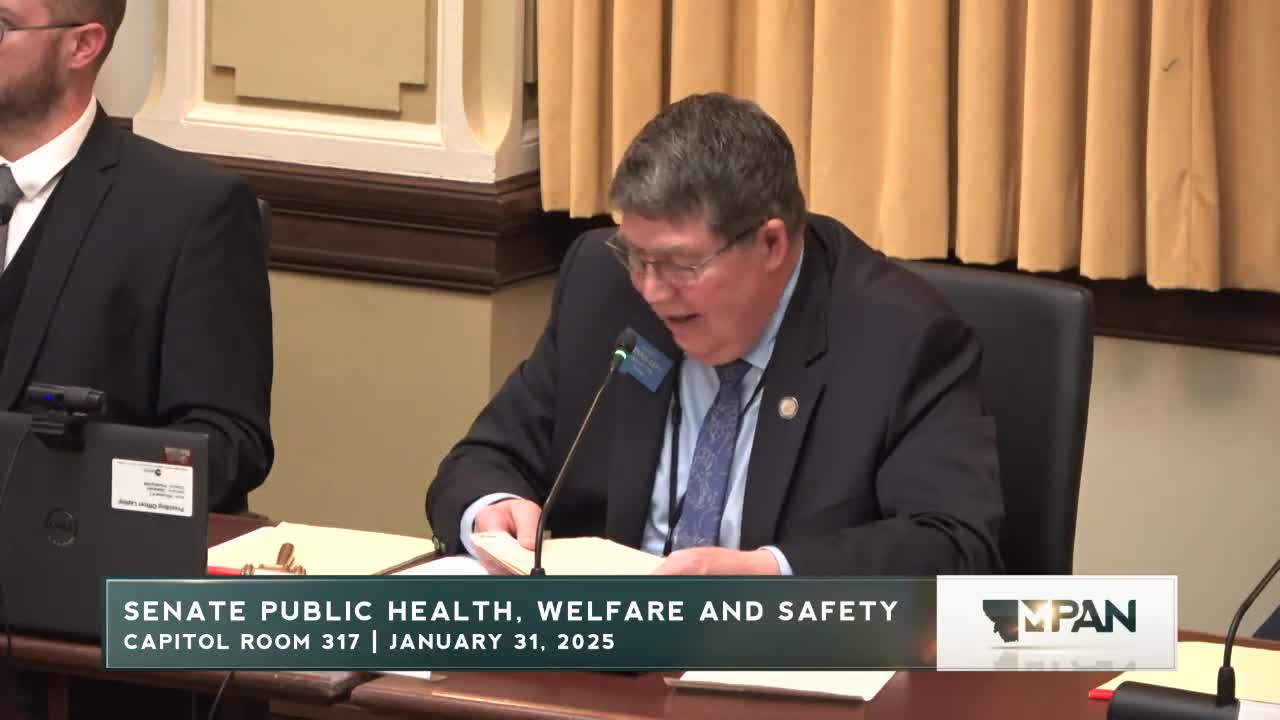
Senator Cuff presented Senate Bill 191 to the Senate Public Health, Welfare and Safety Committee on Jan. 31, 2025, proposing a new health care facility license called a residential treatment center, or RTC, for children who need residential mental‑health services but do not require the most acute psychiatric care.
The bill’s sponsor said the RTC license is intended to ‘‘fill an unmet need for our children’s mental health system’’ by creating a middle level of care between psychiatric residential treatment facilities (PRTFs) and therapeutic group homes. Proponents from Turning Winds and former state licensure staff said the new license would let more families use private insurance for in‑state residential care.
Turning Winds CEO Owen Basden said his Lincoln County facility treats adolescents who ‘‘do not require full time psychiatric care’’ and that the new license would let providers offer counseling, medication management, substance‑use treatment and nursing services in a residential, campus‑style setting. ‘‘By creating this new health care facility license, more doors will be opened, allowing treatment providers in the state to meet the demand and the needs of struggling Montana families who need to utilize their insurance benefits to get the treatment that their loved ones need,’’ Basden said.
Julie Fink, a former licensure manager in the Office of Inspector General, told the committee Montana currently has three therapeutic levels: acute psychiatric hospitals, psychiatric residential treatment facilities and therapeutic group homes. She said therapeutic group homes are typically funded through Medicaid and state placements and are not usually reimbursed by commercial insurers because they are licensed under youth care statutes rather than health care facility rules.
Department of Public Health and Human Services (DPHHS) division administrator Megan Peel told senators the department expects the bill would give DPHHS authority to adopt rules and that, in the department’s view, RTC standards could be set ‘‘higher than those of our therapeutic group home level’’ to address concerns about child safety. Peel also noted a federal Medicaid rule called the IMD (Institution for Mental Disease) exclusion generally prohibits Medicaid payment for residential programs with more than 16 beds, an exception exists for PRTFs, and most currently licensed Montana programs that could fit the proposed RTC level exceed that 16‑bed size and therefore ‘‘wouldn’t qualify for Medicaid payment anyway.’’
Proponents said the primary practical benefit would be increased access to insurance reimbursement from private carriers that do not consistently reimburse the existing alternative adolescent residential or outdoor program licenses. Charles Denow (Turning Winds) told the committee that some insurers will reimburse under the facility’s current license while others will not, and that forcing providers to seek the PRTF license raises costs and regulatory burdens beyond what is appropriate for lower‑acuity youth.
Committee members asked about accountability and oversight. Senator Smith asked whether the RTC licensure would provide less protection for children than existing regulation; Peel answered that the bill delegates rulemaking to DPHHS and that the department would expect to set robust standards. Senator Windy Boy asked about the fiscal note and whether the new license would be added to Medicaid rules; Peel said the bill as written does not require Montana Medicaid to pay for RTC services and that the fiscal note assumes no significant fiscal impact because the department expects only a small number of providers would seek the new license.
Senator Cuff closed by describing his familiarity with a specific Turning Winds facility in his district and by urging the committee to move the bill forward.
The hearing produced informational testimony from the Office of Inspector General licensure staff and DPHHS behavioral health staff; no committee action or vote was recorded during the hearing.