Get Full Government Meeting Transcripts, Videos, & Alerts Forever!
Get email alerts on the Youth And Mental Health topic
No spam. Unsubscribe anytime.
Waterloo leaders swear in 28-member Youth City Council; members highlight mental-health advocacy and ask for city support
Summary
The Waterloo City Council swore in a 28-member Waterloo Youth City Council that described seven years of activity, statewide advocacy on House File 602, upcoming suicide-prevention training and a request for regular city funding.
The Waterloo City Council on Feb. 3 swore in 28 students as the Waterloo Youth City Council and heard leaders outline the group's work on youth mental-health outreach and advocacy.
The students and their advisers described the council as a seven-year mayoral initiative that represents four area high schools and works on committees, bylaws, volunteer opportunities, scholarships and public education. Carol Luce, who introduced the students as “your Waterloo Youth City Council,” said the group is made up of 28 students from four area high schools and represents the city’s diverse school population.
Luce said the council selected youth mental health as a focus after the COVID-19 pandemic and that members worked for two years to advocate for House File 602, which she said passed and now places information for Your Life Iowa on the back of every high school student ID card. Luce said the program has led to about 3,000 contacts last year and that the bill “helps over 500,000 youth” across the state.
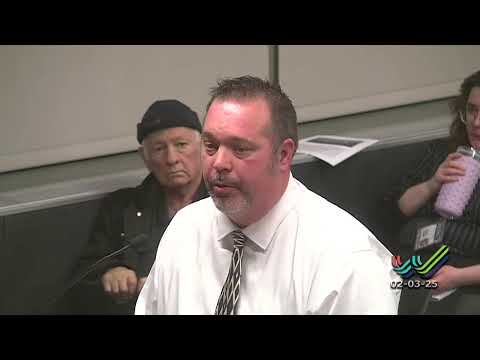
Ritter, a youth council member who addressed the council, said he has served three years on the youth council and reiterated the group’s activities, including taking delegations to Washington, D.C., and presenting at a national mental-health summit. He and Luce invited council members and city staff to attend a QPR (Question, Persuade, Refer) suicide-prevention training led by the students on Feb. 28 from 11:30 a.m. to 1 p.m. at the Waterloo Center for the Arts.
Why it matters: The council framed the Youth City Council as an ongoing local program that both trains student leaders and conducts advocacy with state officials. Luce explicitly requested “some sort of financial support from the city,” saying the group receives mainly in-kind support and grant funding and that stable city funding would help sustain the program.
Council response and next steps: Mayor Hart presided over the swearing-in and several council members and staff congratulated the students. Council members noted the size of this year’s cohort and discussed informal offers of help (photography/headshots and outreach). No formal appropriation or motion to fund the youth council was made at the meeting.
Context and background: Luce said the youth council has been active for seven years, has trained more than 75 people in suicide-prevention techniques, and has taken delegations to advocacy events and conferences, including Washington, D.C., and Las Vegas. The group said its marketing committee uses Facebook, Instagram and TikTok and that it will for the first time review scholarship applications for a local award through the Waterloo Community Foundation.
The city council session that included the swearing-in also continued with scheduled business; Luce’s request for direct city funding was recorded as a public plea rather than an agenda item or formal funding request.
Ending: The Youth City Council will host the QPR training Feb. 28 at the Waterloo Center for the Arts; Luce and Ritter asked council members, first responders and community members to attend. No formal city action on funding was taken during the Feb. 3 meeting.