Get Full Government Meeting Transcripts, Videos, & Alerts Forever!
Get email alerts on the Labor And Employment topic
No spam. Unsubscribe anytime.
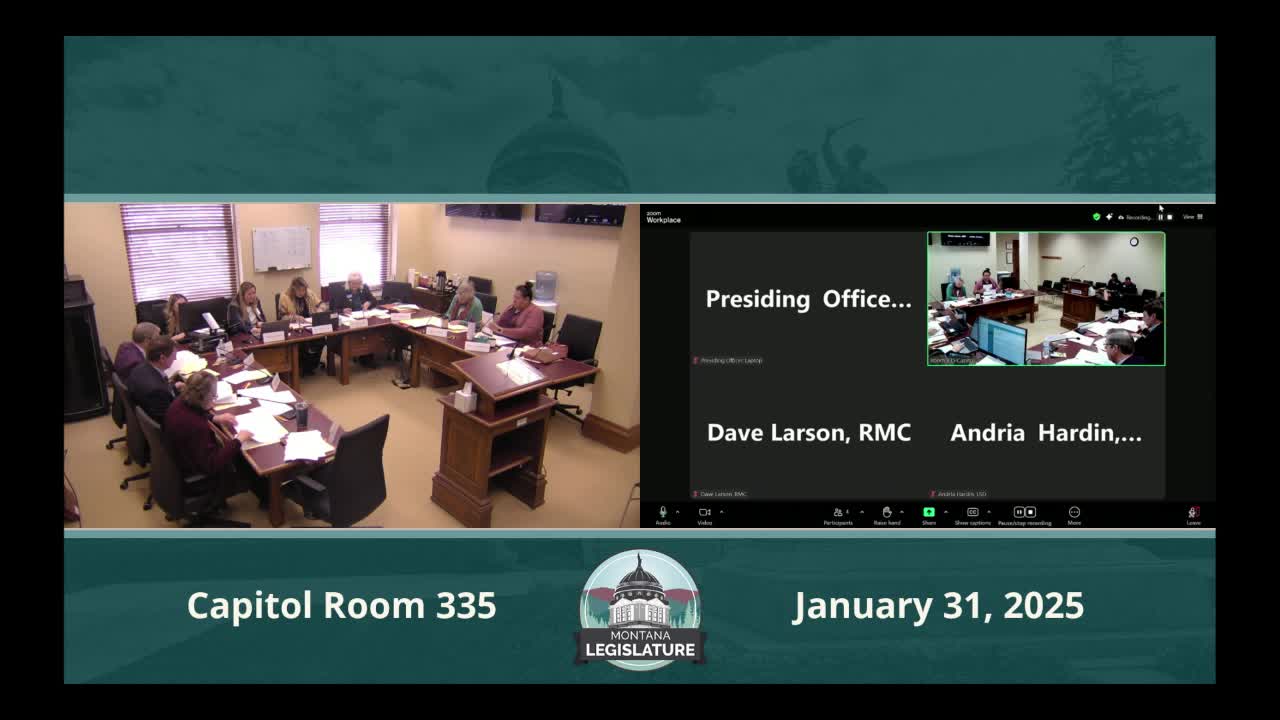
Committee amends SB 94 to define "labor organization activities" and carve public safety exception amid debate
Summary
Senate Bill 94, which limits use of public funds for labor organization activities, was amended twice and passed 5–4 amid debate about definitions, pay, and an exemption for public safety employees; members raised constitutional and practical concerns.
The Senate committee approved Senate Bill 94 as amended after two separate amendments and a contentious debate over definitions, pay protections and a carve‑out for public safety employees.
Miss Harden, committee staff, summarized amendment SB0094.001.001 as replacing the term "representational activities" with "labor organization activities" for consistency and adding reporting requirements so employers can be reimbursed for employee time engaged in labor organization activities. She said the amendment also reorganizes the statutory definition and explicitly lists activities that are not included.
Senator Ellis opposed the amendment, arguing it could disrupt collective bargaining and describing some language as unrealistic: "Often, people that are working these individuals are part of a collective bargaining. They would probably be paid overtime for this activity, and it sorta exempts them. So it messes with the collective bargaining piece," he said.
A later amendment, SB0094.001.002, created an exception to preserve "the uninterrupted delivery of critical government services necessary to protect life, property, and public order" and listed categories of public safety employees the drafters intended to exempt. Committee members questioned the breadth of that carve‑out. Senator McCamey and others warned the list could grow to include many positions that perform similar duties; Senator Ellis and Miss Harden flagged potential equal‑protection issues in creating a new class of public employees.
The committee adopted a substitute motion to remove language that would have exempted "any public employee whose duties are substantially similar" to the listed public safety roles. The amended amendment passed on a recorded voice/roll mix and, later, SB 94 as amended twice passed the committee on a roll call with 5 yes and 4 no votes.
Committee discussion repeatedly returned to questions about operational details: whether employees could be paid while engaging in labor organization activities, how informal versus formal conferring is treated in the definition, and whether local volunteer substitutions or reimbursement mechanisms would be feasible.
Miss Harden advised the committee that some parts of the statute were unclear and that the amendments were intended to provide consistency and reporting mechanisms rather than an exhaustive rewrite.