Get Full Government Meeting Transcripts, Videos, & Alerts Forever!
Get email alerts on the Transportation Bike Lanes topic
No spam. Unsubscribe anytime.
San Mateo council directs staff to pursue partial Humboldt parking restoration and lighting after months of bike-lane debate
Summary
After hours of public comment and staff analysis, the San Mateo City Council asked staff to further study a partial restoration of parking on Humboldt Street coupled with targeted lighting upgrades and a pilot bike-boulevard on parallel streets before removing bike lanes citywide.
The San Mateo City Council asked staff Feb. 3 to pursue a structured engagement and funding plan to pilot a partial parking restoration on Humboldt Street while pursuing targeted street-light upgrades, after a months-long dispute over the North Central bike lanes.
City engineer-manager Jay Yu presented the post-installation review for the North Central Bike Lanes project, noting that the Humboldt segment removed about 170 parking spaces when the Class 2 bike lanes were installed. Yu said staff examined collision and usage counts, community feedback from a December 2024 workshop and several mitigation options, including leasing nearby lots, a residential parking permit program and various bike-boulevard designs.
"If we want to hit the targets of 20 to 25 miles per hour," Yu said of a bicycle-boulevard conversion, "it would require significant hardscape improvements," and he estimated capital costs as high as $3 million for a full conversion with comprehensive traffic-calming infrastructure.
The project timeline and staff presentation showed mixed results: 66 community surveys at a Dec. 4 workshop reported that Humboldt residents felt the facility had a negative impact largely because of parking loss, while other North Central residents and non-local respondents were more favorable. Counts collected at eight intersections during peak hours showed bicyclists use Humboldt but at modest volumes; staff cautioned counts were not unique-rider data and that pre/post collision comparisons are limited by small sample sizes and pandemic-era travel shifts.
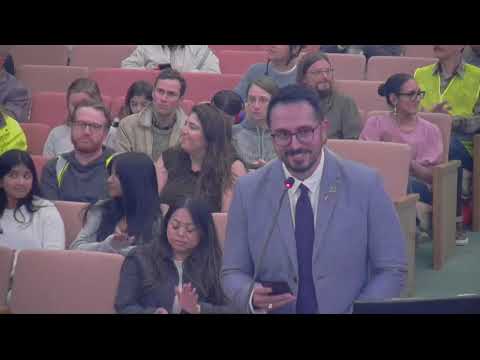
Public comment was extensive and sharply divided. Dozens of speakers urged the council either to keep the protected lanes, saying they provided safe routes for students and families, or to restore parking for residents who say they face nightly shortages. "The Humboldt bike lanes have made traversing the city far better and safer," said Colin Madere, a longtime resident and commuter. "Please do not take away these bike lanes." By contrast, resident Vanessa Lemostapia asked the council to "pass a vote of no confidence" in county leadership on an unrelated subject earlier in the meeting and later urged that neighborhood parking be restored; other neighbors described cars parked on lawns and difficulties with evening visitors.
After deliberations, three council members signaled support for a compromise path staff labeled Alternative 3: a partial removal of bike lanes on Humboldt between Indian and Second that would restore roughly 100 parking spaces (about 60% of parking previously removed) and pilot a bike boulevard on a nearby parallel street (Idaho or Fremont) with traffic-calming measures and community input. Council members also directed staff to pursue Alternative 5: prioritized lighting upgrades for selected streets as an add-on. Council members who opposed full or partial removal said they would rather keep the existing lanes and invest in parking mitigation and enforcement.
Council did not adopt any ordinance or vote to remove lanes at the Feb. 3 meeting. Instead, staff were directed to return with community engagement results, a funding plan, and pilot designs; council members asked that pilots be in place and evaluated before any permanent removal of Humboldt’s bike lanes. Yu said staff would present a detailed funding and implementation proposal at a later meeting.
Cost estimates Yu presented included about $850,000 to remove the entire Humboldt installation and restripe the corridor, roughly $2.2 million for bike-boulevard speed-calming infrastructure (all-in about $3 million), and $620,000 for a targeted partial removal restoring roughly 100 spaces. Staff also estimated $20,000–$45,000 for lighting upgrades on candidate streets depending on scope.
The council directed staff to: engage affected residents and stakeholders through a formal outreach plan; pilot a bike-boulevard alternative on a nearby parallel street (with community buy-in before any removal on Humboldt); refine parking-mitigation options including potential residential-permit program parameters, leasing agreements, and enforcement approaches; and return with a funding plan and a recommended schedule before any permanent changes to existing lanes.
Planning staff noted caveats in the data: bicycle counts were collected during AM and PM peaks on single weekdays and were intersection-based (not unique riders), and collision data covered limited post-installation years compared with multiple pre-installation years. Staff recommended at least one pilot and additional traffic-calming design work before any substantial changes.
Council members also asked staff to prioritize a clear outreach program and to test street-lighting changes as a small pilot for neighborhood feedback.
Next steps: staff will return with refined pilot designs, outreach results and a funding plan before the council considers any decision to remove or permanently alter existing Humboldt bike lanes.