Get Full Government Meeting Transcripts, Videos, & Alerts Forever!
Get email alerts on the Housing Affordability topic
No spam. Unsubscribe anytime.
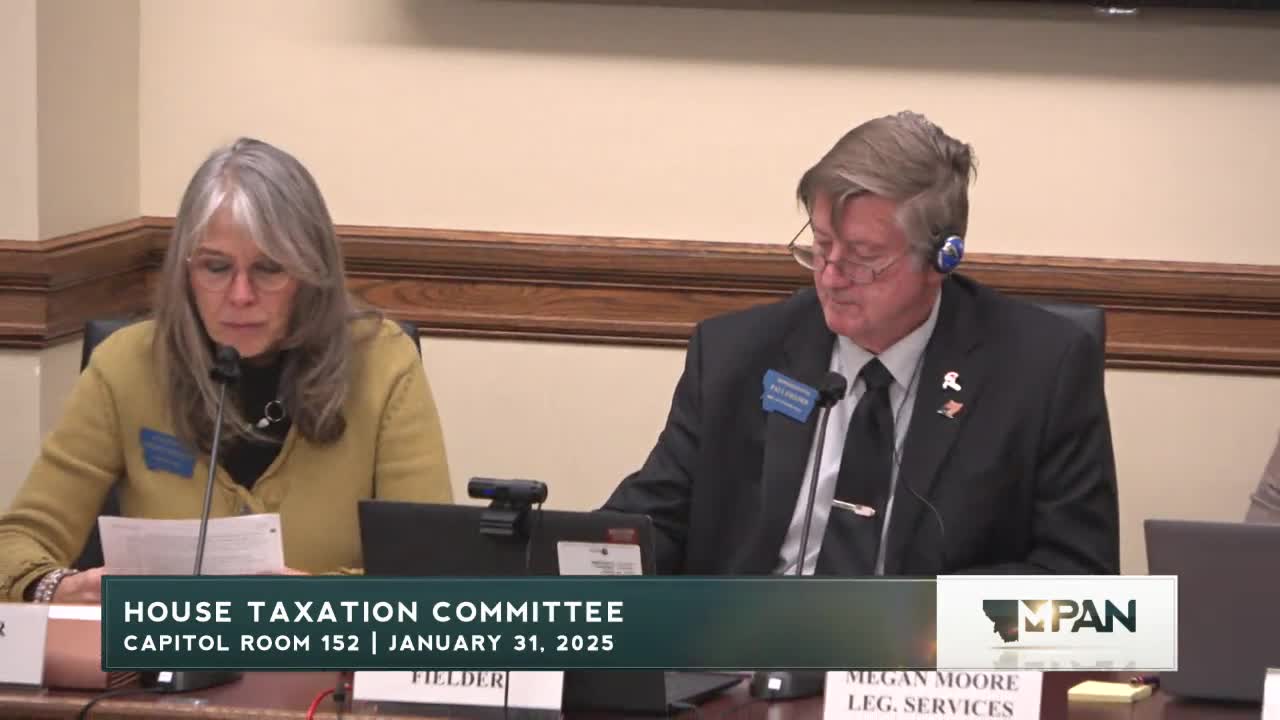
House committee hears bill to create tax credit for landlords who rent below market
Summary
Lawmakers heard testimony on House Bill 306, which would create a nonrefundable income tax credit for landlords who rent dwellings below county fair-market rent; fiscal and administrative questions about the credit amount, calculation and applicability to pass‑through entities were raised.
The House Taxation Committee heard testimony on House Bill 306, a proposal to create an income tax credit for property owners who rent dwellings below county fair‑market rent, Representative Denise Baum said. "This bill will provide an income tax credit for landlords renting dwellings below fair market rate," Baum said.
The bill would make a nonrefundable credit available to individual and corporate income taxpayers for tax years beginning after Dec. 31, 2025, Baum said. To qualify, a unit must be rented for at least $100 below 110% of the county fair‑market rent and meet housing quality standards set by HUD, the sponsor said. The bill defines dwelling to include single‑family homes, manufactured homes and units in multiunit dwellings and requires leases of at least one year; units already receiving rent reductions through other programs would be excluded.
Supporters told the committee the credit is intended as a targeted, near‑term tool to help renters while longer‑term supply strategies continue. Dr. Alan Noonan of Common Good Montana said the measure would help people who are priced out of local markets. "This is one tool that I think the committee can use," Noonan said. Several other proponents, including Susan Mason, Len Broberg and Lisa Dabey (Common Good Montana), described personal or community experiences with rapidly rising rents and said the credit could make modest immediate relief possible.
Opponents raised administrative and policy concerns. Alan Lloyd, executive director of the Montana Society of CPAs, said his group supports affordable housing but opposes creating new credits through the tax code. "Our opposition comes solely to doing it through the tax code," Lloyd said, adding that multiple, narrowly targeted credits complicate the system.
Department of Revenue staff answered committee questions about the fiscal note and administration. Finn McMichael of Tax Policy and Research told lawmakers the bill relies on HUD's fair‑market rent measure: "The definition is based on fair market rent, which is defined by HUD ... as the fortieth percentile of rent paid in a given area." McMichael and David Merrien (Bureau Chief, Audits and Pass‑Through, Department of Revenue) also explained a technical issue: current draft language could make the credit available against composite tax paid by pass‑through entities under Chapter 30; the department said that is atypical and clarification may be needed.
Committee members pressed the sponsor and revenue analysts on how the credit would be calculated and claimed. The department's fiscal note assumes an average per‑unit credit of roughly $300 and treats the credit as an annual amount (for budget projection purposes). Sponsor Baum and some committee members noted the bill text could be read to allow a monthly calculation; staff said that interpretation would change fiscal estimates significantly and asked for clarifying language.
The hearing closed with the sponsor saying the measure was intended as one tool among many to address housing affordability and that the interim review process could be used to assess the program if enacted.
Votes or formal action on House Bill 306 were not taken during this hearing.