Get Full Government Meeting Transcripts, Videos, & Alerts Forever!
Get email alerts on the Insurance Policy Discounts topic
No spam. Unsubscribe anytime.
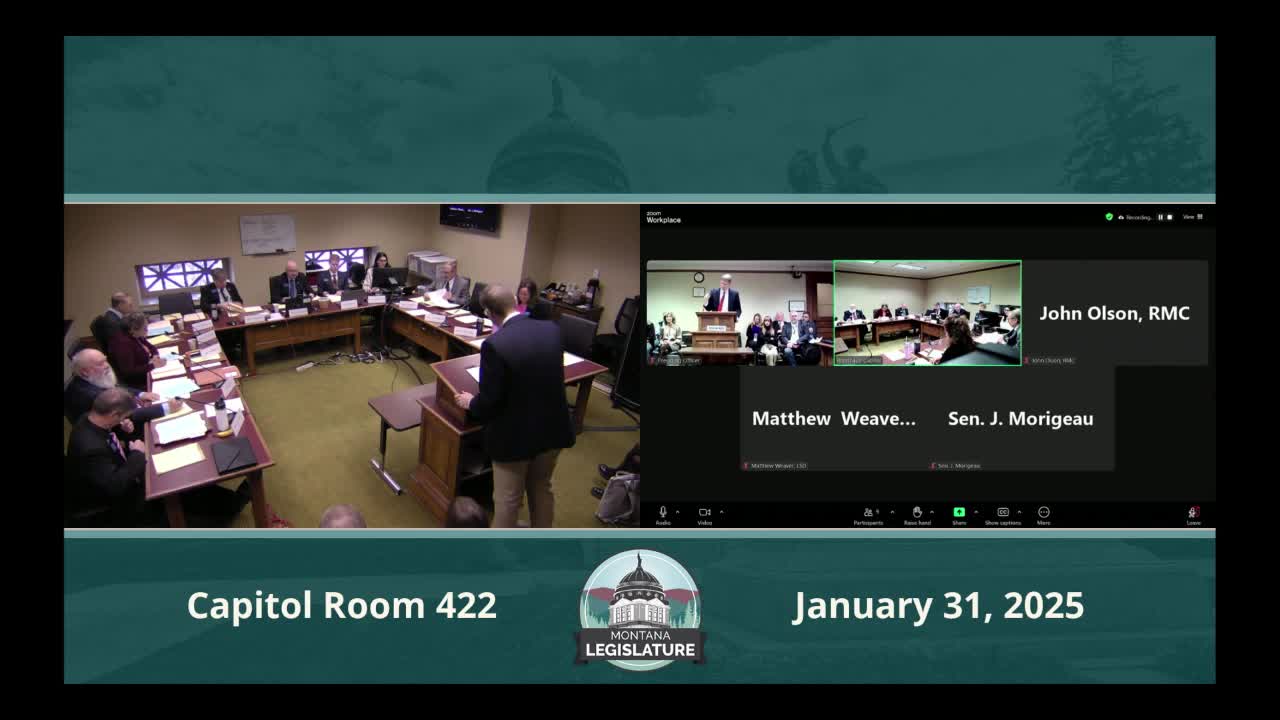
Committee hears bill to allow insurers to offer discounts for fire, wind and hail mitigation
Summary
House Majority Leader Steve Fitzpatrick presented House Bill 136 to the Senate Business and Labor Committee as a fix to allow insurers to offer premium reductions for homeowners who take documented steps to reduce fire, wind and hail risk.
House Majority Leader Steve Fitzpatrick, sponsor of House Bill 136, told the Senate Business and Labor Committee that the bill would revise state law so insurers can reduce premiums for customers who take validated risk-reduction steps.
"This revises laws related to insurance benefits related to risk reduction," Fitzpatrick said, describing the bill as intended to remove a barrier created by the state's rebating statute so carriers will feel comfortable offering discounts for measures such as defensible space, noncombustible building materials and improved water sources.
The bill drew support from the state insurance regulator and carriers. Frank Cote, deputy insurance commissioner, told lawmakers HB 136 would let insurers reward homeowners who reduce risk. "This is a way ... for people to not only take some responsibility in themselves, but also ... get an advantage from their carrier," Cote said, citing data he and regulators have seen on how specific home hardening steps can limit loss.
Bruce Spencer, representing Progressive Insurance Company, said private carriers are seeking actuarially supportable ways to adjust premiums and that HB 136 would allow insurers to more accurately rate risk. "There's really no such thing as a discount in insurance. What it is is an actuarially examined and proven lessening of risk to that policy," Spencer said.
Opponents who testified were largely building-code advocates and timber-industry interests. Sophie Morin of the American Wood Council said the bill's language is vague on what counts as "fire resistive or noncombustible building materials" and urged aligning the statute with the state's adopted International Wildland-Urban Interface Code so the mitigation measures would be clear, technically grounded and updated as codes evolve.
Shane Nellis, regional codes manager for the American Wood Council, and Paul McKenzie, a landowner from Columbia Falls, also recommended replacing the bill's broad materials list with explicit reference to the IWUIC. They argued that using an already-accepted code would reduce inconsistent insurer standards and help property owners and insurers know which measures qualify.
Committee members asked whether insurance companies would inspect properties or accept homeowner-submitted proof. Spencer and Cote said insurers use adjusters and inspectors, typically on a sampling or renewal basis, and that carriers may also accept documentation such as receipts and photos. Cote said insurers must show actuarial evidence before lowering premiums: "We can't just go out and lower costs" without proof the measures reduce risk.
Lawmakers also discussed whether county wildfire protection plans or fire department property-access ratings would factor into underwriting. Cote said insurers generally review multi-year data about mitigation effectiveness; he did not commit that county plans would automatically change rates but said individual mitigation by a property owner could be considered if the insurer had actuarial support.
The hearing closed without a committee vote. Supporters asked lawmakers to pass the bill and opponents urged either clarifying language or an amendment adopting the IWUIC.
Why it matters: HB 136 aims to remove a perceived legal barrier so private insurers can offer lower premiums to insureds who take verifiable steps to reduce wildfire, wind or hail exposure. If carriers use such discounts and they are actuarially supported, property owners who invest in home hardening could see lower premiums.