Get Full Government Meeting Transcripts, Videos, & Alerts Forever!
Get email alerts on the Endowment Donor Rights topic
No spam. Unsubscribe anytime.
Bill Would Let Donors Seek Court Remedies When Charities Break Endowment Restrictions, Advocates Say
Summary
Senate Bill 134 would create a legal path for donors to seek remedies if a charitable organization violates donor-imposed restrictions in an endowment agreement. Philanthropy groups told the committee the measure clarifies donor intent and encourages giving.
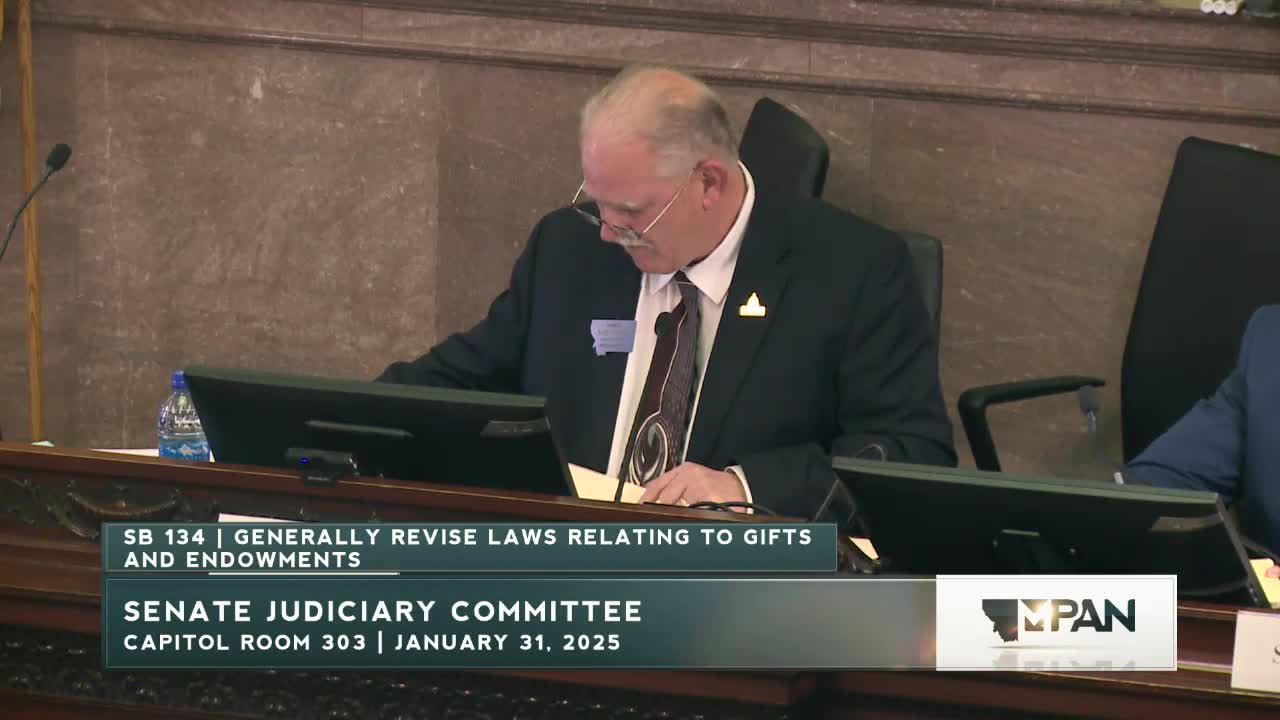
Senate Bill 134, presented to the Senate Judiciary Committee on Jan. 14, would authorize donors to petition a court when a charitable organization fails to follow a written restriction attached to an endowment gift.
Sponsor Sen. Greg Hertz told the committee the bill is designed to give private donors legal recourse when organizations fail to carry out donor-imposed restrictions on the use of endowed funds. The measure would permit a donor (or the donor’s legal representative) to file a complaint within six years after discovering the breach and would authorize courts to order remedies that align with the charitable purpose of the original gift.
Proponents — including the Philanthropy Roundtable and its representatives — argued the bill clarifies the legal status of restricted gifts and would encourage giving. Megan Schmidt, senior director of government affairs for the Philanthropy Roundtable, told the committee that gifts with donor restrictions are, in effect, contracts and that courts should have a clear statutory framework for enforcing them. Advocates emphasized that the bill does not permit donors to reclaim contributions for personal gain: remedies would be limited to re‑directing funds consistent with the charitable purpose.
The Office of Disciplinary Counsel and the State Bar did not register formal opposition, and no opponents appeared at the hearing. The bill’s supporters said state attorneys general have discretion to pursue disputes but often decline, leaving donors with limited options.
Why it matters: Supporters said the bill protects donor intent and makes explicit the courts' role when an organization cannot or will not honor the terms of an endowment agreement. Backers argued the measure will increase donor confidence and charitable capital flow into Montana institutions.
What’s next: The committee closed the hearing and indicated technical amendments may follow. If advanced, the bill would add a statutory enforcement path for private donors and create new procedural steps for courts to resolve restricted-gift disputes.