Get Full Government Meeting Transcripts, Videos, & Alerts Forever!
Get email alerts on the Homelessness Grants topic
No spam. Unsubscribe anytime.
Bill to create one‑time matching grants for shelters draws broad support and agency concerns
Summary
House Bill 310 proposes a one‑time, $2 million matching grant program for homeless shelters, with a 1:1 local match, county caps and scoring; proponents said the money would fund staff and wraparound services, while state agencies urged caution because federal programs already target similar needs.
Representative Melissa Nikolakakos introduced House Bill 310 as a one‑time grant program to help Montana shelters respond to a rising number of people seeking emergency shelter across the state. “House Bill 3 10 establishes a grant program using a modest amount of 1 time money over the course of the next 2 years,” the sponsor said.
The bill would appropriate a one‑time general fund amount (the fiscal note referenced $2,000,000) to a competitive grant program administered by the Department of Commerce, require a 1:1 local match (private funds may count), impose a $250,000 cap per county, and direct the department to use a weighted scoring system in awarding funds.
Why the bill matters
Supporters told the committee that Montana shelters are operating at or beyond capacity and that demand has grown for seniors, veterans, families, victims of domestic violence and young people aging out of foster care. Ella Smith, facilitator for the Montana Coalition to Solve Homelessness, said the categories in the bill “reflect the most significant spike that we've seen over the past 3 years regarding unhoused populations,” and urged lawmakers to fund staff, peer‑support specialists and in‑house services such as mental‑health and substance‑use interventions.
Support and opposition
Proponents included a wide cross section of shelter operators, nonprofit coalitions, faith groups and community health providers. Testimony described shelters’ expanded workloads, longer average stays, and the downstream public costs of untreated homelessness to emergency rooms and law enforcement. Several witnesses who operate shelters described direct experience turning people away because beds and services were full.
State agencies raised concerns about adding a new one‑time appropriation outside the governor’s budget and noted existing federal and state programs that currently fund homelessness prevention, rapid rehousing and services. Jessie Counts of the Department of Public Health and Human Services told the committee she opposed HB 310 in that form and noted DPHHS already administers federal programs including the Emergency Solutions Grant and HOPWA. Mandy Rambo of the Department of Commerce described the department’s “light opposition,” noting Commerce already manages related housing programs and a 2023 bed‑tax allocation.
Key features and clarifications
- Administration: Sponsor testimony and a subsequent amendment named the Department of Commerce to administer the grants, citing the agency’s recent track record distributing shelter infrastructure funds. - Match and cap: Grants would require a 1:1 match; the amendment allows private funds to count toward the match and sets a $250,000 per‑county cap to encourage geographic distribution. - Uses: Funds may be used for staffing, case management, in‑house mental‑health and substance‑use supports, shelter operations and related services designed to move people to permanent housing.
Outcome and next steps
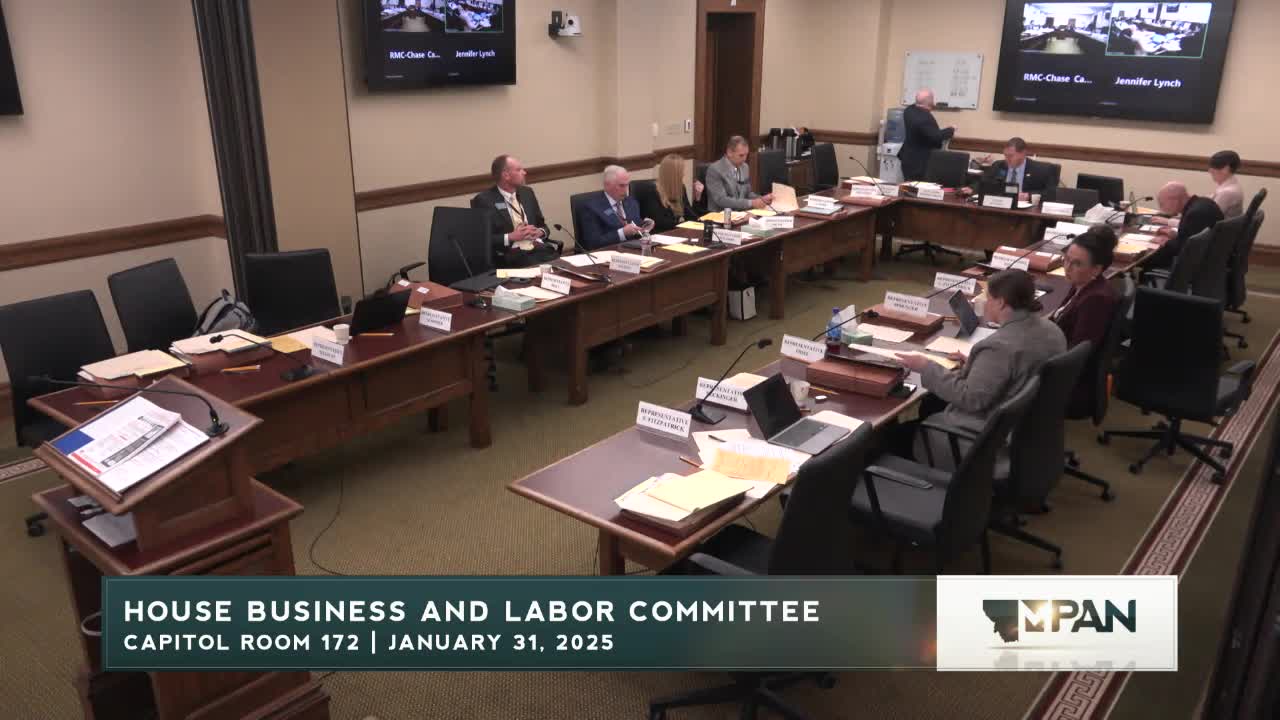
The committee heard substantial, multi‑hour testimony with many proponents and several agency opponents. The amendment naming Commerce as administrator and adding clarity about matching funds was presented as a product of stakeholder collaboration. The transcript records the hearing and subsequent committee discussion; the committee did not record a final vote on HB 310 during the same meeting.
Ending note
Sponsors and shelter operators called HB 310 a focused, one‑time investment to reduce pressure on emergency rooms, law enforcement and other systems by bolstering shelter staff and services; state agencies said the proposal would duplicate or overlap existing federal programs and preferred that funding be considered in the governor’s budget process.