Get Full Government Meeting Transcripts, Videos, & Alerts Forever!
Get email alerts on the Theft Penalties topic
No spam. Unsubscribe anytime.
Committee Restores Tougher Penalties for Retail Theft in Response to Business and Law-Enforcement Concerns
Summary
Senate Bill 19, aimed at reversing portions of 2017 criminal justice changes for theft and related offenses, was debated by retailers, law enforcement and criminal-justice reformers. Supporters said penalties were needed to deter rampant shoplifting; opponents warned the change would criminalize poverty and increase jail populations.
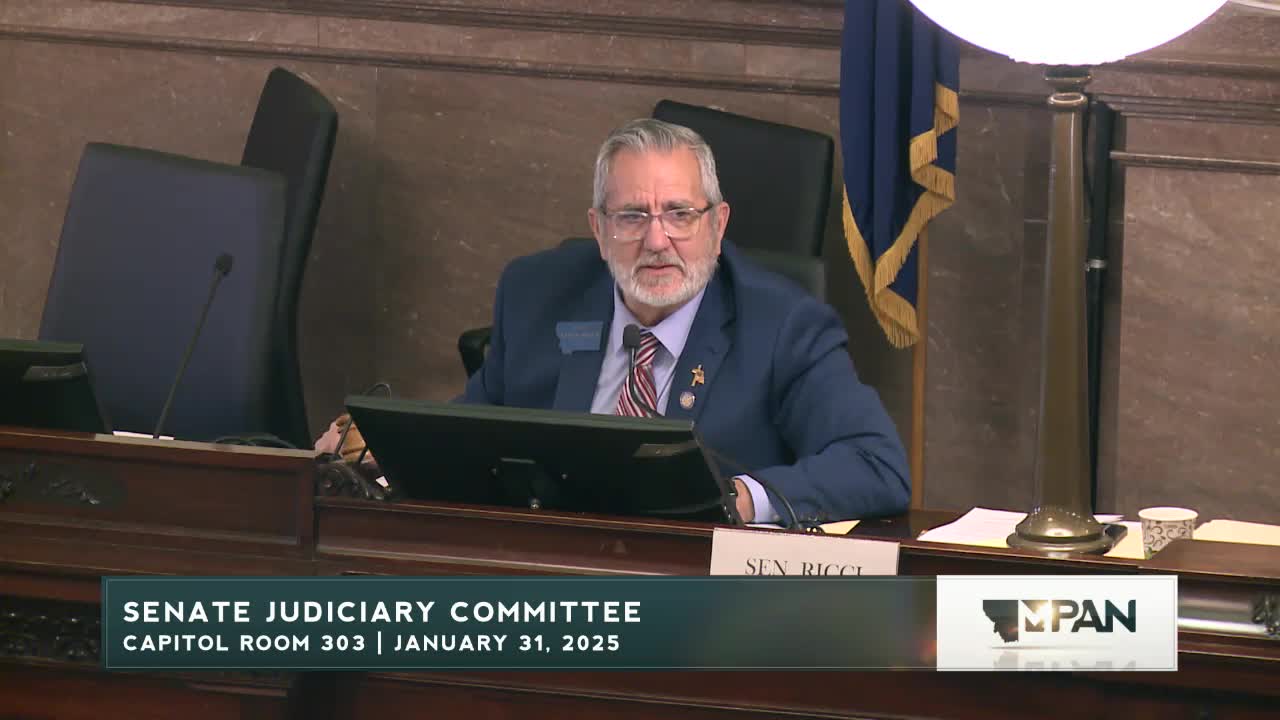
The Senate Judiciary Committee heard and later advanced Senate Bill 19 on Jan. 14, a bill that would raise penalties for many theft-related offenses and restore pre‑2017 statutory language on common-scheme offenses.
Sponsor Sen. Barry Usher described the bill as a corrective to House Bill 133 (2017) and the criminal-justice reforms that followed. "HB 133 actually incentivized crime by assessing a fine of just $500 for stealing $1,500," Usher told the committee, and SB 19 would realign penalties to discourage repeat thefts.
Business and law‑enforcement groups offered the committee a string of first‑hand complaints. The Montana Retail Association, represented by president Brad Griffin, described rising losses and urged restoration of tougher penalties and a provision addressing aggressive "push-out" thefts. "Ten years ago a member told me they were losing $1,000,000 a year out of one store. Today it's $2,000,000," Griffin said. County attorneys, sheriffs and police groups — including the Montana County Attorneys Association, Yellowstone County Sheriff Mike Linder and the Montana Police Protective Association — urged the committee to give judges wider sentencing options for repeat offenders and said current penalties left merchants and local law enforcement without effective tools.
Proponents emphasized that the bill would: (1) remove a dollar threshold from the statutory definition of a "common scheme" to allow prosecutors to rely on pattern evidence; (2) restore jail-time and fine ranges for repeat misdemeanor thefts; and (3) align penalties for failing-to-return leased property and related offenses with theft statutes. Several business groups — Enterprise Rent-A-Car, convenience-store and petroleum associations, NFIB and local chambers of commerce — described inventory losses and safety concerns.
Opponents included the ACLU of Montana and criminal-justice reform groups such as Catalyst Montana. Henry Seaton of the ACLU said SB 19 "denies the reality we once recognized" when lawmakers enacted reforms in 2017 and cautioned the measure would criminalize poverty and swell jail populations. Nicole Gomez of Catalyst Montana argued that incarceration does not reduce reoffending and urged investment in diversion, substance-use treatment and social services instead of enhanced penalties.
Officials from the Department of Corrections and the public-defender office appeared as informational witnesses to answer questions about jail capacity, costs and practical implementation.
Committee action: After testimony and debate, the committee adopted a technical amendment adding "or registered mail" to a notice provision and then voted to advance SB 19 to the full Senate. The committee recorded the bill as sent out of committee as amended.
Why it matters: The bill would change how Montana treats nonviolent property crime and could alter prosecutors' charging options, sentencing outcomes and local jail populations. Supporters said the change was needed to deter repeat thefts that impact small businesses; opponents warned of higher corrections costs and harms to people stealing for subsistence or because of substance use.
What's next: With the committee's approval, SB 19 moves to the Senate for further debate and possible amendment. Opponents and proponents both identified likely litigation and budget implications that could factor into floor debate.