Get Full Government Meeting Transcripts, Videos, & Alerts Forever!
Get email alerts on the State Finance topic
No spam. Unsubscribe anytime.
Committee hears bill to shorten inter-entity loan paperwork for federal reimbursements
Summary
House Bill 61 would limit the time state agencies may carry inter-entity loans for federal-reimbursement timing to seven days, reducing recurring journal-entry work for agency accounting staffs, proponents said. Department of Administration and multiple agencies supported the measure.
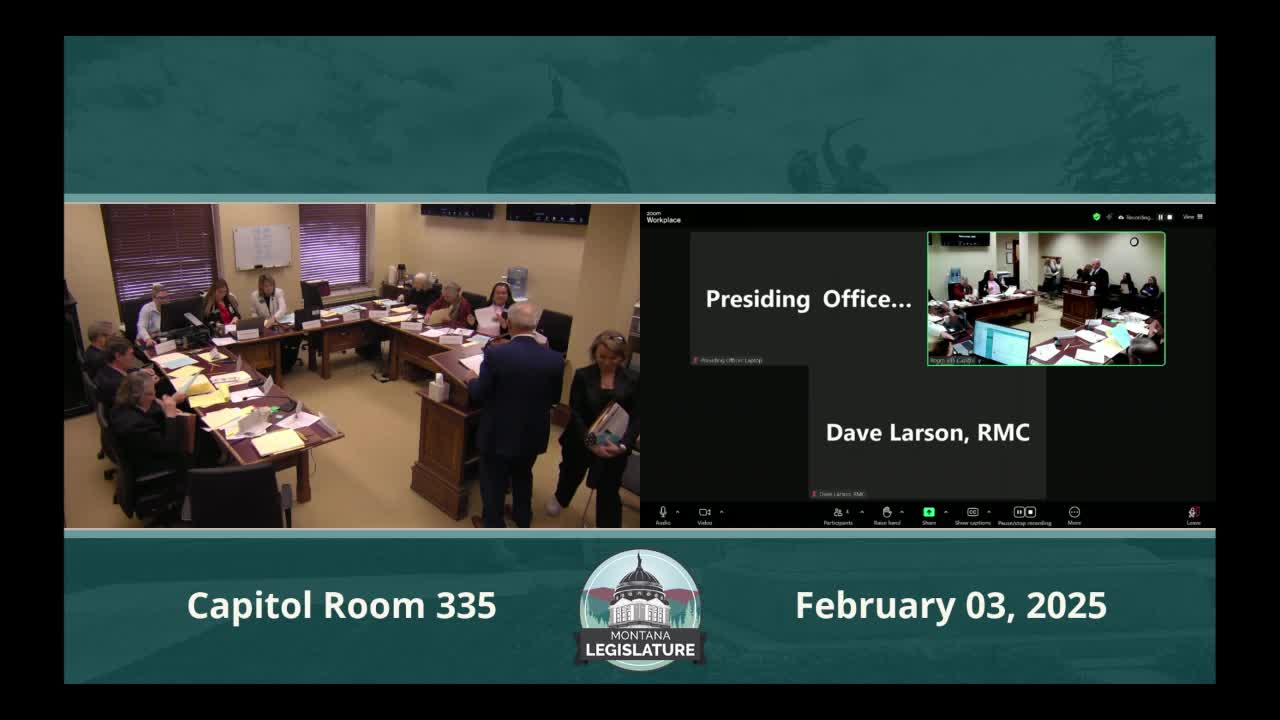
House Bill 61, sponsored by Representative Gary Perry (House District 35), would streamline inter-entity loan paperwork for state agencies that temporarily advance cash while waiting for federal reimbursements. Agency finance directors and the Department of Administration told the Senate State Administration Committee the change would substantially reduce accounting work while preserving fiscal controls.
Representative Gary Perry described the problem as frequent short-term loans between state funds and the general fund while agencies await federal reimbursements. Misty Ann Giles, Director of the Department of Administration, explained the proposal would allow a seven-day grace period before a formal inter-entity loan would be required, reducing repetitive journal entries at fiscal year end.
Jennifer Thompson, State Accountant with the Department of Administration, told the committee her office processed more than 1,600 journal lines associated with federal loans last year and that about 300 federal funds carried an outstanding loan balance at fiscal year end. She said HB61 would allow a single year-end journal entry instead of thousands of agency-level entries while maintaining compliance with GAAP.
Multiple agency CFOs testified in favor, including representatives of Transportation, Fish, Wildlife & Parks, and the Department of Military Affairs, saying the bill would reduce administrative burden and free staff to focus on reconciliation and timely reimbursement requests. Committee members questioned how the administration would guard against federal funding cuts; the Department of Administration said it would apply increased scrutiny and coordinate with the budget office on loans tied to at-risk federal programs.
No committee vote occurred during the hearing; the bill drew broad administrative support.