Get Full Government Meeting Transcripts, Videos, & Alerts Forever!
Get email alerts on the Medical Debt topic
No spam. Unsubscribe anytime.
Committee hears bill to curb medical-debt collections, extend insurance-appeal time
Summary
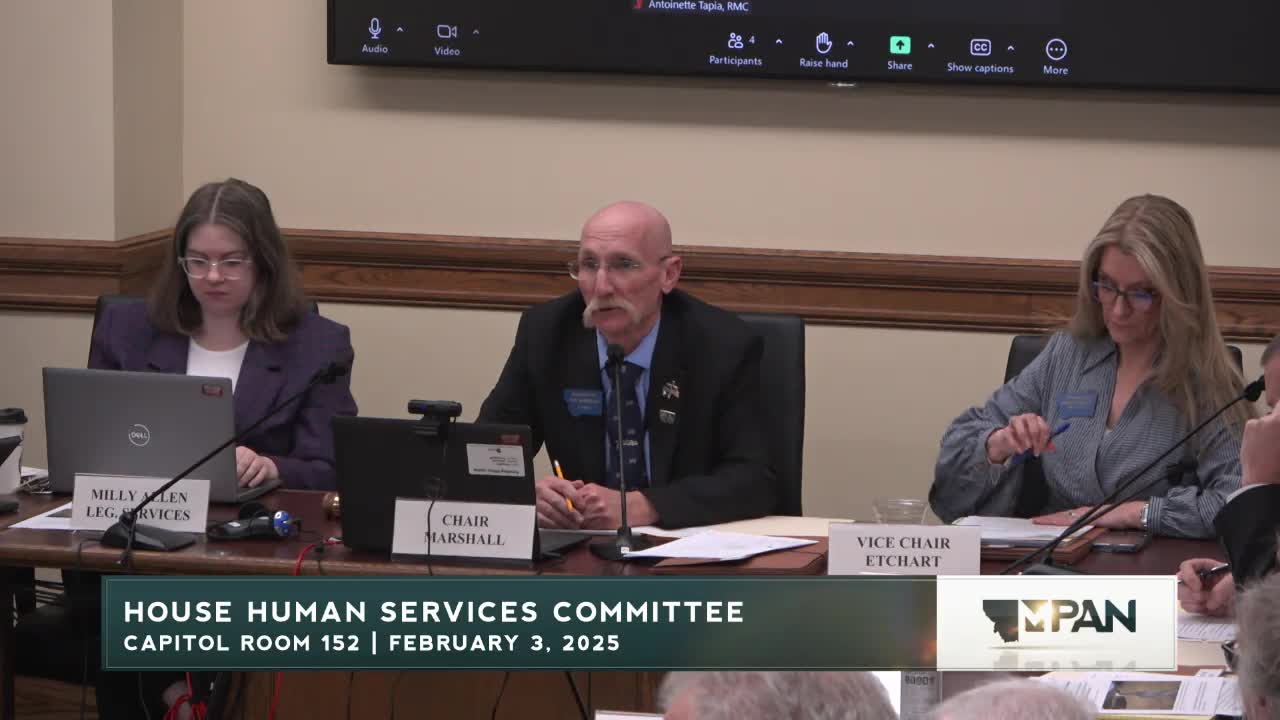
Lawmakers and witnesses at a House Health and Human Services hearing considered House Bill 273, which would limit certain medical-debt collection practices, extend windows for insurance appeals and protect a modest bank-account exemption for patients facing collection.
Representative Ed Staffman, sponsor of House Bill 273, opened a committee hearing Feb. 3 by saying the proposal is aimed at Montanans struggling with medical bills. “People in my district and also throughout Montana are worried about the rising cost of living, especially health care,” Staffman said, introducing what he called the Montana Medical Debt Patient Protection Act.
The bill would prohibit a set of “extraordinary collection actions” by health-care creditors, require notice and additional time for patients to complete insurance appeals, limit some garnishments and preserve a minimum bank-account exemption. The sponsor and proponents said the bill borrows provisions used in neighboring states and is designed to let patients resolve disputes without immediate, severe collection consequences.
Why it matters: Committee witnesses said medical debt is widespread in Montana and can cascade into housing loss, job loss or other financial harms. Staffman cited a statistic he provided to the committee that “1 in 10 Montanans has medical debt in collections.” Witnesses from tribal communities and legal-aid groups described how delays or denials from Indian Health Service and private insurers can leave patients unexpectedly liable for large bills.
Key provisions discussed - Prohibited collection actions: The bill would bar certain collection measures against medically related debts, including causing or threatening arrest, placing liens on a patient’s primary residence except as required by federal law, foreclosing on a primary residence except as required by federal law, and reporting adverse medical-debt information to consumer reporting agencies. Staffman said those prohibitions follow practices in Texas, North Dakota, Utah and other states. - Notice and time to appeal: Creditors would be required to provide at least 30 days’ notice before engaging in collection actions, and the bill would delay collection actions while an insurance appeal is pending. The sponsor noted an amendment on the committee desk shortening one period from 180 days to 120 days at hospital request. - Bank-account exemption: The draft provides a protected exemption of up to $3,000 from certain levies, a figure Staffman said was modeled on North Dakota’s law.
Who testified - Representative Ed Staffman (House District 59), sponsor — introduced the bill and noted collaboration with hospitals on an amendment addressing advanced beneficiary notices and timing. - Cetus Crowe (Representative, House District 15) — described his personal case in which he said he received a $90,000 bill from Logan Health after a prolonged hospitalization, and that Blue Cross Blue Shield and Indian Health Service initially denied or delayed payments; he said he ultimately negotiated some payments but remained responsible for roughly $20,000 and had depleted savings. - Adam Zarin, director of state government affairs, Leukemia & Lymphoma Society (also speaking for ALS Association and American Cancer Society Cancer Action Network) — “We are in support of, HB 273,” he told the committee and said medical debt frequently disrupts treatment for people with cancer and other chronic illnesses. - Lance Forstar (spoke on a letter of support submitted on behalf of the Montana American and Caucus) — urged passage and described reservation health-care challenges. - Alisa Snow (representing the Blackfeet Tribe, Fort Belknap Indian Community and the Chippewa Cree Tribe of Rocky Boy) — testified that Indian Health Service’s Purchased/Referred Care (PRC) program sometimes generates billing disputes that end up in collections before patients know an outside provider’s invoice has been submitted. - Beth Hayes, consumer staff attorney, Montana Legal Services Association — supported the bill and said the additional time and the $3,000 exemption would help low-income Montanans avoid cascading harms from collection levies and garnishments. “It gives them time to figure out what their financial options are,” Hayes said. - David Carlson, executive director, Disability Rights Montana — described higher average medical costs for people with disabilities and said the bill’s timing protections would help vulnerable families avoid immediate losses of wages or bank funds. - Mark Cook (private citizen, veteran) — said he supported the bill as a temporary protection while people recover and arrange payment plans. - Adrianna Hines, Consumer Data Industry Association — testified in opposition, saying, “The association respectfully urges the committee to oppose this legislation as we believe it is preempted by federal law,” and submitted a letter outlining the association’s position. Hines summarized recent changes by consumer reporting agencies: paid medical collections were excluded from credit scores effective July 1, 2022; the reporting window for medical collections was extended to 1 year in 2022; and small medical debts under $500 were excluded in 2023.
Issues raised in questioning Committee members asked whether parts of the bill would be preempted by federal rules governing credit reporting. Proponents and the sponsor said federal protections are helpful but the bill goes further and mirrors steps taken by other states; Staffman cited court decisions in Maine and Nevada that had rejected federal preemption challenges to similar state laws. Committee members also asked witnesses about the prevalence of billing errors and how frequently Indian Health Service PRC referrals result in unpaid bills; witnesses characterized those occurrences as common enough to justify statutory protections but said exact statewide counts were not provided during the hearing.
Process and next steps Staffman said an amendment on the committee desk reduces one timing threshold from 180 days to 120 days to accommodate hospital concerns and that he is open to additional amendments. The committee did not take a vote during the hearing; the chair closed the hearing on House Bill 273 and indicated the committee planned executive action and a floor bill the following day.
Ending note The hearing assembled testimony from tribal representatives, health and patient-advocacy organizations and a consumer-data industry group that emphasized potential federal preemption. No formal vote was recorded at the hearing; the sponsor and committee members signaled further amendment work before any committee recommendation is issued.