Get Full Government Meeting Transcripts, Videos, & Alerts Forever!
Get email alerts on the Traffic Enforcement topic
No spam. Unsubscribe anytime.
City considers more traffic cameras and ALPR; municipal court warns of staffing limits
Summary
Officials said funding would allow more speed and red‑light cameras, but municipal court warned current staffing cannot absorb a large increase in tickets; court recommended adding a commissioner and clerks if camera counts rise substantially. SPD seeks to adopt an updated ALPR policy and WAPA grant will fund an initial Flock deployment.
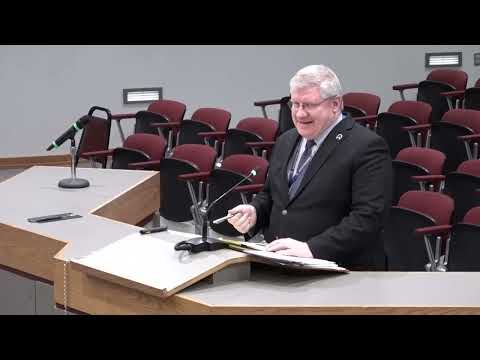
Howard, a municipal court official, told the committee that adding cameras would increase the court’s workload and that current staffing is insufficient to absorb a large expansion without additional positions.
Howard reported 2024 photo‑enforcement data showing an average of about 1,678 tickets per camera approach per year, with roughly 511 contested in person and about 7,667 contested by mail (Howard clarified that “by mail” submissions are electronic uploads to the vendor portal, not paper mail). He said contested in‑person and by‑mail cases consume most staff time and that the court lost one Court Clerk II position recently, undermining the capacity to absorb additional camera‑generated cases. Howard said adding 10 more cameras could require an additional court commissioner and one or two clerks; he noted the traffic‑calming resolution allows court staffing to be funded “above the line” from program revenue.
Separately, SPD said it received $100,000 from the Washington Auto Theft Prevention Authority (WAPA) to fund fixed Flock ALPR cameras; the proposal lists 34 candidate intersections though the grant covers 28 fixed cameras and some movable pole‑based devices. SPD also said it is updating its automated license plate reader (ALPR) policy to mirror a modern policy used by Everett PD and to include privacy protections: license plate reads would be retained for 30 days by default and saved only when a specific criminal investigation or court process requires preservation. The city may pursue aggregated traffic‑count data from the vendor (roughly $500 per camera per year) to support traffic‑calming analyses without privacy implications.
Councilmembers asked about online contesting, mitigation processes and the cost delta between a court commissioner and a judge; Howard said mitigation is largely an administrative video review by commissioners and that commissioners can typically reduce fines under local rules. The committee discussed whether municipal court could move more back‑end work in‑house (instead of Vera Mobility) to retain more revenue and obtain better data for traffic safety analysis; Howard said that option is being explored.
SPD said it will update the council on the funding line item for long‑term camera maintenance and on agreements needed to integrate Flock data with the real‑time crime center.