Get Full Government Meeting Transcripts, Videos, & Alerts Forever!
Get email alerts on the Police Oversight topic
No spam. Unsubscribe anytime.
Police ombuds reports rise in community contacts, flags police review-board practices
Summary
The city police ombuds reported a sharp increase in public contacts in 2024, delivered three closing reports that included recommendations on canine deployments, body-worn-camera audio, charging decisions and review-board membership and conduct.
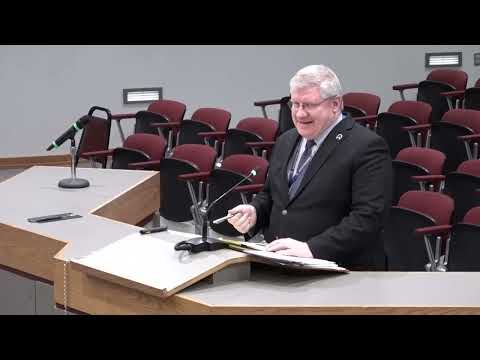
Bart, the city police ombuds, told the Public Safety Committee on Feb. 3 that his office saw a substantial uptick in public engagement in 2024 and has made recommendations after reviewing several use-of-force and review-board cases.
The ombuds said his office recorded 3,091 community contacts in 2024, up from 1,820 the previous year, and attended 53 community meetings (roughly double 2023). He said the office generated 98 total complaints between the ombuds office and Spokane Police Department case work, referred 63 cases to outside agencies and issued three closing reports delivered in December and January.
Those closing reports addressed three separate incidents. One (F24038) involved a stolen vehicle stop where an officer struck a juvenile with a closed fist; the ombuds criticized comments by some review-board members that suggested “deadly force can be a de‑escalation technique,” and recommended procedural and membership changes for review boards. Another review (K240007) involved a canine search where the canine located the suspect and was then used to effect the arrest; the ombuds recommended the department examine when a canine should be used for apprehension versus track/search and asked that an uninvolved supervisor conduct the initial use‑of‑force review. A third case (F23054) involved a person tackled after riding a bike away from an assault scene; the ombuds recommended enabling audio during body‑worn camera buffer mode, clarifying charging decisions to focus on the elements of the offense rather than a victim’s request, and giving review‑board members clearer guidance emphasizing alternatives to force and de‑escalation.
Bart said he has worked with SPD leadership and training staff to press for policy and training changes. He said SPD’s executive staff and chief reviewed several cases, training and review‑board membership adjustments have been made, mentorship was added to the review‑board process and the department is re‑evaluating de‑escalation and use‑of‑force policy language. He described follow‑up meetings with the SPD training director and the use‑of‑force program lead in neighboring jurisdictions to compare practices and standards.
The ombuds concluded that oversight is functioning by identifying problems and seeking corrective action, and offered to supply the committee with the office’s annual report.
Committee members asked about the 70% increase in contacts; Bart attributed the rise primarily to outreach and community visibility. Several members pressed for continued clarity on recommendations and timelines for any policy changes.