Get Full Government Meeting Transcripts, Videos, & Alerts Forever!
Get email alerts on the City Council Ordinances And Appointments topic
No spam. Unsubscribe anytime.
Spokane City Council reinstates downtown alcohol restriction, requires Narcan at some stores and advances preservation rules
Summary
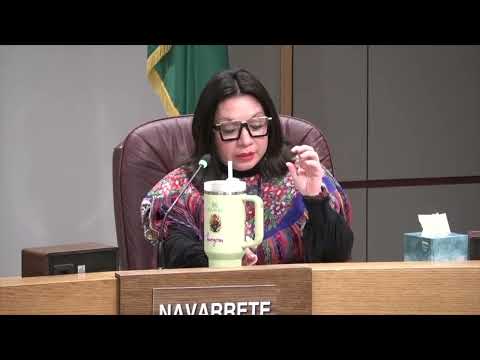
Council Member Paul Dillon said the Spokane City Council approved several ordinances and reappointments at a recent meeting, including reinstating a downtown alcohol impact area, a Narcan distribution requirement for some retailers, and an ordinance on historic preservation for downtown centers and corridors.
Council Member Paul Dillon said the Spokane City Council approved several ordinances and reappointments at a recent meeting, including reinstating a downtown alcohol impact area, a requirement that some retailers provide free Narcan, and an ordinance on historic preservation for downtown centers and corridors.
Dillon, who represents District 2, told listeners the council “approved our board and commission appointments” and that those included reappointments to the Spokane Arts Commission. He said the council “approved an ordinance that would bring back the alcohol impact area downtown, that had previously lapsed, since 2022,” and described the measure as banning the sale of single-container, high-volume alcohol purchases within the downtown precinct.
The council also passed an ordinance creating what Dillon called a “community health emphasis area” for certain stores that sell drug paraphernalia; under the ordinance, those retailers would be required to distribute free Narcan in order to sell such items. Dillon said the measure accompanies council concerns about public health and safety.
On the legislative agenda, Dillon said the council held a hearing and approved an ordinance related to historic preservation covering downtown and designated centers and corridors. He did not provide ordinance numbers or vote tallies in the recap.
Dillon described an uptick in alcohol-related violent crime as part of council discussion of the downtown alcohol impact area, saying, “we have seen an increase in the city of alcohol related, violent crimes.” He also summarized public comment, saying open forum included commentary on immigration, public safety, safety in council chambers and shelter availability.
Formal vote counts, the names of motion movers and seconders, and specific ordinance numbers were not specified in the recap provided by Dillon. The council’s actions as described were approvals or adoptions; further details and full texts of the ordinances were not included in the statement.
For now, the council has directed its legislative work toward downtown public-safety measures and preservation rules while confirming arts-commission reappointments; Dillon closed by thanking participants who testified and those who attended the meeting.