Get Full Government Meeting Transcripts, Videos, & Alerts Forever!
Get email alerts on the Traffic Safety Dui Law topic
No spam. Unsubscribe anytime.
Controversial bill would narrow "actual physical control" for DUI; law enforcement warns of safety risks
Summary
Sponsor proposed changing the definition of "actual physical control" so a person asleep or seated outside the driver's seat could not be charged with DUI in some circumstances; law enforcement groups urged opposition, saying the change would weaken enforcement and increase fatalities.
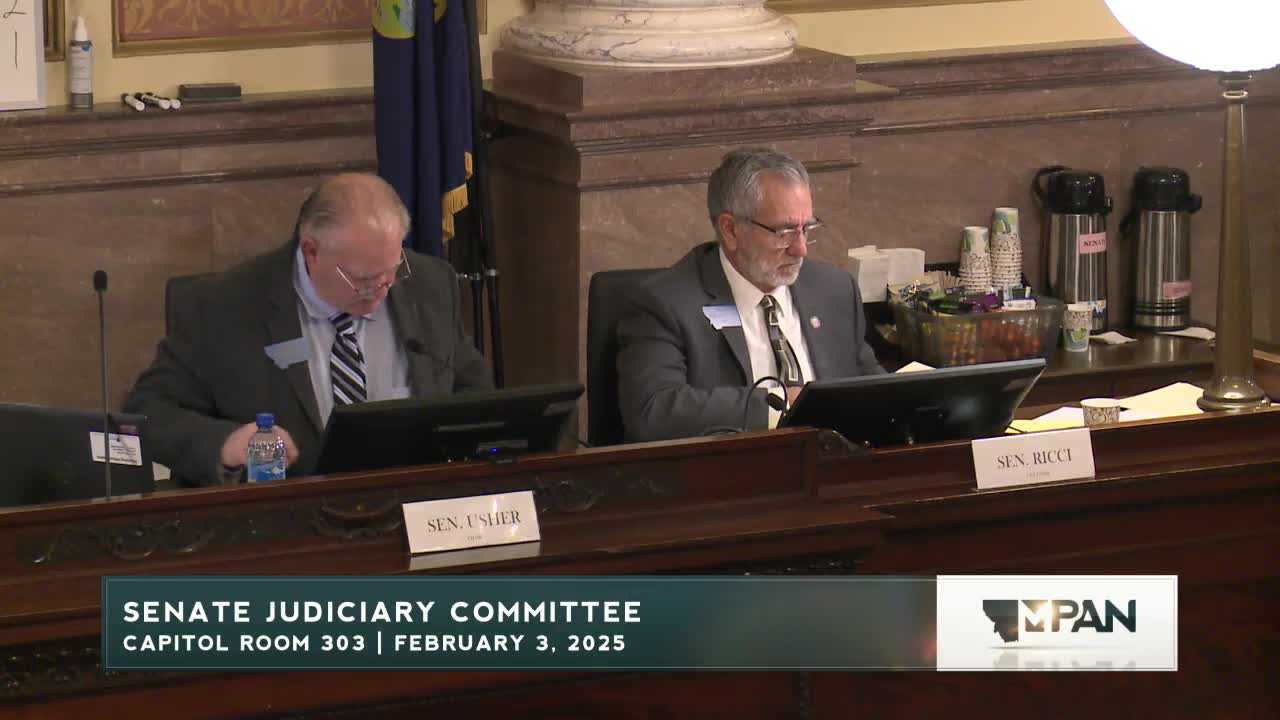
Sen. Trebis introduced Senate Bill 196 to redefine "actual physical control" in Montana's DUI statute. The draft language initially said the term applies only when a person is operating or driving a motor vehicle "on the public roads and highways of the state" and excluded situations when a person is seated in any seat except the driver's seat. The sponsor told the committee he would offer an amendment to restore the current phrase "a way of the state open to the public" and to add exceptions — for example, when a person is asleep in a lawfully parked vehicle — and to require that facts show the person did not drive the vehicle to the location while under the influence.
Proponents said the bill would incentivize safer behavior ("sleep it off" in the vehicle rather than driving home) and reduce harm. Don Cape, of the Coalition for Safety and Justice, said allowing an intermediate choice to remain in a parked vehicle could make roads safer.
Opposition testimony came from multiple law enforcement and prosecutors' groups, who said the proposal would hamper investigations and prosecution and likely increase impaired driving crashes. Doug Samuelson, captain with the Montana Highway Patrol, warned that alcohol's physiological effects can sedate people without producing restorative sleep and that a person who "sleeps it off" for a short time can still be highly impaired hours later. Mary Barry, representing the Montana County Attorneys Association, said the bill as drafted would effectively eliminate the legal doctrine of actual physical control and produce enforcement gaps that repeat felony DUI offenders could exploit.
Other opponents included the Montana Police Protective Association, the Association of Montana Troopers, the Montana Association of Chiefs of Police, local sheriffs and the Montana Sheriffs and Peace Officers Association. Witnesses recounted cases in which officers arrested impaired drivers who were asleep or seated outside the driver's seat after driving; law enforcement argued the change would reduce officers' ability to remove dangerous drivers from the road, increase legal uncertainty and shift risk onto the public.
Sponsor supporters and the sponsor said an amendment was being prepared that would narrow the change and restore some current language; the hearing record shows the sponsor asked the committee to consider the amended language when it becomes available. The committee closed the hearing; no committee vote was recorded at the hearing.