Get Full Government Meeting Transcripts, Videos, & Alerts Forever!
Get email alerts on the Judicial Elections topic
No spam. Unsubscribe anytime.
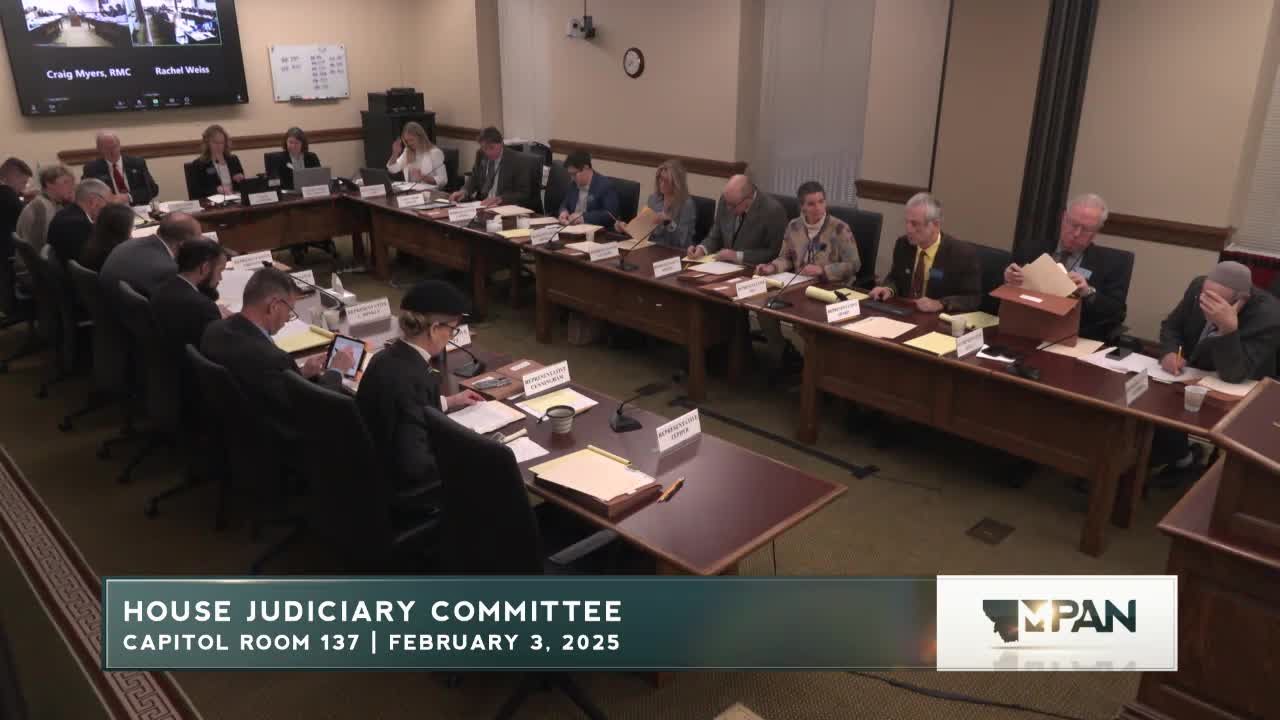
Montana hearing on HB 295: sponsors and opponents clash over partisan labels for judicial candidates
Summary
Supporters told the House Judiciary Committee HB 295 would give voters more information by allowing judicial candidates to list a party affiliation on ballots; opponents, including the State Bar and judicial groups, warned the change would politicize courts and urged rejection.
Representative Paul Fielder, sponsor of House Bill 295 and a Republican from House District 14, told the House Judiciary Committee that HB 295 would allow judicial candidates to “declare a party affiliation” on ballots and to announce party endorsements if they chose to, rather than forcing a nonpartisan label.
Supporters at the hearing said the change would give voters more information about candidates’ leanings. John Sinrude, testifying for himself, said many voters “have no clue who the judges are” and that party labels would help voters know which organizations or donors support candidates. Bart Crabtree of the Montana Citizens Council on Judicial Accountability said an opt-in party label would “create a lot more transparency.” Henry Kriegel, deputy state director for Americans for Prosperity Montana, argued the measure protects judges’ First Amendment rights and gives “important information for the voters” about judicial philosophy.
Opponents, representing a broad cross-section of legal and tribal groups, said partisan judicial elections would undermine judicial independence. Bruce Spencer, speaking for the State Bar of Montana and the Montana Judges Association, argued courts are a check on majority rule and that party labels are appropriate for legislators but not judges. Jeff Sherlock, a retired district judge who testified as an opponent, said most daily judicial work involves family, criminal and civil matters in which partisan labels are irrelevant and recommended the issue be decided by referendum.
Friends of the Third Branch, represented by Anne Sherwood, urged a no vote, saying judges occupy an office of trust and the code of judicial conduct requires avoiding the appearance of impropriety. Alyssa Snow, speaking for the Blackfeet Tribe and the Chippewa Cree Tribe of Rocky Boy, warned of historical and outside influence in judicial contests and said Montana should “table HB 295.” Several private attorneys and trial lawyer representatives said nonpartisan options such as questionnaires and public materials are better ways to inform voters than changing ballot labels.
Committee members asked witnesses about specifics the bill would require on ballots and the choice of the word “undisclosed” for those who do not opt in. Representative Cunningham and others questioned whether “undisclosed” carries an unintended negative connotation; opponents suggested alternatives such as “nonpartisan” or “independent.” Former Judge Sherlock and other opponents repeatedly told the committee that the oath and judicial code require judges to put aside personal views and that party labels would not reliably predict judicial decision-making.
No formal committee vote on HB 295 was recorded during the hearing. The sponsor reserved the right to close and the committee moved on to the next agenda item after public testimony.