Get Full Government Meeting Transcripts, Videos, & Alerts Forever!
Get email alerts on the Downtown Parking topic
No spam. Unsubscribe anytime.
Board adopts downtown resident parking ordinance but holds permit fees for 2025
Summary
After extensive public comment from downtown residents, the board approved a central-business parking ordinance and voted to hold residential permit fees at $0 for 2025 while staff/owners work on a plan for 2026.
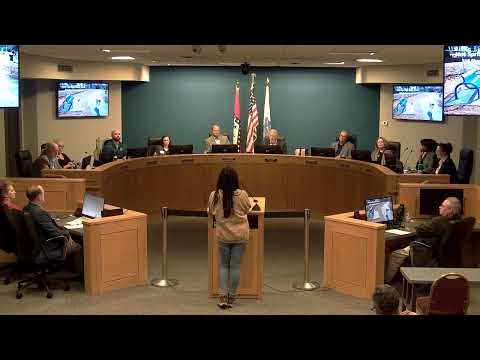
The Hot Springs Board of Directors on Feb. 4 adopted an ordinance establishing a downtown residential parking program but amended the pricing so that permit fees for residents will be held in abeyance for calendar year 2025.
The ordinance (O-25-04) would create a residential permit system for a defined downtown area (Prospect Avenue north along Central Avenue to the Whittington/Park Avenue split). Under staff’s original proposal permits were to be tiered: a primary-zone permit priced at $260 per quarter ($1,040 annually) and a secondary-zone permit at $130 per quarter ($520 annually). The board kept the program structure — including permitting one primary and one secondary vehicle per address — but approved Director Karen Garcia’s motion to set the fee at $0 for 2025 to give residents and property owners time to plan before fees take effect in 2026.
City planning and transit staff described three downtown parking zones: primary (core downtown), secondary (surface lots and Exchange Street parking garage), and Ouachita Avenue priority zone (with time restrictions). The program targets owners or lessees in the specified downtown area who lack dedicated off-street parking. Staff noted the program was designed to balance resident needs and downtown turnover to support businesses and to provide revenue to fund future parking infrastructure.
Multiple downtown residents spoke at the meeting. Andrea Hale, who rents in the downtown core, said she initially supported the proposed fee but, after consulting neighbors, backed a lower-cost approach and called parking near residents’ homes "essential" rather than a luxury. Tyler Draper and other speakers urged the board to delay a fee until residents’ leases expire, saying sudden new costs would hit fixed-income households. Some directors urged parity between downtown residents and downtown employees; Director Brian Trustee highlighted that many hospitality workers pay a discounted employee rate (25¢ per hour under the employee program) and urged consistent treatment.
After discussion the board approved the amendment to hold fees in abeyance for 2025 and then adopted the ordinance as amended. The final roll call on adoption recorded: Director Karen Garcia — aye; Trustee — no; Director Erin Holiday — aye; Director Phyllis Beard — aye; Director Marsha Dobbs Smith — aye; Director Dudley Webb — aye; Mayor Pat McCabe — no. The motion carried.
Clarifications and next steps: Staff said permits will still be recorded in the system (license plates and addresses entered) even with a $0 fee for 2025 so enforcement and permit recognition is possible. The board asked staff to convene meetings with property owners, lessees and residents and return with a proposed fee structure for 2026. Officials flagged safety and walkability concerns for residents who might be assigned to secondary lots some distance from homes.
The ordinance includes a two-vehicle-per-address allowance (one primary, one secondary). Staff noted roughly 8–10 downtown households are expected to use the program; the board’s 0-fee decision is intended to give those residents time to plan and to allow staff to consult with landlords before 2026 fees are implemented.