Get Full Government Meeting Transcripts, Videos, & Alerts Forever!
Get email alerts on the Public Defender Resources topic
No spam. Unsubscribe anytime.
Metro public defender urges resources and caution on 'speeding up' court dockets
Summary
Chief Public Defender Martisha Johnson told the committee that speeding court dockets without commensurate defender resources risks defendants' constitutional rights; she cited heavy caseloads, limited interpreter and investigator capacity, and the time required to review body‑worn camera footage.
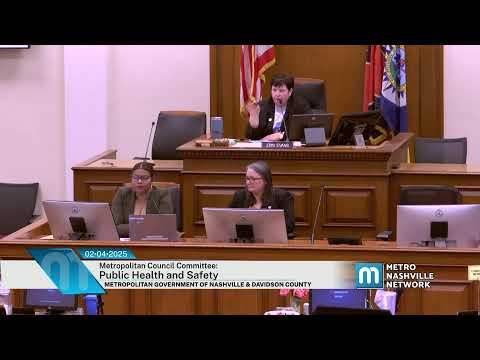
Chief Public Defender Martisha Johnson appeared before the Public Health & Safety Committee to urge caution about proposals to accelerate criminal dockets without matching resources for the defender’s office.
Johnson told council members that efficiency measures—sometimes framed as “rocket dockets”—could infringe constitutional protections if public defenders lack the staff and tools to provide adequate representation. She outlined resource gaps, interpreter shortages and the time demands of new technologies such as body‑worn cameras.
Why it matters: Changes to court processes affect defendants’ statutory and constitutional rights, case outcomes and the workload across the justice system. The defender’s remarks aim to ensure that proposals for faster case processing come with funding and operational capacity for defense counsel.
“I wanna be frank,” Johnson said. “When I hear the word efficiency, especially when used in the context of speeding things up in the criminal legal system, it concerns me. It worries me. And in fact, I hear an infringement on your constitutional rights, frankly.”
Johnson provided data from 2023 showing that public defenders’ cases moved faster than the overall average in some dockets but said workload disparities remain. She described limited interpreter availability—“On a normal day, we could see 2 to 3 interpreters in general sessions court,” she said—and noted investigators and discovery reviewers are scarce: the office has 10 investigators to support its caseload.
On technology, Johnson said video review is time consuming: one attorney spent three hours reviewing half of one officer’s body camera clip and the office lacks sufficient capacity to watch multiple officers’ recordings for each case. She asked council members to consider resource parity when adding new technologies, arguing that without comparable defense resources, accelerated processes risk undermining fair representation.
Johnson said the defender’s office will request additional budget resources for new attorneys, interpreters and investigators in upcoming budget deliberations and agreed to provide more specific resource requests to council ahead of the budget process.