Get Full Government Meeting Transcripts, Videos, & Alerts Forever!
Lahontan Water Board staff outline changes, protections in 2024 timber waiver to speed forest work
Summary
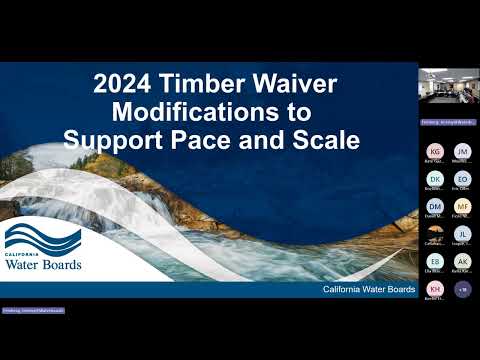
Lahontan Water Board staff presented a virtual outreach workshop explaining the 2024 Lahontan timber waiver, a conditional waiver of waste discharge requirements intended to support accelerated timber‑harvest and vegetation‑management projects across the Lahontan region while imposing new water‑quality protections.
Lahontan Water Board staff presented a virtual outreach workshop explaining the 2024 Lahontan timber waiver, a conditional waiver of waste discharge requirements intended to support accelerated timber-harvest and vegetation‑management projects across the Lahontan region while imposing new water‑quality protections.
The presentation, led by Jeremy Feinberg of the Forestry Dredge and Fill Unit, summarized how the board revised language and category eligibility to expand non‑notifying coverage, described new construction and stabilization standards for skid‑trail and road crossings, outlined monitoring and reporting changes, and explained processes for expedited enrollment for post‑fire salvage work.
Board staff said the waiver was adopted by the Lahontan Water Board by unanimous vote on 08/20/2024 and applies to projects enrolled after that date as well as projects previously enrolled under prior iterations. “The purpose of today's presentation is threefold, to identify new timber waiver conditions, which support accelerated pace and scale for timber harvest and vegetation management projects, discuss water quality protection measures required by the 2024 Lahontan Timber Waiver, and answer technical questions regarding permit requirements, and receive comments from interested persons,” Feinberg said.
Key expansions and eligibility changes
Staff emphasized the largest change is an expansion of category 1 non‑notifying coverage. Category 1 now covers additional defensible‑space, community‑protection and human‑safety projects, including work in a 1,000‑foot defense zone around private property lines, structures or facilities; roadside fuel reduction within 300 feet of evacuation routes; and projects within 300…
Already have an account? Log in
Subscribe to keep reading
Unlock the rest of this article — and every article on Citizen Portal.
- Unlimited articles
- AI-powered breakdowns of topics, speakers, decisions, and budgets
- Instant alerts when your location has a new meeting
- Follow topics and more locations
- 1,000 AI Insights / month, plus AI Chat