Get Full Government Meeting Transcripts, Videos, & Alerts Forever!
Get email alerts on the Beaver Muskrat Damage Control topic
No spam. Unsubscribe anytime.
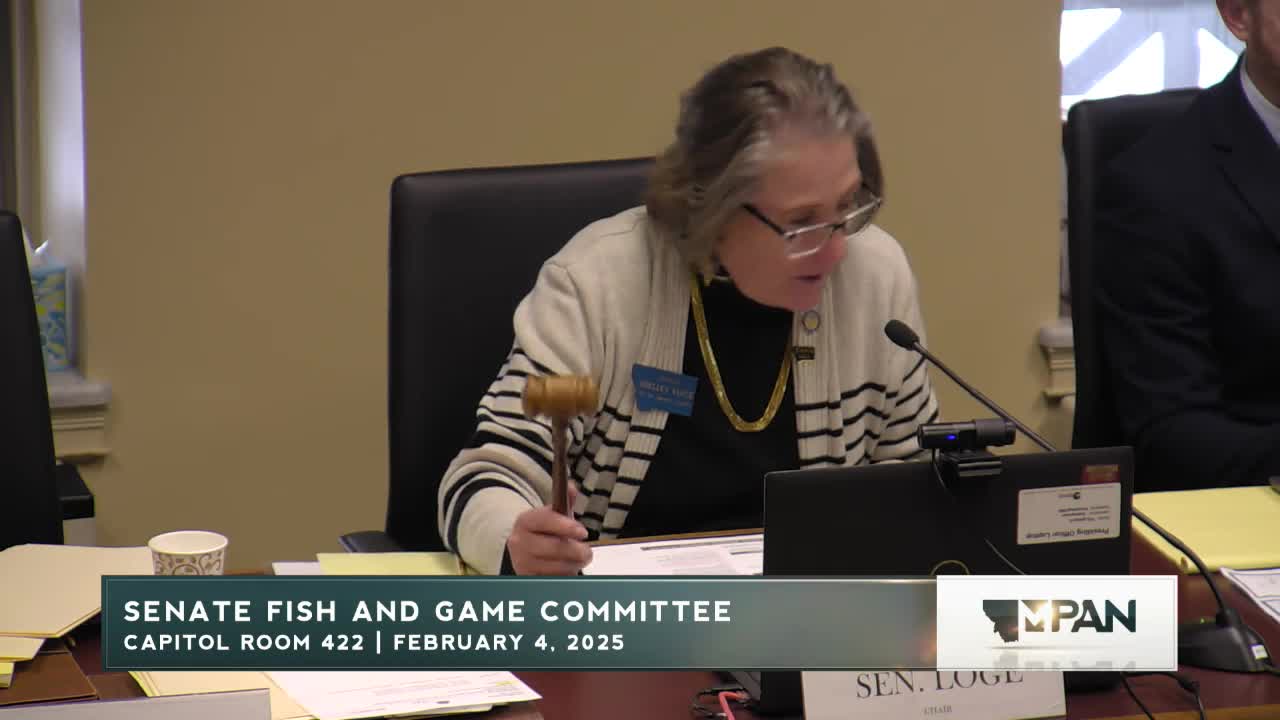
Committee weighs bill to expand damage-control trapping of beaver and muskrat
Summary
House Bill 95 would broaden landowner options to control beaver and muskrat that damage irrigation, stock ponds and certain urban infrastructure, expand permit use and allow no-permit take June 1–Aug. 31; Montana Fish, Wildlife & Parks supported the change as part of broader beaver management planning.
Representative Paul Fielder introduced House Bill 95 and said the measure, requested by Montana Fish, Wildlife & Parks, would expand damage-control authority for beaver and muskrat to include additional rural and urban development structures.
“It's a plain damage control bill,” Representative Paul Fielder said, describing how the department currently issues permits for damage to irrigation districts and stock ponds and that the bill would extend similar authority for other structures and situations. He said no permit would be required for the June 1–Aug. 31 period because that is a dispersal period for these rodents.
Quentin Kujala, chief of conservation policy for Montana Fish, Wildlife & Parks, told the committee the department supports HB 95 and that the bill will help landowners address damage while the agency develops beaver-restoration guidance. “I'm here today in support of House Bill 95,” Kujala said, adding that the department is pursuing a public beaver-restoration planning process and that the bill would give local managers more capacity to respond to damage while restoration work proceeds.
Committee members asked whether the bill restricts trapping equipment; Representative Fielder said it does not specify gear and that landowners should be able to use whatever effective means are needed to solve the problem. Senator Phelan asked whether Conibear (body-gripping) traps could be used; Representative Fielder said the bill allows effective equipment appropriate to the situation.
No organized opponents testified at the hearing. Representative Fielder emphasized that permitting remains available outside the June–August window and that the bill is intended to let landowners and organizations address acute, localized damage when trappers are unavailable or conditions prevent contractors from safely addressing problems.
The department framed the bill as complementary to efforts to consider beaver for water-storage and wetland benefits; Kujala said a beaver restoration guidance document remains under development and will include public process and review.
The committee took testimony and questions but recorded no formal vote during the hearing.