Get Full Government Meeting Transcripts, Videos, & Alerts Forever!
Get email alerts on the Wildlife Quail Classification topic
No spam. Unsubscribe anytime.
Montana committee hears debate on classifying California and Gambel’s quail as upland game birds
Summary
A Montana House bill would add California and Gambel’s quail to the state’s upland game bird list, a change proponents say would aid bird-dog trainers and opponents say risks spreading nonnative birds and disease; Fish, Wildlife & Parks provided informational testimony and urged commission review.
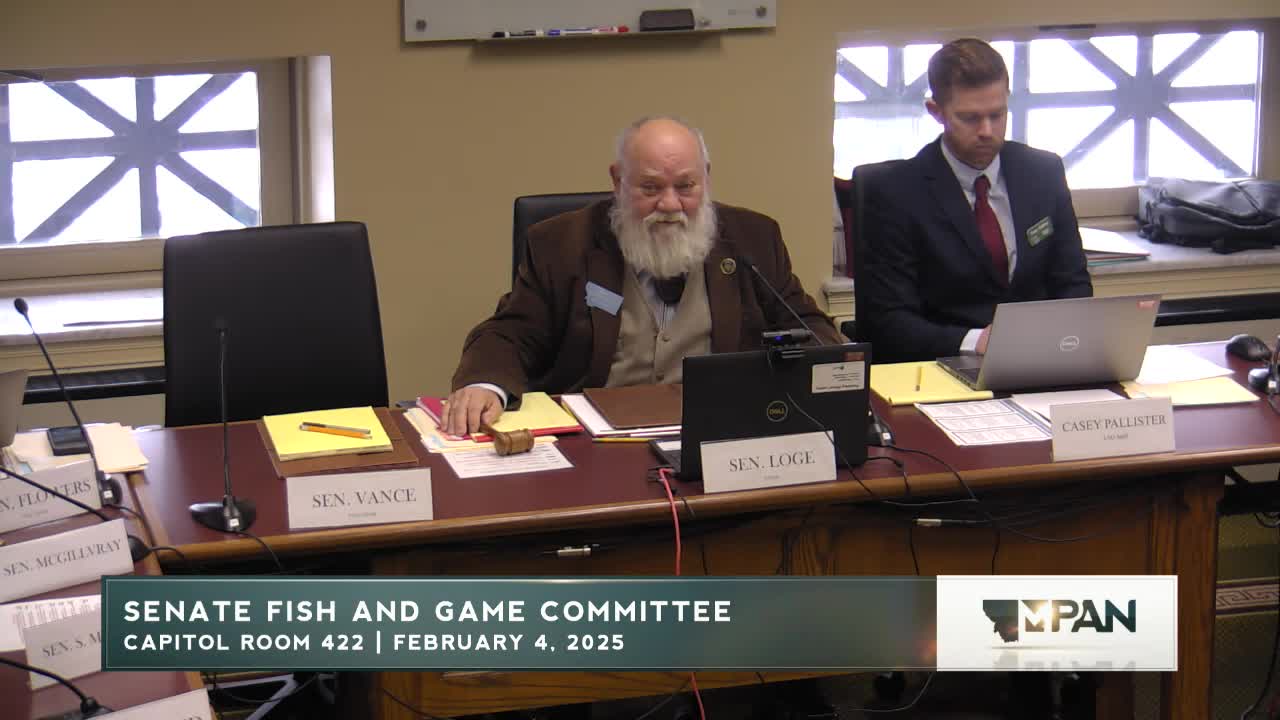
Representative Paul Fielder, a wildlife biologist and sponsor, told the Montana Fish and Game Committee that House Bill 57 would add California quail and Gambel’s quail to the statutory definition of upland game birds.
“I'm bringing this bill at the request of the Environmental Quality Council,” Representative Paul Fielder said, noting the change would appear on specified pages of the bill and that any new listing would not take effect until March 2026.
Proponents at the hearing said the quail are well-suited for training bird dogs and already occur in parts of Western Montana. Dave Heine, who described himself as operating a small farm north of Flathead Lake and participating in youth upland-bird programs, said California quail are “a really desirable bird for training all ages of pointing dogs.” Jerry Ruwer, a hunter appearing by phone, also supported the bill and said quail have been present in the state for years.
Opponents — including Montana Audubon and chapter leaders from 5 Valleys Audubon — urged the committee to reject HB 57 or send the question to the Fish and Wildlife Commission for review. Peter Dudley, representing Montana Audubon, said the current designation for the quail in Montana is “exotic prohibited” and emphasized that the commission and its Classification Review Committee typically handle questions about introducing or reclassifying nonnative species.
“Currently, they're an exotic prohibited species,” Peter Dudley said, describing the commission-driven process for classification and noting that the designation currently bars transport or release of the birds. Dudley and Rosemary Leach, president of 5 Valleys Audubon, told the committee they were concerned about the birds’ prolific local populations, potential competition with native species, and disease risk—particularly congregations at feeding sites that, they said, could increase avian influenza transmission.
Quentin Kujala, chief of conservation policy for Montana Fish, Wildlife & Parks, testified as an informational witness and said the department has documented a long-term presence of these quail in the Bitterroot Valley but has not found formal research demonstrating competition or disease impacts. “We have not detected that competition and that disease concern over that timeline,” Kujala told the committee, while noting that the birds’ presence has so far been relatively constrained to Western Montana.
Committee members asked about observed flock sizes and the process for classification. Dudley and other opponents said the birds likely established from illegal releases and that the Classification Review Committee and Fish and Wildlife Commission are the proper forums for weighing disease, competition, and public comment. Kujala explained that the commission has the authority to set seasons and possession rules if species become game birds and that any intentional releases would be subject to department review and, if applicable, the Montana Environmental Policy Act process.
No formal committee action or vote was recorded during the hearing. Representative Fielder closed by reiterating his view that listing the quail would allow the department to manage them as game birds if the commission chose to do so.
The committee recorded public testimony from proponents and opponents, including written petitions referenced during testimony; members asked staff and witnesses clarifying questions about population reports, historic petitions to the department, and the commission’s authority.
The hearing record shows a range of views: proponents emphasized recreational and dog-training benefits and existing local populations; opponents urged a conservative, commission-led process because of ecological and disease concerns. The bill’s sponsor and the department said management options would remain with the commission if the species were added to the upland game bird list.