Get Full Government Meeting Transcripts, Videos, & Alerts Forever!
Get email alerts on the Transportation Electric Vehicles topic
No spam. Unsubscribe anytime.
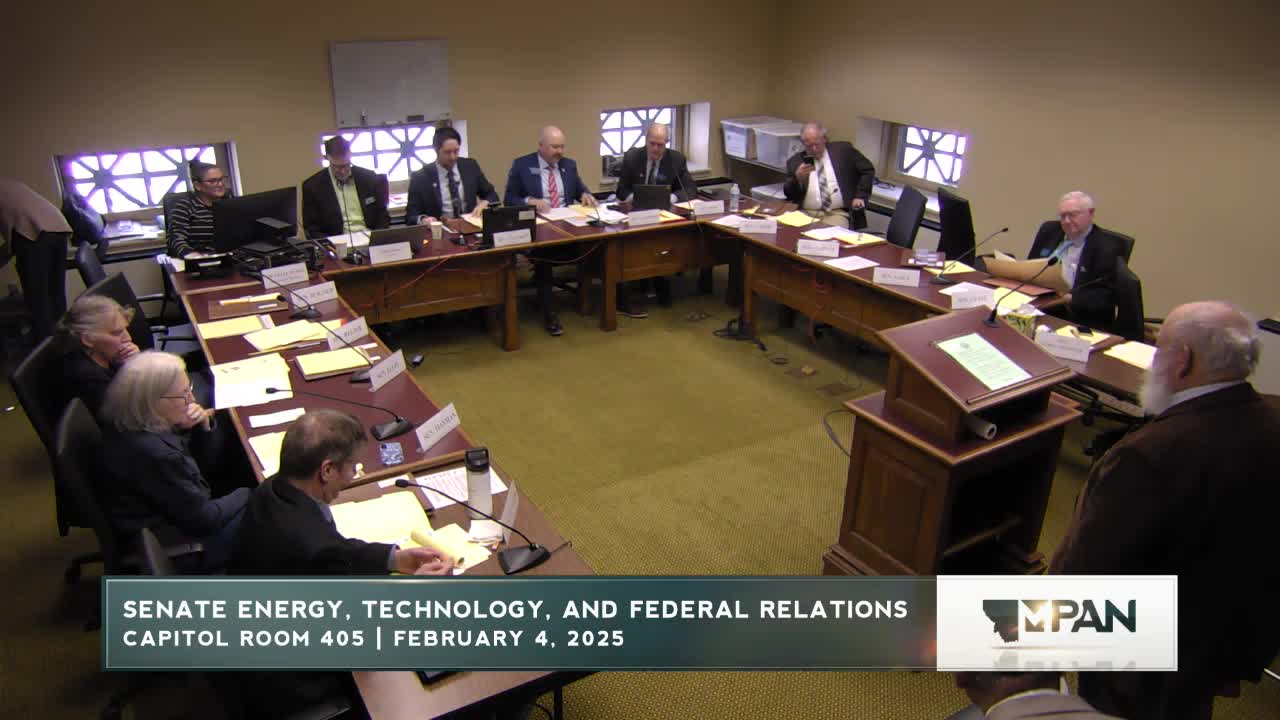
Senate committee hears cleanup bill on EV charging fees; stakeholders seek earlier registration adjustment
Summary
Senate Bill 228 would clarify implementation of a 3¢ per kilowatt‑hour tax on public EV charging stations and related definitions; sponsors and agencies described the change as a technical cleanup, while local governments and renewable groups urged moving earlier a planned 30% cut to the EV registration fee.
Senator Logie told the Senate Energy Committee that Senate Bill 228 is a technical cleanup to earlier legislation that established a 3¢ per kilowatt‑hour tax on electricity dispensed at public charging stations and clarified metering and implementation rules. “What this bill is is just to clean up on the language of what we are doing currently,” Logie said, noting the state has collected revenue under the existing structure.
Larry Flynn, deputy director of the Montana Department of Transportation, told the committee the changes are implementation details vetted by a multi‑stakeholder working group and are not a policy revisit: “This is just to shave off some of those rough edges and get the terms in place that we need to do so,” Flynn said.
Officials said the statutory metering approach requires charging stations (the bank of chargers) to be separately metered from the host business so the 3¢ tax applies to electricity used by the charging station. Flynn said doing per‑port metering would be far more expensive and that the working group agreed the station‑level meter is a practical compromise.
Montana Department of Transportation staff reported collections to date: roughly $47,000 in the charging‑station tax for calendar year 2024 and “in excess of $700,000” collected via the EV registration surcharge in the same period, figures that sponsors said are part of a ramp‑up while the charging network expands.
Several local governments and environmental groups opposed the bill as written unless the registration fee schedule is advanced. Danny Hess of the City of Bozeman urged changing the statute so the planned reduction in the EV registration fee occurs sooner than the bill’s statutory 2028 date; “With that amendment, we would support SB 228,” Hess said. McKenna Sellers of the Montana Renewable Energy Association and Nick Fitzmaurice of the Montana Environmental Information Center also asked why the registration reduction is delayed while the public charging tax takes effect immediately.
Sponsor Logie said he would not accept an on‑the‑spot amendment to move the registration cut earlier, citing compromises reached two years earlier and the interagency implementation schedule, but stakeholders said they would be willing to support the bill if the schedule were expedited. The committee heard no formal motions or votes and closed the hearing after sponsor remarks.