Get Full Government Meeting Transcripts, Videos, & Alerts Forever!
Get email alerts on the State Trust Agricultural Lease Bidding Hb80 topic
No spam. Unsubscribe anytime.
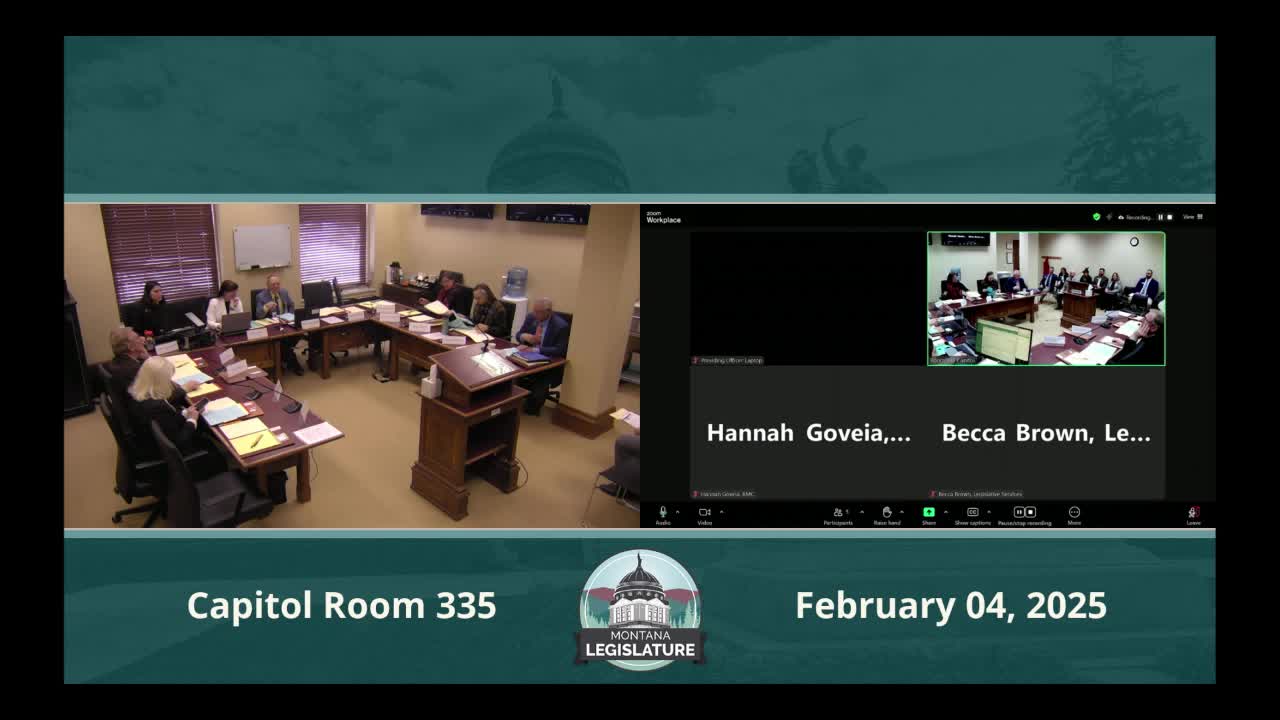
Senate committee hears HB 80 to move state agricultural lease bidding to cash-per-acre
Summary
The Senate Agricultural, Livestock and Irrigation Committee heard testimony on House Bill 80 to require cash-per-acre competitive bids for agricultural state trust leases, a change DNRC and agricultural groups said would simplify bidding and billing.
The Senate Agricultural, Livestock and Irrigation Committee heard testimony on House Bill 80 on HB 80, a bill sponsored by Representative Brandon Gregg to allow the Department of Natural Resources and Conservation (DNRC) to competitively bid agricultural state trust leases on a cash-per-acre basis rather than on a crop-share basis.
Representative Brandon Gregg, sponsor of HB 80, told the committee the bill would "allow the DNRC the ability to competitively bid agricultural leases on a cash lease only basis." He said the measure passed unanimously through the House. Kelly Matishka, agricultural and grazing bureau chief in the Forestry and Trust Lands Division of DNRC, testified in support and described the current process as confusing for staff and lessees.
Matishka said DNRC manages more than 9,000 active leases across about 4,700,000 trust acres and that trust revenues from agricultural leases generate between $15 million and $20 million annually for beneficiaries, mostly K–12 schools. She said about 555,000 acres are classified as agricultural, roughly 1,000 leases come up for renewal each year, and only about 40 to 50 of those typically receive competitive bids. "When a bid is submitted for an agriculture lease, under current law, it must be [on a] crop-share basis at the minimum of 25% crop share," Matishka said, and she explained that under current rules a crop-share bid greater than 33.33% must also be backed by a cash-per-acre guarantee, creating so-called "combo" bids.
Matishka and proponents told the committee that combo bids force DNRC staff and lessees to determine annually which payment (crop-share or cash-per-acre) yields the higher payment to the trust and to process additional paperwork. She said there are currently 56 competitive-bid leases with an agriculture component and about 41 of those use combo bids. Matishka said HB 80 would make new competitive bids cash-per-acre only ("This is only for new bids on agriculture leases, not grazing"), eliminate the need to annually compare crop-share versus cash values for those new bids, and keep existing crop-share leases unchanged unless a lessee requests conversion or the lease comes up vacant for bidding.
Industry groups testified in support. Nicole Rolfe of the Montana Farm Bureau Federation said the change "simplifies things on the farmer side" and that many producers already prefer cash leases. Ellie Brighton, representing the Montana Stock Growers Association and the Montana Association of State Grazing Districts, said many members operate on cash AUM or cash-lease systems and supported streamlining. Richie Melby, speaking on behalf of Secretary of State Christi Jacobson, described the bill as a cleanup and simplification. Boyd Heilig, for the Montana Grain Growers Association, said in his experience cash leases were easier and sometimes more profitable.
Committee members asked DNRC officials about procedural and practical safeguards. Matishka said DNRC requires a $20-per-acre deposit on agricultural bids, that leases are generally 10-year terms (with some five-year leases when management concerns exist), and that field staff inspect parcels on renewal cycles to monitor management and, if necessary, place stipulations or pursue cancellation for serious mismanagement. She described an administrative hearing process and a land-board review for unusually high or disputed bids: an aggrieved lessee can request a hearing, both parties present their cases, DNRC makes a recommendation, and the State Land Board makes final decisions.
Senators also raised questions about drought, insurance and disaster protection. Matishka said cash leases allow producers to insure the full lease amount and can provide better protection under disaster programs than a crop-share arrangement. The bill does not change grazing leases or how annual grazing rates are calculated; grazing rates remain set annually based on stocking evaluations and a statutory multiplier tied to cattle prices, Matishka said.
No committee action or vote was taken at the hearing. Committee staff told members they must finish a conflict check before the committee can move HB 80 to executive action. The hearing was closed after sponsor remarks and committee discussion.
Next steps: the committee staffer said they will complete conflict checking and notify Chair Gillespie when HB 80 is ready for executive action; no date was set.
Sources: testimony by Representative Brandon Gregg (bill sponsor) and Kelly Matishka (DNRC Agricultural and Grazing Management Bureau chief), testimony from Nicole Rolfe (Montana Farm Bureau Federation), Ellie Brighton (Montana Stock Growers Association / Montana Association of State Grazing Districts), Richie Melby (office of the Secretary of State), Boyd Heilig (Montana Grain Growers Association) and committee staff remarks in the Senate Agricultural, Livestock and Irrigation Committee hearing on HB 80.