Get Full Government Meeting Transcripts, Videos, & Alerts Forever!
Get email alerts on the Reserve Deputies School Security topic
No spam. Unsubscribe anytime.
Committee hears bill to allow counties to compensate reserve deputies for school security
Summary
The House Local Government Committee heard House Bill 323, which would let counties pay reserve deputy sheriffs for duties such as school security. Proponents said compensation could boost staffing; opponents, including the Montana Association of Counties, urged clarifying language to avoid creating employee status and related liabilities.
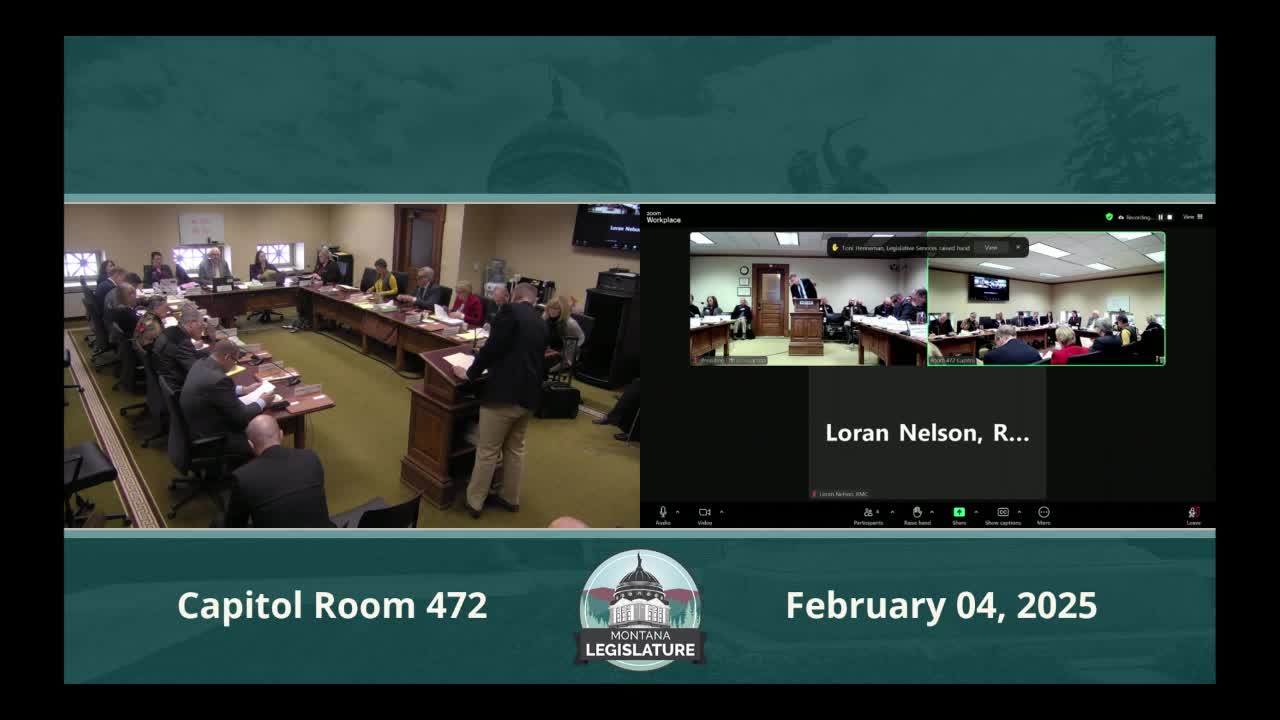
HELENA — The House Local Government Committee opened a public hearing on House Bill 323 on whether counties may provide pay or other compensation to reserve deputy sheriffs who perform duties such as school security.
Representative Steve Fitzpatrick, R‑House District 24, sponsored the bill and told the committee the measure leaves compensation decisions to county commissions and aims to expand local staffing options for law enforcement.
The bill drew proponents from Cascade County and statewide law enforcement groups. Cascade County Sheriff Jesse Slaughter said his office has struggled to staff school security and other assignments and urged a compensation option to recruit retired officers and others with law‑enforcement experience. "Volunteerism is dead," he said. "We have 3 SROs. It's still not enough." Slaughter told the committee a fully sworn deputy costs "close to $200,000" to start up and more than $100,000 a year with salary and benefits, figures he offered as context for seeking lower‑cost, compensated reserve options.
Undersheriff Scott Van Dyken, also of Cascade County, said reserve programs once counted dozens of volunteers but now provide far fewer personnel and that training and equipment costs deter potential reserves. "For these guys to attend training, it's expensive. They have to buy their own equipment," he said.
Nannette Gilbertson of the Montana Sheriffs and Peace Officers Association said reserve programs can be a recruitment pipeline into full‑time service: "A lot of our deputies start out as reserves and then transition into that full‑time role."
Opponents and officials representing county governments urged technical changes. Joette Woods, a county commissioner and president of the Montana Association of Counties, said the legislation should not create unintended employment liabilities. "A volunteer can make a wage and hour claim against the county years after serving," Woods said, urging language that prevents paid reserves from being treated as employees retroactively.
Karen Alley, associate general counsel for the Montana Association of Counties, echoed that concern and pointed to the Fair Labor Standards Act as the primary federal test the bill should avoid triggering. "We do have concerns about ensuring that a reserve deputy doesn't begin to meet and look like an employee under the Fair Labor Standards Act," Alley said.
Committee members asked clarifying questions. Sheriff Slaughter said Montana reserve deputies must complete a minimum 88‑hour training cycle, pass physical and psychological tests and, when sworn, exercise the full powers of a sheriff. He said Cascade County would limit compensated reserves' duties to school security and put them under the supervision of full‑time school resource officers.
Representative Overstreet asked whether the sponsor would consider amendments to address liability concerns; Fitzpatrick said he was open to changes and planned to work with stakeholders. Committee discussion did not include a vote; Fitzpatrick said he would draft amendments and the committee closed the hearing on HB 323.
The measure would authorize but not require counties to compensate reserve deputies; the decision would remain at county commission discretion. No formal committee action or vote on the bill was recorded at the hearing.