Get Full Government Meeting Transcripts, Videos, & Alerts Forever!
Get email alerts on the Local Governance topic
No spam. Unsubscribe anytime.
Burbank council reviews overhaul of boards, commissions and committees
Summary
City Clerk Kimberly Clark presented a comprehensive review of Burbank's boards, commissions and committees on Feb. 4; council gave staff direction on membership size, attendance rules, training and several name and consolidation proposals and asked staff to return with ordinance language and implementation steps.
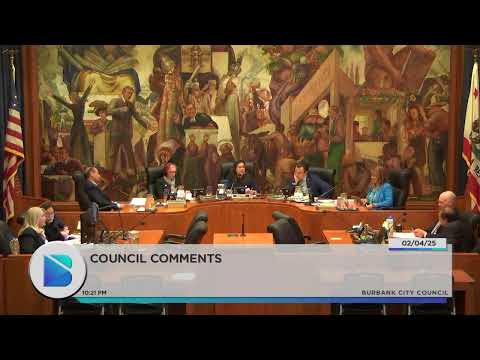
Burbank City Clerk Kimberly Clark presented a citywide review of the city's boards, commissions and committees to the Burbank City Council on Feb. 4, recommending a set of changes that would standardize membership sizes, tighten attendance rules and consolidate some advisory bodies.
"Tonight's report is a first step only to gather the council's input and direction on proposed changes to the city's BCC's," Clark told the council during the presentation.
The report, developed with department staff, noted that a survey of 52 comparable cities found an average of 12 boards and commissions composed of five to seven members; Burbank's current panels range from five to nine members, with the youth board at 17. Clark recommended a consistent composition (five members or up to seven for some groups), a simpler attendance rule (three missed regular meetings in an August 1'July 31 year would trigger a staff report to council) and mandatory training and a code-of-conduct acknowledgment for appointees.
Council members discussed the recommendations at length and signaled a number of directions to staff rather than adopting immediate ordinance changes. Council consensus and staff direction included: - Move toward consistent BCC membership sizes (five to seven members generally), with the Sustainable Burbank Commission and the Cultural Arts/arts-related advisory group treated as exceptions because of their event- and outreach-heavy workloads. - Remove an outdated code requirement that one Art in Public Places appointee be from the residential community and one from the business community; consolidate the Burbank Cultural Arts Commission and the Art in Public Places Committee into a single arts body and return with options for structure and a recommended name. - Rename the Community Goals Committee to the Community Development Block Grant (CDBG) Committee and keep the Infrastructure Oversight Board name but clarify its role and relationship to Measure P funding in recruitment materials. - Revise the youth board structure: allow middle-school voting alternates to be full voting members, add one representative seat for LILA (Lyce9e International de Los Angeles) if the council desires, and reduce the total youth board membership (staff recommended dropping from 17 to 13) while keeping an odd number for voting. - Simplify attendance enforcement: after a second absence a member receives a written warning; a third absence in the rolling Aug.1'July31 year prompts a staff report to council; council asked staff to give members the option to resign prior to a public council consideration and authorized staff to implement automatic removal upon a fourth unexcused absence in a 12-month period if council prefers to streamline enforcement. - Require basic Brown Act/conflict-of-interest training and a signed code-of-conduct acknowledgement within 30 days of a new appointee's first meeting and standardize onboarding materials for chairs and liaisons. - Ask staff to return with draft ordinance language, a proposed implementation timeline (including phased reductions in membership sizes by attrition), and outreach materials explaining any changes.
Councilmembers offered several refinements during debate. Councilmember Mullins said attendance rules should account for short partial appointments and special meetings, and suggested automatic removal after a fourth missed meeting if a member previously had an excused third absence. Councilmember Rosati asked staff to ensure private and parochial schools currently excluded from youth-board representation (the report identified specific private schools) be included in the recruitment list. Vice Mayor Takahashi and others asked that consolidated arts proposals include ways to preserve expertise from the Planning and Parks & Recreation representatives who currently serve as voting members on the Art in Public Places Committee.
On term limits, council discussed an option for three consecutive full terms (12 years) applied prospectively; council members asked staff to return with ordinance language if the council wishes to adopt that approach. Clark said staff would bring back recommended ordinance language and implementation details for council consideration rather than imposing immediate code changes.
Why it matters: boards and commissions are the primary channels for resident participation and technical review in land use, arts, sustainability and program oversight. The council directed staff to prepare formal draft ordinance amendments and recruitment materials so the public and commissioners can review how the changes would be implemented.
Councilmembers and staff said they would also develop standardized onboarding and chair training to reduce recurring confusion about roles, Brown Act requirements and when a council liaison may provide factual clarification to an advisory body.
The clerk's office will return to council with draft ordinances and a recommended implementation timetable; staff said they would collect input from affected commissions and provide a citywide survey of BCC members about onboarding, training and meeting practices as part of the follow-up work.