Get Full Government Meeting Transcripts, Videos, & Alerts Forever!
Get email alerts on the Public Defense Children Bureau topic
No spam. Unsubscribe anytime.
Bill to shift children’s abuse-and-neglect work into Office of Public Defender prompts hiring and reimbursement questions
Summary
Senate Bill 151 would create a children's bureau inside the Office of Public Defender and move contract abuse-and-neglect cases to state-employed attorneys; the committee questioned hiring timelines, travel costs and federal reimbursement assumptions.
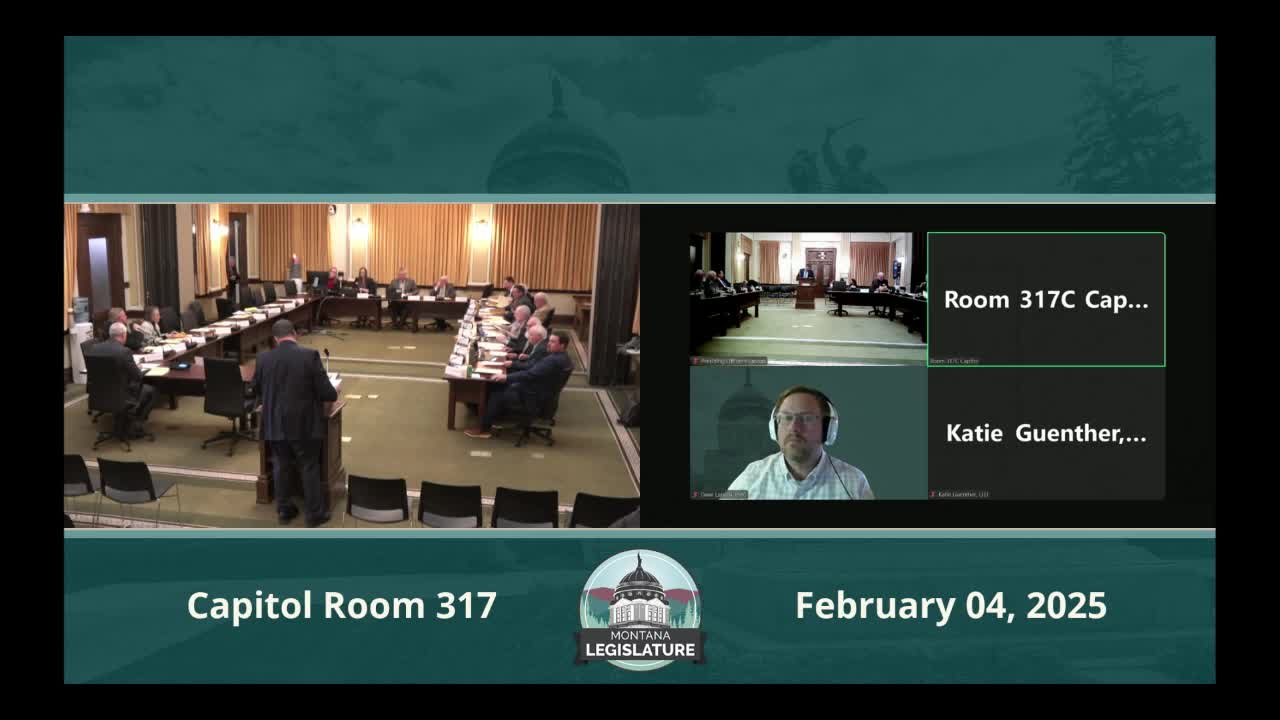
Senate Bill 151, presented in the Finance and Claims Committee, would create an organizational structure inside the Office of Public Defender (OPD) that moves work now performed by contract attorneys into a dedicated children's bureau staffed by FTEs. Sponsor testimony framed the change as a shift to more consistent, in-house representation for children and parents involved in abuse-and-neglect cases.
Senator Dennis Lens (Senate District 25), the bill sponsor, summarized the fiscal note and transition timeline: the fiscal narrative assumes 21 new FTEs at a cost of about $1,900,000 and anticipates reductions in contract payments that drive net contracting savings referenced in the fiscal note. Lens described the proposal as a conservative transition estimate and said the fiscal model expects the program to be budget-neutral by about fiscal year 2028 if the transition proceeds as estimated.
Brett Chandelson, director of the Office of State Public Defender, told the committee the primary implementation risk is hiring the specialized staff. He said, “This is the the big concern to success would be the ability to actually hire them,” and later stated, “I think we can anticipate at least 12 placed in this in the next biennium if we prioritize that.” Chandelson explained recruitment will likely be a mix of moving experienced attorneys into the agency and hiring and training new attorneys; he also clarified the 21 positions include 17 attorneys and 4 non-attorney staff.
Committee members raised questions about travel time and in-person contact with children and families. Senator Bollman asked whether the fiscal note accounted for travel (so-called “windshield time”); Chandelson and OPD staff explained the fiscal note assumes their House Bill 2 request and a contractor-rate adjustment to $90 an hour with a travel modifier, and that FTE travel is usually covered as part of salary and marginal travel expenses whereas contractors are billed hourly plus travel. Chandelson said FTE staffing would be distributed across the state based on operational needs, drawing on the existing Family Defense Bureau model that already places OPD employees in multiple locations.
Committee members also questioned the program’s dependence on federal Title IV-E reimbursement. Chandelson explained OPD receives Title IV-E reimbursements via the Department of Health and Human Services and that both FTE and contract expenditures are subject to IV-E reimbursement at slightly different rates. He said a dedicated bureau can increase the percentage of operating costs recaptured via IV-E because of the bureau’s focused mission, but also noted that if IV-E reimbursements were to change or be unavailable, both contract and FTE sides would be affected.
In executive action, the committee took a roll-call vote on the bill and did not pass it at that time. The recorded roll-call vote in the transcript showed more committee members opposed than in favor during the attempted passage; committee leadership then moved to reverse the vote and table the bill for further consideration.
The discussion focused narrowly on fiscal feasibility, hiring timelines and geographic service delivery; no statutory language changes were adopted in committee during the hearing.