Get Full Government Meeting Transcripts, Videos, & Alerts Forever!
Get email alerts on the Energy Taxation topic
No spam. Unsubscribe anytime.
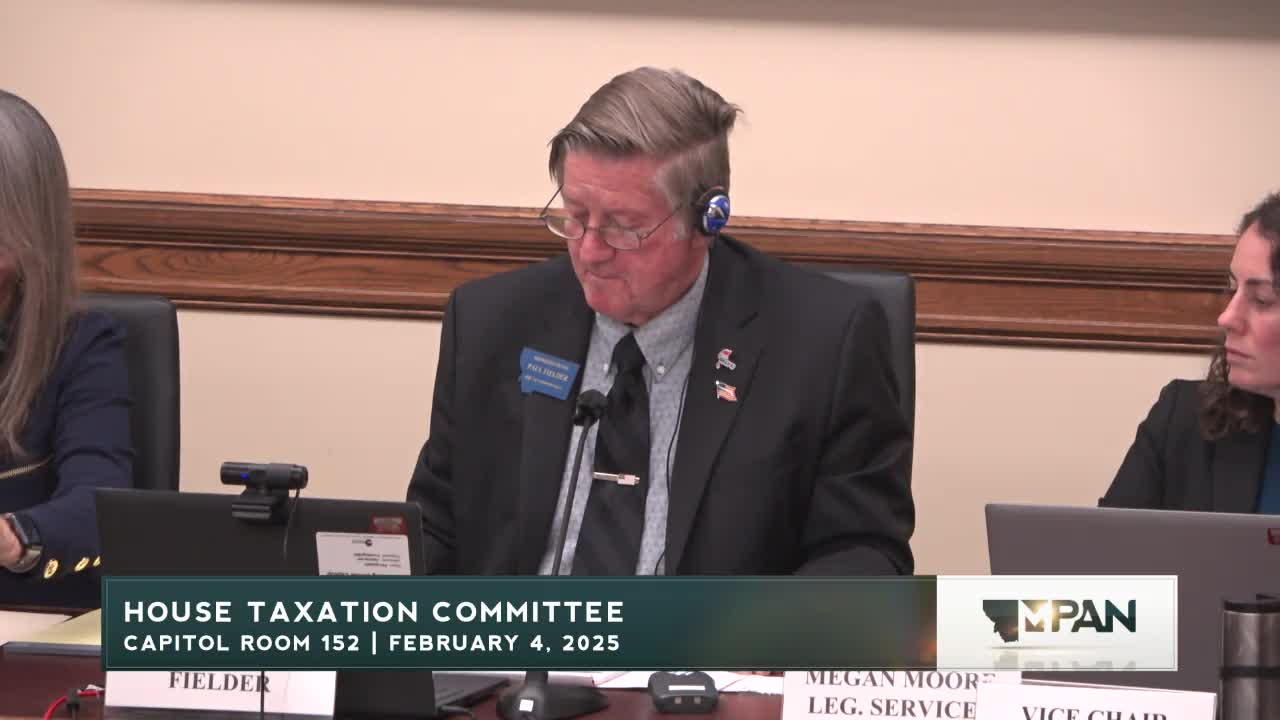
Montana hearing on HB 326 would tax electricity sales from in-state generation; opponents warn of lost projects
Summary
Representative Gary Perry sought a 10% tax on sales of electrical energy produced in Montana and creation of a State Energy Resource Severance Act; dozens of utilities, developers and local groups testified that the measure would act as a 10% sales tax, threaten competitiveness and reduce revenues to local projects.
Representative Gary Perry introduced House Bill 3 26, the State Energy Resource Severance Act, proposing a tax on sales of electricity produced in Montana and a new energy severance trust aimed at creating legacy revenue for the state.
Perry, who represents House District 35, told the House Taxation Committee the bill would put Montana ‘‘first’’ by capturing value from energy produced in the state and directing legacy dollars to a permanent fund and to a proposed state energy authority. ‘‘I want Montana to be the energy hub for the Northwest for many generations to come, but I want there to be commensurate legacy dollars for Montanans,’’ Perry said during his opening remarks.
The sponsor described the measure as intended to produce funds for infrastructure needs — water and sewer repairs, roads and other local projects — and said the bill would exclude coal-fired generation from new taxation initially because coal already pays a 15% severance tax (he later proposes reducing that coal rate to 10% in the bill). Perry said the permanent fund in the bill would cap deposits at $250,000,000 and that other sections outline allocations to an energy authority and to project funding.
Nearly three dozen witnesses opposed the bill in a hearing that drew representatives from utilities, renewable developers, rural electric cooperatives, state agencies and local chambers. Opponents consistently argued the bill, as written, functions as a 10% sales tax on energy sales rather than a classic severance tax and would make Montana projects uncompetitive in regional procurement processes.
Bruce Spencer, a lobbyist and attorney representing the Montana Energy Business Alliance, told the committee, ‘‘It is not a severance tax. It’s a 10% sales tax. It’s a 10% tax on the amount of money that the project wind developer receives from the sale of that energy.’’ Spencer said projects need long-term power purchase agreements to secure financing and that any cost passed into bids will make Montana projects less competitive in regional request-for-proposal processes.
Utility witnesses and trade groups said the added cost would be passed to customers or force developers to locate projects elsewhere. Ryan Hall of the Montana Electric Cooperatives Association said a new 10% tax ‘‘would have an immediate and significant impact on power supply costs for electric cooperatives and could cause some sources of electricity generation to no longer be economically viable.’’ Alan Olsen of Northwestern Energy and Mike Green for Montana-Dakota Utilities said the structure of the bill also left unclear how the tax would be calculated for utility-owned plants that do not sell power at a discrete ‘‘sale’’ price.
Developers outlined prospective local benefits they say could be lost. Melissa Lewis of Puget Sound Energy said the company’s planned Beaver Creek wind project in Stillwater County is expected to generate about $1,800,000 a year in local and state tax revenue and millions more in impact fees; she estimated HB 326 would cost that facility roughly $8,000,000 per year and $240,000,000 over a 30-year life, potentially making the project infeasible. Renewable Northwest and NextEra cited regional demand forecasts and said Montana needs more clean generation; both warned that a new tax would deter the investments that produce jobs and payments to landowners and counties.
State agencies and locally focused groups also testified. Trevor Watson, deputy administrator at the Department of Natural Resources and Conservation, said HB 326 would reduce revenues from the Broadwater hydro project by roughly $150,000 annually, funds that support operation and rehabilitation of state water projects. Rebecca Boslough King of the Montana Association of Conservation Districts said the bill would threaten conservation district funding that currently receives coal tax trust distributions.
Supporters of the bill were not present in the hearing room; Perry said he had attempted interim outreach to developers but that he could not secure firm numbers about economic impacts and therefore used a 10% proposal in the draft. The committee closed the hearing after more than two hours of testimony from opponents, informational witnesses and committee questions. No formal committee action on HB 326 occurred during the hearing.
The record contains multiple technical and policy disputes committee members pressed witnesses to clarify, including whether the measure would be considered a sales tax or severance tax, how the tax would be applied to utility-owned generation, and how the measure would affect county tax abatement agreements and existing property-tax receipts from renewables.
The sponsor and many opponents agreed on one point: the debate concerns how Montana should capture long-term fiscal value from any energy that is generated within the state but sold out of state. Perry framed HB 326 as an attempt to leave ‘‘legacy dollars’’ for Montanans; industry and local-government witnesses argued the approach in the bill would shrink project development, reduce near-term tax receipts and raise customer bills.
Perry closed by urging the committee to ‘‘make the right decision’’ to secure legacy dollars for Montana; several committee members asked technical follow-ups and requested additional fiscal and legal analysis before any further action.
Ending: The committee closed the HB 326 hearing without taking executive action. Members asked staff and informational witnesses to provide clarifying material requested during questioning; the record shows broad disagreement between the sponsor’s intent and industry testimony about the bill’s effect on competitive procurement and customer rates.