Get Full Government Meeting Transcripts, Videos, & Alerts Forever!
Get email alerts on the Capital Facilities topic
No spam. Unsubscribe anytime.
Subcommittees Review DPHHS Requests in House Bill 5, Including Security Upgrades, Roof Study and Hospital Repairs
Summary
Department of Public Health and Human Services officials described five projects in House Bill 5 focusing on safety, deferred maintenance and licensure upgrades at state-run care facilities, but no votes were taken during the hearing.
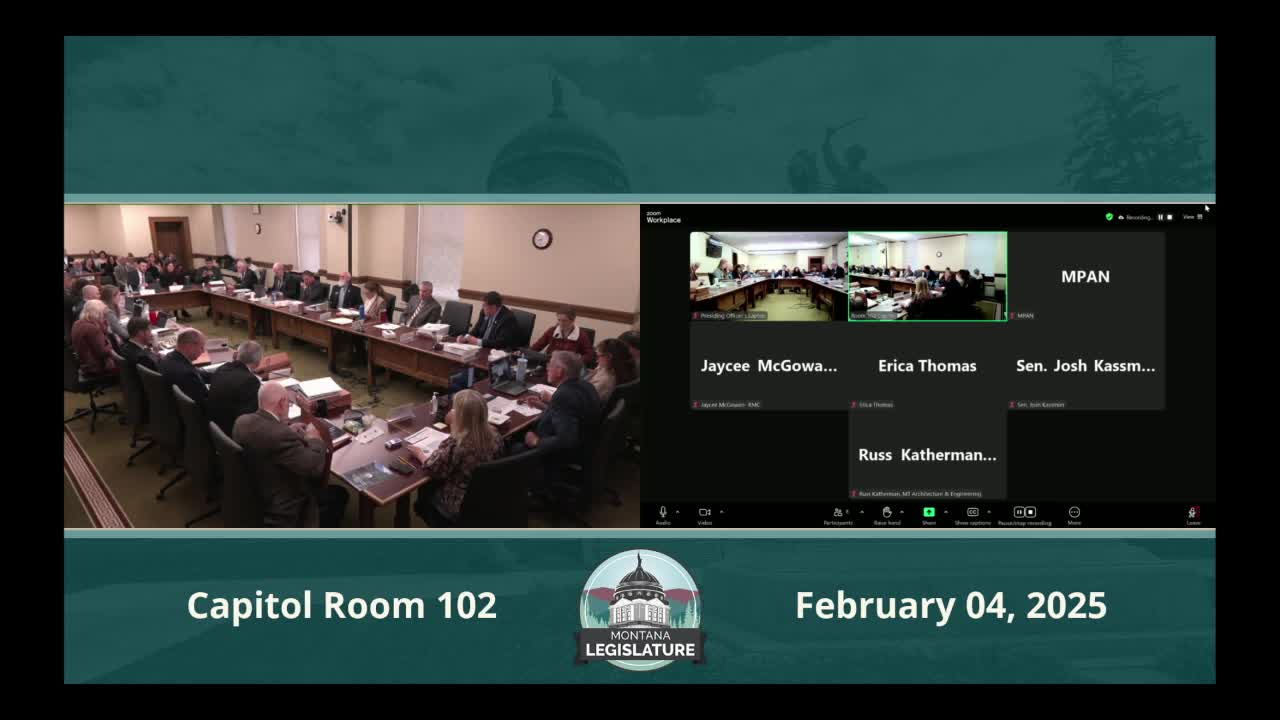
Officials from the Department of Public Health and Human Services and the Department of Administration told joint subcommittees B and F that five projects in House Bill 5 are intended to address safety, deferred maintenance and licensure needs at state-run health care facilities.
The projects presented included a $130,000 request to finish door access controls at the Montana Mental Health Nursing Care Center in Lewistown; a $300,000 request for 36 additional security cameras at that same facility; a $1.9 million investigation and exterior-envelope repair request for the Eastern Montana Veterans Home in Glendive to identify and stop active leaks; a comprehensive mechanical-system replacement request at the Montana State Hospital; and a licensure‑related renovation request for the Spratt unit to support multiple potential future licensure types.
Why it matters: committee members and agency staff said the requests are intended to improve resident and staff safety, protect long‑term capital investments and ensure facilities meet licensure and federal expectations. Director Charlie Brereton of the Department of Public Health and Human Services told the committees the packet’s theme was “centered on our state run health care facilities, including the Montana State Hospital.”
Most detailed items - Lewistown access controls (MR2): Randy Stevens, planning manager in the Architecture & Engineering Division, said the $130,000 request would add control hardware, readers, mounting and wiring for 25 remaining door locations. Stevens said, “This allows real time monitoring and to make this facility safer for at risk residents and the staff.” Committee members asked whether engineering and non‑construction fees were included and Stevens said the figures allow for competitive procurement and possible use of statewide term contracts.
- Lewistown cameras (MR05): Stevens said the $300,000 request would add 36 interior and exterior cameras to fill blind spots on the existing system. Charlie Brereton said the additional cameras “would feed into the existing DPHHS camera system” and that staff at facilities as well as headquarters in Helena can access the cloud‑based system.
- Glendive water infiltration (MR20): Katherman (Russ Katherman of the Architecture & Engineering Division) described persistent leaks at the Eastern Montana Veterans Home and the need to fund an investigation before designing repairs. He said the $1.9 million request covers diagnostic work and includes a contingency for roof replacement if the investigation shows that to be necessary. Katherman estimated the building is about 50,000 square feet and said previous exterior repairs had not solved the problem.
- Montana State Hospital mechanical systems: committee members were shown an engineering assessment listing multiple aging components — nine air‑handling units, numerous condensing units running on R‑22 refrigerant, boilers, digital controls and related plant infrastructure — that would require phased replacement. No final project total was specified during the presentation; staff said the submitted narratives and the engineering report in the committee packet describe needed components.
- Spratt unit licensure upgrades (CDD05): Katherman and Brereton explained the Spratt unit needs mechanical, fire‑alarm and sprinkler upgrades that would support multiple licensure outcomes. Brereton said the department does not yet know which licensure type will be used long term, but that “we do believe that we'll have a use for those Spratt beds either on the civil side or the forensic side in a future state. So the request that's before you is necessary for any of those licensure types.” Committee members pressed about patient moves tied to House Bill 29 and asked for operational details.
Committee questions and follow-up: members asked for clarifications about the statewide building inventory and a likely typographical discrepancy in the committee book (Katherman said he would check with staff), procurement details for security systems, and whether any of these projects would require additional appropriations if investigations show larger repairs are needed. Katherman said project appropriations in House Bill 5 are restricted to the described purpose and unspent funds would revert to the long‑range account.
Process note: this meeting was a hearing and no committee votes on these projects occurred during the session. Committee staff and agency presenters agreed to provide follow‑up materials, including a campus‑level listing of active projects and the facility condition assessment report.
Ending: the hearing on House Bill 5 concluded after presenters took questions and agreed to provide supplemental documents to the subcommittees. Members said they would review the detailed narratives and engineering assessments in the committee book before any appropriation decisions.