Get Full Government Meeting Transcripts, Videos, & Alerts Forever!
Get email alerts on the Legislative Procedure Session Law topic
No spam. Unsubscribe anytime.
Committee advances bill to simplify how termination dates are recorded in session law
Summary
The Legislative Administration Committee voted to advance Senate Bill 75, which would change how legislative staff codify and amend statutory termination dates, a procedural measure sponsors say will reduce repetitive drafting work without changing lawmakers' authority to set or extend sunsets.
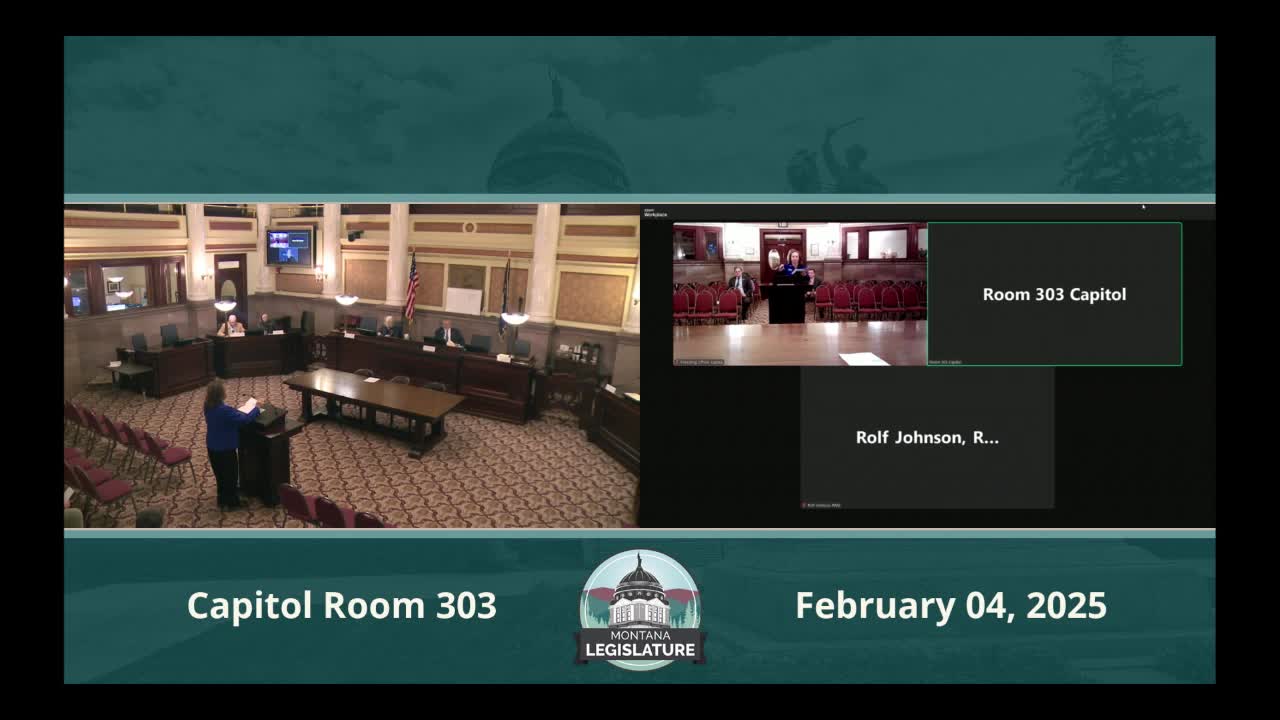
The Legislative Administration Committee on an early-morning voice vote advanced Senate Bill 75, a bill sponsored by Senator Sue Vinton that would alter how termination ("sunset") dates are recorded in session law to simplify later amendments.
Senator Sue Vinton, who represents Senate District 20 in Yellowstone County, said the bill is offered "at the request of legislative council" and asked committee staff to explain the technical details. Jared Coles, deputy legal director for the Montana Legislative Services Division, told the committee the bill is a drafting and statutory-interpretation tool aimed at reducing the workload of codifying repeated sunset extensions.
"What this bill does is it basically says, as legislative services division, when we're putting things into statute, we can simply look at an act that's amending the very first piece of legislation that had a termination date," Coles said. He described the current practice as producing multiple session-law enactments that must each be amended every time a legislature extends a termination date, a process he said can become exponentially more complex with repeated extensions.
The bill does not change the substantive authority of the Legislature to set, extend or allow termination dates to take effect, Coles told the committee. "If a piece of law terminates, it terminated. There's nothing we can do about it. The legislature has to come in and amend the session law before that act terminates," he said.
Committee members asked clarifying questions about scope and effect. Senator Dunwell asked whether the bill would prevent the Legislature from extending a termination date; Coles answered it would not. Senator Fuller asked how long the drafting practice has been in effect; Coles said the problem predates his tenure but has worsened over successive sessions. Senator Heyman summarized the change as reducing the number of places staff must amend: "This bill is as simple as saying the only thing you have to change in code is the original bill," he said; Coles agreed.
Senator Vinton closed by urging a due-pass recommendation on the bill. The committee then moved and passed the bill by voice vote; the committee chair recorded that Senator Zolnikoff and Vice Chair Emerich voted aye by proxy.
The bill's sponsor and staff framed the proposal as a technical drafting improvement to session-law codification rather than a change in policy or legislative power. If enacted, legislative services staff would use the bill's procedure when codifying statutes that have termination dates so that later extensions need not amend every prior session-law enactment that touched the original termination provision.
Votes at the committee level were taken by voice; the record specifically notes proxy aye votes for Senator Zolnikoff and Vice Chair Emerich but does not provide a numerical roll-call tally in the transcript.