Get Full Government Meeting Transcripts, Videos, & Alerts Forever!
Get email alerts on the Occupational Licensing Health Evaluations topic
No spam. Unsubscribe anytime.
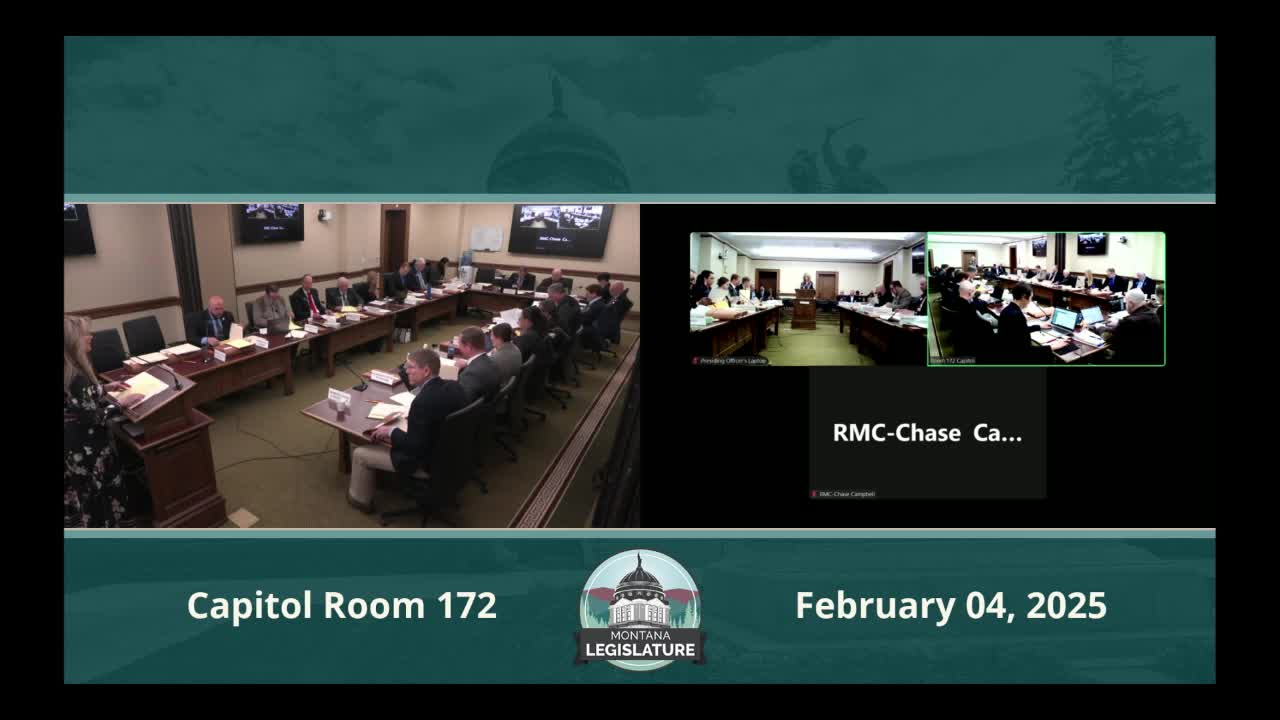
Committee hears bill to set standards for mental and physical exams for health licensees
Summary
An amended House Bill 238 would limit board-ordered fitness-for-duty evaluations to health-related licensing boards and set a four-factor test and protections for licensees, department witnesses said.
Representative Jodie Echart introduced House Bill 2 38 and asked the House Business and Labor Committee to consider an amended version that narrows the bill to health-related licensing boards.
What the bill would do: The amendment would limit authority to order mental or physical evaluations to boards that license health practitioners — specifically alternative health care, behavioral health, veterinary medicine and boards licensing medical practitioners under the cited statutory definition — and would set parameters for when those evaluations may be ordered. Quinlan O'Connor, chief legal counsel for the Department of Labor and Industry, told the committee the change responds to stakeholder concerns and clarifies when boards should use evaluations.
Why it matters: Department witnesses framed the measure as licensee protection and as clarity for boards that currently have authority but need guidance. Sarah Swanson (Department of Labor and Industry) said boards have begun asking for more “in-depth or invasive” evaluations and the bill “sets forth very clear parameters when the boards may and may not ask for this sort of information.”
Key procedural and substance points: - The amended bill limits its application to certain health-related licensing boards. O'Connor summarized that, under the amendment, the provision would apply to alternative health care, behavioral health, board of veterinary medicine and boards licensing medical practitioners under the referenced statutory definition (listed in the bill text as 37 2 1 0 1), which the counsel said covers medicine, dentistry, osteopathy, podiatry, optometry, pharmacy and nursing. - The bill requires boards to consider four factors before ordering an evaluation: duration of risk, nature and severity of harm, likelihood of potential harm and imminence of potential harm. O'Connor described that as a multi-factor balancing test to ensure orders are rare and targeted. - The bill would allow boards to subpoena relevant records; O'Connor and department witnesses explained that licensing boards have subpoena authority and that federal HIPAA contains carve-outs for administrative subpoenas, though they said statutory clarity could be improved. - The measure would permit summary suspension of a license or suspension of application processing when a licensee refuses an ordered evaluation and the board finds an imminent risk of harm.
Stakeholders and testimony: The Montana Medical Association (Jean Branscum) and the medical community said they supported the amended, narrower bill in its current form to preserve ability to order fitness-for-duty evaluations where patient safety is at issue. Department legal staff and representatives urged the amendment as a way to provide clearer guidance; several committee members questioned how the process would work in diversion and recovery programs, and O'Connor explained how referrals to the Montana recovery program interface with board processes.
Ending: Representative Echart closed by requesting the committee “pass.” The committee did not take a recorded vote during the hearing.