Get Full Government Meeting Transcripts, Videos, & Alerts Forever!
Get email alerts on the Civil Procedure Settlement Payments topic
No spam. Unsubscribe anytime.
House committee hears bill to expand voluntary payments to cover contract and warranty claims
Summary
Representative Steve Fitzpatrick told the House Business and Labor Committee a bill would let defendants make advance payments for any type of claim without admitting liability, while preserving exceptions for bad-faith insurance actions and attorney-fee claims.
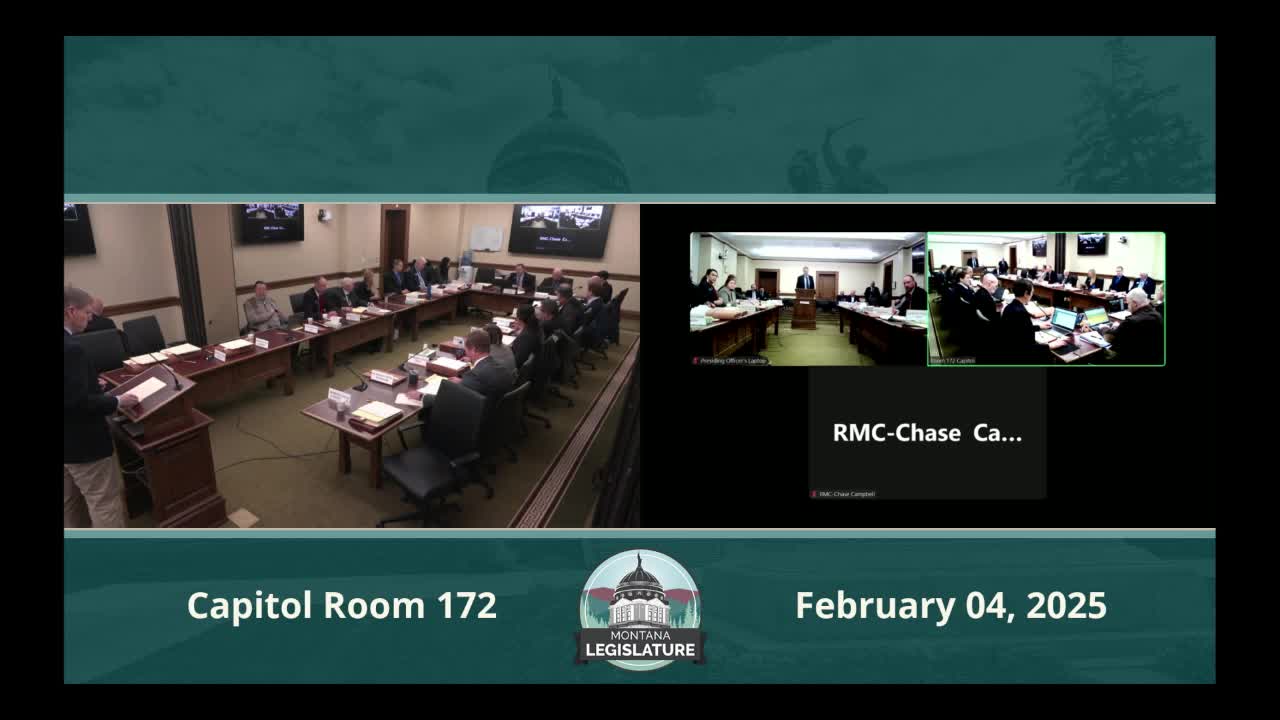
Representative Steve Fitzpatrick introduced House Bill 3 24 on behalf of the House Business and Labor Committee to expand Montana’s voluntary-payment protections so they apply to a wider set of claims, including breach of contract and warranty claims.
The bill would allow a person or insurer to make an advance payment on parts of a claim — for example, medical bills or lost wages — before the overall claim or lawsuit is resolved. Representative Fitzpatrick said the payment “is not an admission that you are actually liable,” and described the tool as a way to get money to injured people while disputes over other damages, such as pain-and-suffering, are resolved.
Why it matters: Supporters said voluntary payments let parties address undisputed elements of damages quickly and ease financial pressure on claimants. Fitzpatrick said the bill would extend that option from traditional bodily-injury claims to other disputes where elements of damages are undisputed, such as breach-of-contract disputes.
The bill includes two stated carve-outs: it would not bar admission of payments in bad-faith insurance actions, and it would not bar evidence of voluntary payments in proceedings to determine attorney fees. Fitzpatrick said those exceptions reflect the need to allow evidence where proof of an insurer’s delay or other misconduct is itself at issue.
Committee members asked clarifying questions. Representative Oblander asked whether a defendant could recoup a voluntary payment if later found not liable; Fitzpatrick answered, “my understanding of how this works is you do not get your money back. I think that's how this works.” Committee members also asked whether voluntary payments are sometimes treated as admissions by courts; Fitzpatrick said some lawyers have argued they can be construed that way and that the statutory scheme protects voluntary payments from that evidentiary use.
Members also confirmed that voluntary payments would be wholly voluntary for defendants, that any voluntary payment would be deducted from a later settlement if parties resolve the claim, and that the sponsor carved out the two exceptions for bad-faith and attorney-fee matters.
The committee closed the hearing on House Bill 3 24 after questions and took no formal action during the meeting.
Ending: The bill will move forward for further consideration; no committee vote or amendment was recorded at this hearing.