Get Full Government Meeting Transcripts, Videos, & Alerts Forever!
Get email alerts on the Capital Planning topic
No spam. Unsubscribe anytime.
Louisa County reviews capital plan, Amazon revenue projections and debt strategy; board debates saving for an aquatics facility versus debt reduction
Summary
Louisa County supervisors reviewed the five‑year capital improvement plan and long‑range revenue projections at a Feb. 3 workshop and directed staff to provide a clear debt‑reduction pathway while weighing whether to keep annual savings for an aquatics facility.
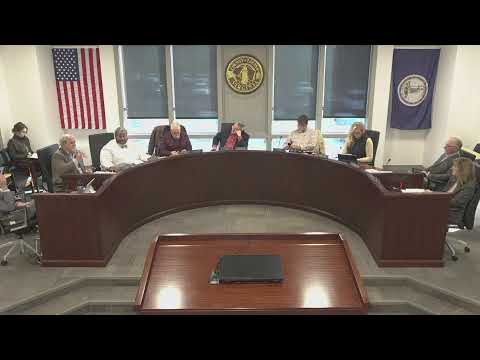
Louisa County supervisors spent an extended portion of their Feb. 3 budget workshop reviewing the five‑year capital improvement plan, projected revenues from expected Amazon data‑center development, and the county’s $141 million outstanding debt load.
Staff said the preliminary FY26 budget showed an approximate $7.4 million shortfall with current capital projects included. The finance committee recommended shifting large projects — including the community center in the parks plan — from the FY26 starting year to 2027 to better align capital spending with projected Amazon‑related revenues that staff estimate will begin to materialize in 2027. Moving the community center out one year would reduce near‑term pressure but would increase the later year capital burden by an estimated $3.6 million.
Supervisors pressed staff on whether the county should use available savings to pay down existing debt instead of depositing money into earmarked savings for an aquatics facility. Board members noted constraints on early payoff of certain debt instruments (some bonds cannot be retired before established call dates), and staff said some instruments (for example, Virginia Resources Authority loans) can be paid early after a required waiting period. Staff and supervisors also described several reserve buckets already in place — a long‑term capital fund (approximately $9.5 million cited in discussion), a separate savings amount used for interperiod cash‑flow management, and an OPEB reserve the board has carried.
Several supervisors urged staff to develop a transparent “pathway to debt neutrality” that lays out which debt can be retired early and how projected Amazon revenues could be used to pay callable debt or reduce future borrowing. Staff and board members agreed that more formalized projections and a clear repayment roadmap would come back through the finance and revenue committees in the next 60–90 days.
On the aquatics facility, staff noted the county has historically set aside roughly $400,000 per year toward that project as a savings plan. Some supervisors said they favored keeping the allocation as a dedicated savings bucket so the county could build the facility with cash when revenues allow; others said the earmark creates public expectations and argued the money should instead be steered toward retireable debt. Staff clarified the legal constraints on creating a sinking fund labeled specifically for debt retirement, but confirmed that money placed in long‑term capital funds can be used at the board’s direction for debt reduction when legal conditions are met.
Why it matters: The discussion maps the county’s choices between saving for discretionary capital projects, responding to near‑term service demands, and using projected new revenues to reduce the county’s long‑term debt burden. Supervisors asked staff for a clear plan that quantifies callable versus non‑callable debt, timelines for revenue availability, and specific tradeoffs for deferred capital projects.
Next steps: Staff will update capital schedules and present a debt‑neutrality pathway and refined Amazon‑revenue projections to the finance and revenue committees; the board will revisit the CIP after those analyses are complete.