Get Full Government Meeting Transcripts, Videos, & Alerts Forever!
Get email alerts on the Disparity Study topic
No spam. Unsubscribe anytime.
Griffin & Strong outlines timeline, outreach and data sources for Regional 1 Health disparity study
Summary
Griffin & Strong told Shelby County officials the disparity study for Regional 1 Health has completed data collection and case‑law review, is conducting anecdotal interviews and a business survey, and expects a draft in July with final delivery in August. Community meetings are scheduled for early February.
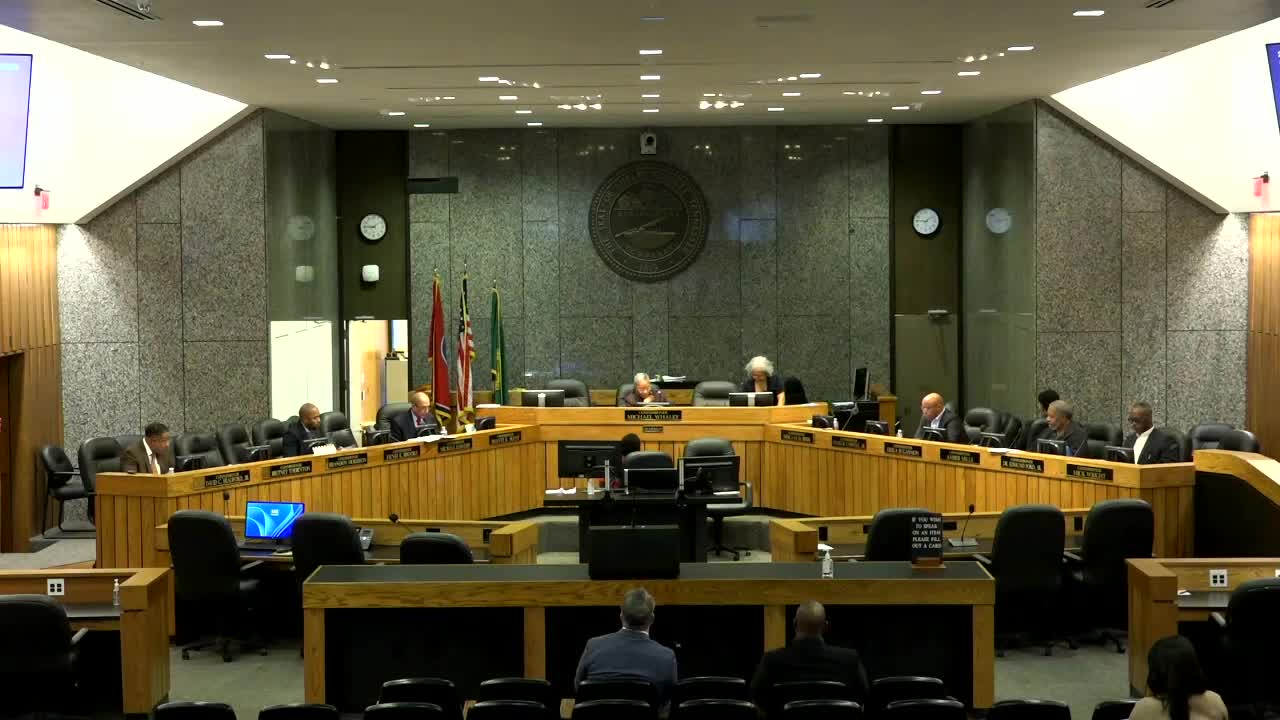
Griffin & Strong told the Shelby County Inclusive Economic Development Committee that its disparity study for Regional 1 Health has completed data collection and case‑law review and is moving into analysis and community outreach.
Hannah Rowell, project manager for Griffin and Strong, said, “we're going along swimmingly in the disparity study. We have completed our data collection from Regional 1 Health and we've also completed our case law review and are currently in the revision process of that chapter.”
The firm described next steps the committee will use to shape future procurement and an MWBE (minority- and women‑owned business enterprise) program. The study team said anecdotal interviews are under way and expected to wrap up at the end of the month; a business‑owner survey is live and will run through mid‑February; public community meetings are scheduled for Feb. 4 and Feb. 6; and focus groups, drawn from a random sample of business owners, are scheduled for February but are not open to the public. The team said it will review Regional 1 Health’s databases with the health system before performing utilization and disparity analyses and then move into findings and recommendations.
Michelle Clark Jenkins, director of methodology and research for Griffin and Strong, told the committee the project draws sampling and contact lists from multiple sources, including Shelby County certification and EOC lists, city and state DBE lists and Regional 1 Health’s GPO vendor list. Jenkins said the team uses a master outreach file and that subconsultant Small Planet Works (represented in the meeting by Janice Banks) is contacting businesses from randomized lists to schedule interviews. Rowell estimated outreach to roughly 20 local organizations so far.
Committee members pressed for clarity about the public meetings and asked the consultants to share meeting notices so the county can post them. Attorney Van Turner and Chair Brooks asked the consultants to provide the meeting information to county staff; Rowell agreed to share a publicity contact. The study team gave a target schedule of a draft report in July and project completion in August.
Why it matters: committee members said the disparity study will inform procurement documents and workforce goals for the Regional 1 rebuild and other projects. Several commissioners and committee members repeatedly requested that outreach materials and meeting links be posted on county web pages so residents and small businesses in targeted ZIP codes know how to participate.
The committee scheduled follow-up updates for Feb. 20, 1:30 p.m., when the study team expects to report additional findings and to answer further questions about outreach and analysis.