Get Full Government Meeting Transcripts, Videos, & Alerts Forever!
Get email alerts on the Property Tax Assessment topic
No spam. Unsubscribe anytime.
Shelby County reassessment shows about 27% valuation increase; XAI campus estimated to add $13.5 million
Summary
County assessor and trustee told the budget committee the 2025 certified assessment roll will be roughly 27% higher, producing an estimated $1.035 billion in gross property tax obligations; the planned XAI supercomputer campus is conservatively projected to contribute about $13.5 million in personal-property tax revenue, filings still pending.
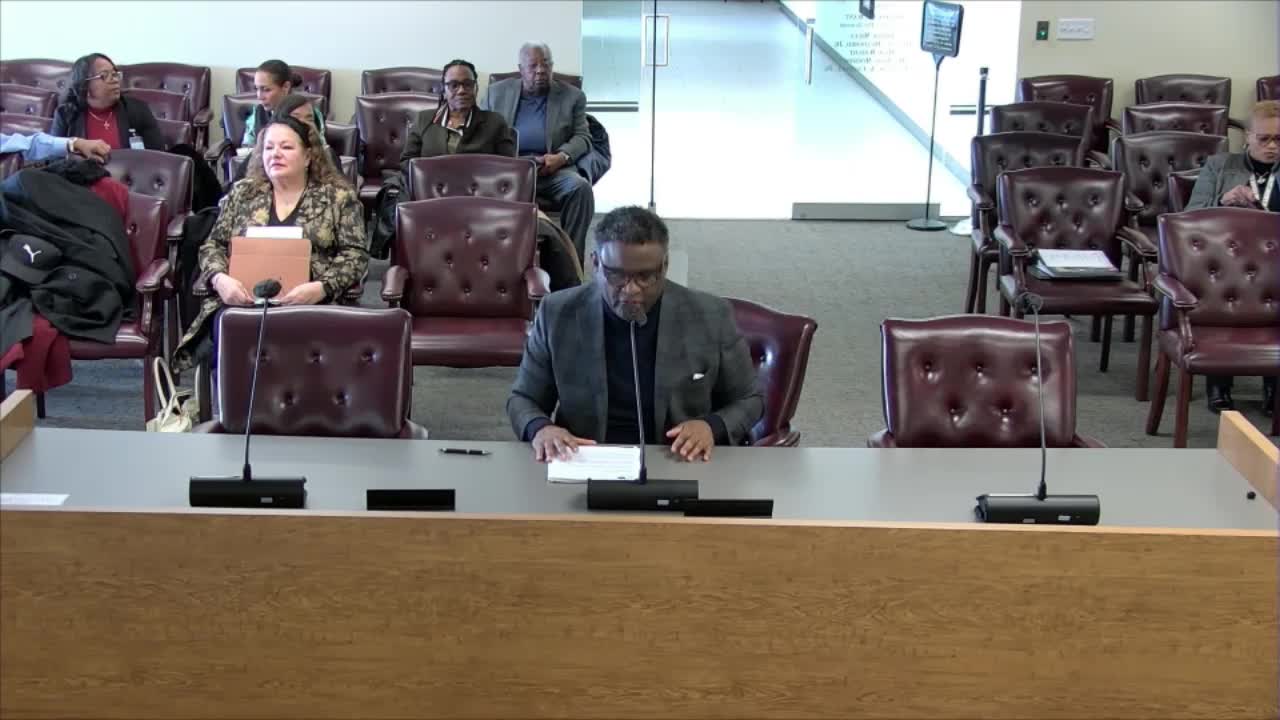
Melvin Burgess, Shelby County Assessor of Property, told the Budget & Finance Committee that the county’s 2025 certified assessment roll is projected to increase by about 27% and that the county’s combined certified assessments total roughly $30.53 billion, producing an estimated $1,034,974,003.42 in gross property tax obligations.
Burgess said the assessor’s office currently lists real estate assessments at $28,385,587,237, personal-property assessments at $2,144,629,339 and Green Belt assessments at $140,907,370, and that notices of valuations will go out on or about March 1, 2025. He added that his office has not yet received final personal-property filings from XAI; his staff’s conservative projection for the XAI supercomputer campus is about $13,500,000 in property-tax revenue but those filings remain outstanding.
The assessment snapshot, Burgess said, will be submitted as the certified assessment roll on April 20, 2025. "We stand by these numbers," he said, while noting some small corrections are still being made and that leased equipment reporting remains under discussion with XAI tax representatives.
Regine Newman, Shelby County Trustee, told commissioners that several state-controlled factors will determine the county’s final property-tax revenue. "Reappraisals by state law are revenue neutral," Newman said, explaining that the state sets a certified tax rate intended to prevent a reappraisal from producing a windfall. Newman also said the county expects restoration of revenues previously lost to the state sales-ratio adjustment: roughly $31 million in reduced revenue from state-assessed and personal-property accounts will be restored in the reappraisal cycle.
Newman outlined other elements that affect property-tax revenue, including tax-rate decisions by the commission, assessment appeals, TIF payouts (anticipated near $10.3 million this year), pilot/abatement payments (about $41.4 million last tax year) and a historical collection rate that has averaged about 97 percent in recent years. She cautioned that the certified rate from the state depends on the assessor’s final roll and the state’s review process.
Budget and calendar implications were raised repeatedly in committee discussion. Committee members and staff noted the assessor’s April 20 certification date and the trustee’s subsequent review are part of the schedule that budget staff will use while assembling the mayor’s proposed FY26 budget. Michael Thompson, director of budget and fiscal planning, and others said the administration will work with the assessor and trustee as the certified rate becomes available so the proposed budget can be adjusted as needed.
Commissioners asked about the origin of the XAI projection and whether elements such as leased equipment or changes in the number of GPUs could alter the estimate; Burgess and his staff said they are still obtaining details from XAI representatives and that the current $13.5 million figure is conservative. Multiple commissioners pressed for continued communication between assessor, trustee and administration about large account filings or abatement requests so the commission can factor those items into revenue planning.
The discussion also included a legal-procedure clarification from legislative counsel: the Shelby County Charter requires a supermajority vote of the commission if the body increases the tax rate by $0.10 or more from the previous year.
The committee will revisit these revenue estimates as the assessor’s office certifies the roll and the trustee receives and processes state assessments and any appeals.