Get Full Government Meeting Transcripts, Videos, & Alerts Forever!
Get email alerts on the Public Safety Addressing topic
No spam. Unsubscribe anytime.
Roane County 9-1-1 director asks commission to clarify addressing authority to reduce duplicate addresses and response delays
Summary
9-1-1 director Brian Walker urged the commission to allow emergency-dispatch review of road names and addresses before they are finalized, citing duplicated street names, inconsistent records and examples that have delayed response.
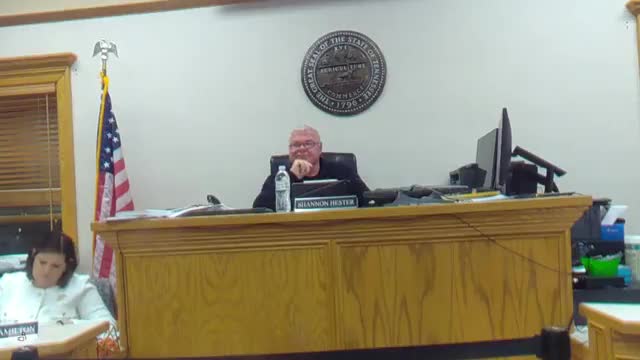
Brian Walker, Roane County's 9-1-1 director, asked commissioners to consider giving the 9-1-1 office authority to review road names and address assignments before they are finalized so emergency responders and other agencies avoid duplicate addresses and response confusion.
"We want the authority to say, hold on. Let's do it the way the state wants it done," Walker told the commission, adding that the 9-1-1 center does not seek to take over naming or to unilaterally change existing addresses. He said the office's goal is to reduce duplicate names and ambiguous addressing that can lead to delayed responses in emergencies.
Walker described repeated examples where multiple roads share the same or similar names and where properties have two different addresses in different county records. He cited an example in which residents received deliveries to a mailbox on DeArmond Road, while the 9-1-1 mapping and local records used a different road name. Walker said that inconsistency can lead to multiple emergency units being dispatched while operators sort out which location a caller means.
He also described a private drive that had been subdivided: "All we signed off on, all we said was the address ... did not conflict with anything else in the county," Walker said of one naming review. Yet, he said, the address was recorded differently with the post office and not updated in all systems, creating ambiguity for responders.
Walker told commissioners he and staff have drafted policy proposals and talked with planning and assessor staff; he asked the commission what next steps they wanted and suggested the planning commission as the forum to review a formal addressing policy. Chair and several commissioners directed Walker to take the draft policy to the planning commission; Walker agreed he would do so and to provide the commission with further information.
Walker's request reflects broader county growth and the frequency of new private roads and subdivisions; commissioners noted that consistent addressing helps first responders, postal service and tax assessment work.
Next step: Walker was directed to bring the draft addressing policy to the planning commission for review and, if recommended, the planning commission would forward it to the full county commission.